
Roof Repair
A small leak never stays small. We trace the real source, fix it right with materials that match, and save the roof you have when replacement isn't needed yet.
Not every problem needs a new roof. A cracked boot around a vent pipe, a few shingles lifted by wind, failed sealant at a skylight, a hairline crack in a tile, worn-out valley metal, or flashing that has pulled away from a wall can each let water in - and each is a straightforward fix if you catch it before the damage spreads. The catch is that the problem almost never announces itself where it actually is. Water finds the ceiling stain, the homeowner assumes the hole is right above it, and the real entry point sits several feet away, quietly rotting the decking while everyone looks in the wrong place.
That gap between where a leak shows up and where it starts is the single most important thing to understand about roof repair on the Suncoast. Water doesn't drip straight down. It runs along the top of the underlayment, tracks down a rafter, follows the slope of the decking, pools on a ceiling joist, and finally finds a nail hole or a seam in the drywall to come through. By the time you see the stain, the water has often traveled a long way from the breach - and sealing the drywall, or tarring the shingle directly above the stain, does nothing but hide the symptom while the cause keeps working.
So we diagnose the leak, not the stain. That means getting up on the roof, checking the failure points our climate is known for, and following the water back uphill to where it is genuinely entering. Sometimes that's obvious - a boot split wide open in the sun. Sometimes it takes tracing a stain in the attic back to a flashing joint two dormers over. Either way, we don't guess and hope. We find the source, then make a lasting repair with materials chosen to match your roof, not a smear of black tar that buys a month and traps moisture underneath.
A word about that tar, because it's the most common thing we're called to undo. Roofing cement and cheap sealants have their place, but slathered over a leak as a permanent fix they do real harm: they crack in our heat, they trap water against the decking, and they make the eventual proper repair harder and messier. When you see a roof with black smears everywhere, you're usually looking at years of someone treating symptoms instead of finding causes. We'd rather do it once, correctly.
And we'll always tell you the truth about what we find. If a repair will genuinely get you several more good years, that's what we'll recommend, and we'll say so plainly. If your roof is near the end and a repair is throwing good money after bad, we'll show you the photos and the reasons and let you decide - no pressure, no scare tactics, no manufactured emergency. Our name is on the work and we live here, so the honest answer is also the one that keeps you calling us.
Common repairs we handle
- Roof leaks traced to their true source, not just the ceiling stain
- Cracked and dry-rotted pipe boots around vent penetrations
- Failed flashing at walls, chimneys, skylights, and in the valleys
- Wind-lifted, curled, cracked, or missing shingles
- Cracked, slipped, or broken tiles matched to the existing profile
- Worn or rusted valley metal that channels the roof's heaviest water
- Tired, cracked sealant at penetrations, ridges, and transitions
- Storm and debris damage, and emergency dry-in when water is actively coming in
- Minor deck and fascia repair where water has already gotten in
Why the source matters more than the stain
The most common repair mistake - made by homeowners and cut-rate roofers alike - is sealing the spot directly above the ceiling stain. Because water travels, that spot is usually not where it's getting in, so the "fix" fails at the next hard rain while the real entry point keeps soaking your decking. Do that a few times and a leak that started as a ten-dollar boot has quietly rotted a sheet of plywood you now have to replace.
Finding the true source is a skill, and it's the part of repair that actually earns its keep. We look at the whole picture: where the stain sits relative to the slope above it, what penetrations and transitions are uphill of it, whether there's a valley or a wall line feeding water toward that spot, and what the attic side shows. On the Suncoast the culprit is usually one of a short list of known failure points, which is why an experienced local roofer can often narrow it down fast. Getting that diagnosis right is the whole reason our repairs hold and the ceiling stain doesn't come back with the next storm.
The repairs we make most, and why they fail here
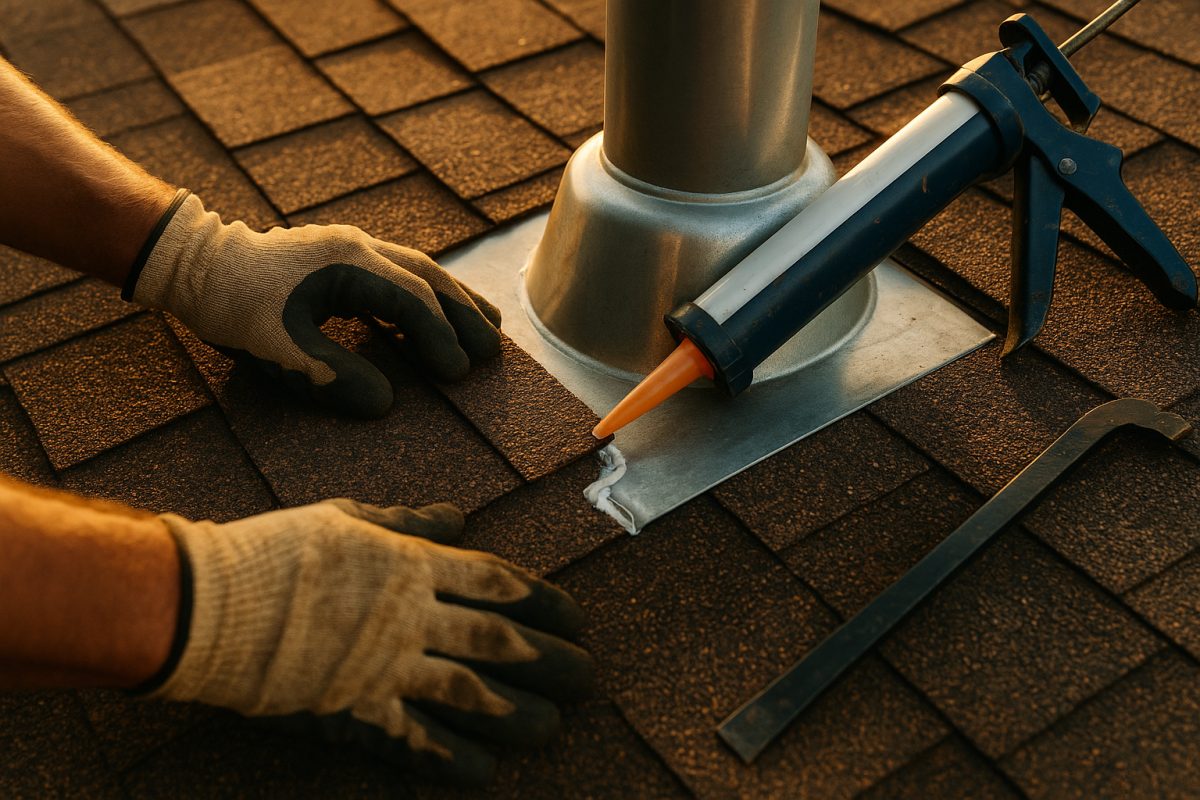
Pipe boots are the number-one leak we fix. That's the rubber or lead collar sealing around a plumbing vent pipe, and the rubber ones simply bake and split in Florida sun - often within a decade, long before the shingles around them are worn out. A cracked boot is cheap and quick to replace, and catching it early is the difference between a small repair and a rotted-out section of deck.
Flashing is the next big one. Flashing is the metal that seals the joints where a roof meets something else - a wall, a chimney, a skylight, a valley where two slopes drain together. Those joints are where roofs leak, because they're where water is forced to change direction and where movement and corrosion work on the metal. Wall and chimney flashing pulls away or rusts, skylight flashing and its sealant give out, and valley metal - which carries the concentrated runoff of two roof planes - wears thin or corrodes right where the most water passes over it. We re-flash these the right way, with proper metal and overlaps, rather than caulking over a joint that needs rebuilding.
Then there are the field failures: shingles lifted, curled, cracked, or torn off by wind, which open the roof to wind-driven rain; and cracked or slipped tiles, which we replace with matching profile pieces so the repair disappears into the roof. Worn sealant at penetrations and ridges gets renewed with the right product, not a random tube from the hardware store. None of these are exotic - they're the bread-and-butter repairs that keep a sound roof sound, as long as they're done at the right spot with the right material.
Why Suncoast roofs fail where they do
Our climate attacks roofs in specific, predictable places, and knowing them is half the battle. Relentless UV bakes the oils out of asphalt shingles until they turn brittle, curl at the edges, and crack - and it dry-rots rubber pipe boots faster than almost anything else on the roof. Salt air along the coast corrodes older metal flashing, valley metal, and fasteners, eating them from the exposed edges in. Wind uplift works its way under lifted tabs and past tired sealant, prying at anything that isn't fastened down tight. And the daily heat-then-afternoon-storm cycle expands and contracts every material on the roof, working nails loose and stressing seams a little more each season.
That last one is the quiet killer, because it never stops. A Suncoast roof heats up hard by midday and gets hit with a driving thunderstorm by late afternoon, over and over, all summer. Metal expands and contracts, sealant hardens and pulls, nail heads back out a fraction at a time, and the small gaps that opens up are exactly the gaps wind-driven rain exploits. It's why roofs down here fail sooner than the brochure promises, and why the failures cluster at the boots, the flashings, the valleys, and the ridges rather than out in the open field of the roof.
Because we repair roofs here every week, we check those exact failure points first - the pipe boots that dry-rot in our sun, the valley metal that rusts and thins, the ridge caps that lift, the wall and chimney flashing that everyone else forgets. A targeted repair at the right spot, with the right material, is what buys you years instead of weeks. It's also why we don't just seal the ceiling stain and leave: we fix the cause, so you're not calling us back after the next storm.
Emergency leaks, dry-in, and the damage underneath
When water is actively coming into the house, the priority changes. Before we worry about the permanent repair, we stop the water - a secured emergency tarp or a temporary patch that dries the house back in and protects your ceilings, insulation, and belongings while the real fix gets scheduled. On the Gulf Coast that dry-in is often the call that saves you from a ruined ceiling and a mold problem, and being genuinely local means we can get to you fast when it counts, not days later from out of state.
Once the water's stopped, we look at what it already touched. A leak that's been running a while doesn't just wet the drywall - it soaks the decking and can rot the fascia, the exposed board along the roof's edge behind the gutter. Where we find soft or rotted wood, we replace that decking or fascia as part of the repair, because bolting a new boot or fresh shingles onto rotten wood is just setting up the next failure. This is minor structural work, not a full re-deck, but it's the difference between a repair that lasts and one that fails from underneath. We show you the damaged wood before we replace it, so you see exactly what you're paying for.
Matching your roof, and the honest repair-or-replace call
A good repair should disappear into the roof, and that means matching what's already there - the shingle color and profile, the tile shape, the metal detailing. We do our genuine best to match, and on most roofs we get close enough that you'd never spot the repair from the yard. We'll also be honest up front when a perfect match isn't possible: on older roofs, shingle and tile colors get discontinued, and a repair patch on a sun-faded roof may not be an exact twin. You'll know what to expect before we start, not after.
That matching question also feeds the bigger decision: repair or replace. When we inspect, we look at the whole roof, not just the leak - the roof's age, the condition of the shingles or tile everywhere else, how many prior repairs it's already had, whether the underlayment beneath a tile roof has reached the end of its life, and whether the deck is still sound. A young roof with one failed boot is an obvious repair. A twenty-year-old shingle roof leaking in its third spot, with brittle shingles everywhere you look, is usually a case where repairs are just buying weeks at a time and a replacement is the cheaper path over any real horizon. We'll lay out the math plainly and let you make the call - the roof is yours, and so is the decision.
Common questions
My ceiling has a water stain - is my whole roof bad?
Usually not. A stain most often traces back to a single failed pipe boot, a wind-lifted shingle, a cracked tile, or a bad flashing joint - a targeted repair, not a new roof. But because water travels before it shows up, the stain is rarely right below the leak. We find the real source, tell you honestly whether a repair will hold, and only raise replacement if the roof is genuinely near the end.
Why does the leak show up so far from where the roof is actually damaged?
Because water runs before it drips. It travels along the underlayment, down a rafter, and across the decking until it finds a nail hole or drywall seam to come through - often several feet from where it got in. That's exactly why sealing the spot above the stain fails: the real entry point is uphill. We follow the water back to its true source so the repair actually stops the leak.
Do you offer emergency leak repair?
Yes. If water is actively coming in, call us - we'll get you dried in fast with a secured emergency tarp or patch to stop the damage, then schedule the permanent repair once the house is protected. Being local means we're not driving in from another state after a storm; we can get to you when it actually matters.
My roofer just put tar over the leak - is that a real fix?
Rarely. A smear of roofing cement over a leak is a symptom-treatment, not a repair: it cracks in our heat, traps moisture against the decking, and makes the proper fix harder later. A lasting repair means replacing the failed part - the boot, the flashing, the shingle, the tile - with matching material at the true source. If your roof is covered in black tar smears, someone has been chasing stains instead of fixing causes.
What are the most common roof repairs you make around here?
On the Suncoast the short list is cracked and dry-rotted pipe boots, failed flashing at walls, chimneys, skylights, and valleys, wind-lifted or cracked shingles, cracked or slipped tiles, and worn valley metal and sealant. Our sun, salt, wind, and daily heat-then-storm cycle attack those exact spots, so an experienced local roofer knows to check them first.
Will a repair match the rest of my roof?
We do our genuine best to match existing shingles or tile in color and profile, and on most roofs the repair disappears from the yard. On older roofs an exact match isn't always possible because colors and tile profiles get discontinued, and sun-fading changes the originals over time. We'll tell you up front and honestly what to expect before we start.
Can you fix a leaking tile roof, or do tiles have to be fully replaced?
Individual cracked, slipped, or broken tiles can be replaced with matching-profile pieces without touching the rest of the roof. But if a tile roof is leaking while the tile still looks perfect, the real problem is usually the waterproof underlayment beneath the tile wearing out - that's a different job than a spot repair. We inspect to tell you which situation you're actually in before recommending anything.
Do you repair the wood if the leak has already caused damage?
Yes. A leak that's been running a while soaks the decking and can rot the fascia behind the gutter, and we won't fasten a new boot or fresh shingles onto rotten wood. Where we find soft or rotted decking or fascia, we replace that section as part of the repair and show you the damaged wood first, so the fix lasts instead of failing from underneath.
How do I know if I should just replace the roof instead of repairing it?
We'll show you. After inspecting the whole roof - its age, the condition of the shingles or tile everywhere else, how many times it's already been repaired, and whether the deck and underlayment are still sound - we give you an honest read on its remaining life. Then you can weigh a repair against replacement with the real math in front of you, and no pressure to pick the bigger job.
Why do Suncoast roofs seem to fail faster than roofs elsewhere?
Because our climate is unusually hard on them. Relentless UV bakes shingles brittle and dry-rots rubber boots, coastal salt corrodes flashing and fasteners, wind uplift pries at every loose edge, and the daily heat-then-afternoon-storm cycle expands and contracts everything until nails back out and seams open. Roofs down here genuinely age faster, and the failures cluster at the boots, flashings, valleys, and ridges - which is exactly where we look first.
Roof Repair across the Suncoast
We handle roof repair in every town we serve - matched to its homes and weather.
Ready when you are
Book a free inspection and get an honest assessment of your roof - with a clear written quote and no obligation.
Get a Free Quote