
Florida's Citizens Insurance roof age rule: what Port Charlotte homeowners need to know
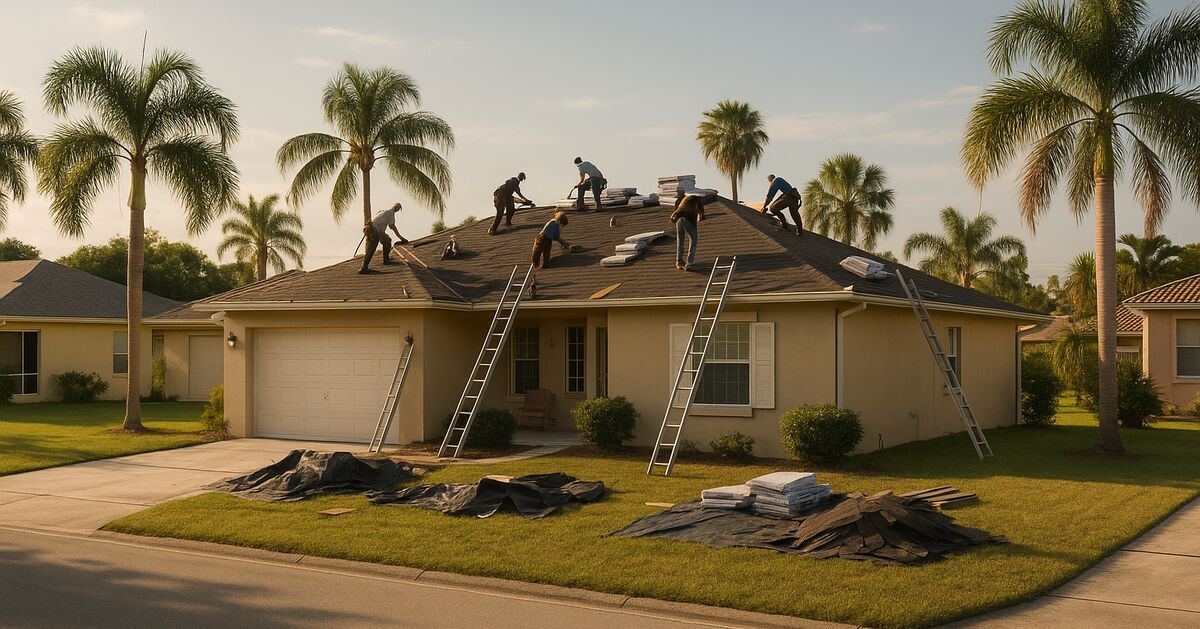
Your insurance company just told you your 12-year-old roof needs to go. Sound familiar? Across Port Charlotte, homeowners are getting letters from Citizens Property Insurance Corporation - Florida's insurer of last resort - saying their coverage will be non-renewed or their home won't qualify for a new policy, all because of roof age. It's a situation that's catching a lot of people off guard, and it's worth understanding exactly why it's happening and what your real options are.
What the Citizens Insurance roof age rule actually says
Citizens Property Insurance Corporation has a roof age policy that, in plain terms, works like this: if your asphalt shingle roof is 15 years old or older, Citizens will require a roof inspection before it will issue or renew a policy. If that inspection shows the roof has less than three years of useful life remaining, Citizens will not cover the home unless the roof is replaced.
For metal or tile roofs, the threshold is more generous - Citizens uses a 25-year cutoff rather than 15. But the vast majority of homes in Port Charlotte and the surrounding Charlotte County area were built with standard three-tab or architectural asphalt shingles, so the 15-year rule is the one hitting homeowners hardest right now.
The practical result: if your shingle roof is somewhere between 15 and 20 years old, you are in the zone where an inspection could trigger a required replacement even if the roof still appears to be performing fine from the outside.
Why Citizens is applying this rule more strictly now
Florida's homeowners insurance market has been under severe financial strain. A combination of litigation abuse, back-to-back hurricane seasons, and widespread fraudulent claims drove several private carriers into insolvency or out of the state altogether. Citizens, which was originally designed as a market of last resort, found itself covering an enormous share of Florida homeowners by default.
To stabilize its finances and reduce risk, Citizens has been tightening underwriting standards. Older roofs represent a statistically significant claim risk, especially in areas like Port Charlotte that sit squarely in the path of Gulf storms. An aging shingle roof is more likely to sustain damage in a wind event and generate a large claim, so Citizens is drawing a hard line on roof age as a risk management tool.
The ripple effect is that homeowners who never expected to replace their roof for another five or ten years are now being told they need to act quickly - or lose their coverage.
Why Port Charlotte is seeing this especially often
Port Charlotte was developed heavily in the 1970s, 1980s, and 1990s. A significant portion of the housing stock has roofs that were last replaced in the late 2000s or early 2010s, which puts them squarely in the 12 to 18 year range right now. That's the exact window where Citizens' inspection requirements kick in.
Add to that the area's exposure to tropical weather systems moving across Charlotte Harbor, and it makes sense that insurers are paying close attention to roof condition here. Homeowners who bought houses in Port Charlotte's many planned communities during the post-2008 recovery period are particularly likely to be dealing with roofs that are now approaching or past the 15-year threshold.
The situation is similar in parts of Englewood and Venice, where older housing stock is also running into the same Citizens timeline issues.
What happens if you don't replace the roof in time
If Citizens sends a notice that your home does not meet underwriting requirements because of the roof, you will typically receive a window of time - often 30 to 90 days - to either replace the roof or provide documentation that contradicts the inspection finding.
If you don't act, Citizens will non-renew your policy. That puts you in a difficult position:
- You'll need to scramble to find coverage elsewhere, which may be limited and expensive
- A lapse in coverage can trigger your mortgage lender to force-place insurance on the home, which is typically far more expensive than a standard policy
- Selling the home becomes harder, since buyers' lenders will require proof of insurable coverage
In short, letting the deadline pass without a plan creates a cascade of financial problems that almost always costs more than just replacing the roof when the notice arrives.
The inspection process: what it actually involves
When Citizens orders a roof inspection, they send out a third-party inspector who photographs the roof and evaluates its overall condition. The inspector is looking at things like:
- Shingle granule loss (granules are the protective coating on asphalt shingles; when they wear away, the underlying mat is exposed to UV and moisture)
- Curling, cupping, or cracking shingles
- Missing shingles or patched areas
- Flashing condition around chimneys, vents, and roof penetrations
- Evidence of moss, algae, or moisture intrusion
- Sagging or soft spots that may indicate decking damage underneath
The inspector is not necessarily a roofing contractor, and the report goes to Citizens, not to you first. If the inspection result is unfavorable, you have the right to dispute it with your own independent inspection, but you'll need to act quickly and have documentation ready.
If you're not sure where your roof stands, having a professional roofing inspection before Citizens sends their inspector is a smart move. It gives you time to address any issues proactively - or at least understand what's coming. You can learn more about our full roofing services and what an inspection covers.
Can you buy time with repairs instead of a full replacement?
In some cases, yes - but it's limited. If an inspection shows isolated problem areas but the roof as a whole has remaining life, a targeted repair accompanied by documentation may satisfy Citizens temporarily. However, once a shingle roof reaches 15 years old, Citizens' inspectors tend to be conservative in their life expectancy estimates, and "repair to extend life" arguments don't always hold up with underwriters.
The honest reality is that if your roof is 15 to 17 years old and showing any signs of wear, the economics of repair versus replace often tip toward replacement anyway. A new roof in Port Charlotte typically comes with a wind mitigation benefit that can offset some of the insurance premium increase, and it restarts the clock on the Citizens age threshold. Our FAQ page covers common questions homeowners have about the replacement process.
How roof material choice affects the insurance picture
If you're replacing your roof because of Citizens' requirements, the material you choose matters - not just for longevity, but for how it affects your insurance going forward.
Asphalt shingles are the most common and lowest upfront cost, but they'll put you back on the 15-year Citizens clock.
Metal roofing (standing seam or exposed fastener panels) qualifies for the 25-year threshold, meaning you won't face this Citizens issue again for a very long time. Metal roofs also tend to earn better wind mitigation credits.
Concrete or clay tile similarly qualifies for the 25-year rule and is a popular choice in Southwest Florida because it handles heat and UV exposure exceptionally well.
As you weigh your options, it's also worth knowing that your material and color choice can affect your insurance premium directly. Our post on how roof color and material affect your insurance premium in Southwest Florida goes deeper on this topic and is worth reading before you commit to a material.
The wind mitigation inspection: your offset opportunity
Any time you install a new roof in Florida, you are entitled to a wind mitigation inspection afterward. This inspection documents specific features of your new roof - things like the nail pattern used in the decking attachment, the roof deck thickness, the type of roof-to-wall connection, and whether you have a secondary water resistance layer.
The results of that wind mitigation inspection go to your insurer and can result in meaningful premium discounts. Homes in Port Charlotte that upgrade from an older roof with unknown or poor attachment methods to a new roof built to current Florida Building Code standards often see significant wind mitigation credits that partially offset the cost of the replacement over time.
It's one of the few situations in homeownership where a major required expense comes with a built-in partial recovery mechanism. Make sure you schedule the wind mitigation inspection promptly after your new roof is installed while everything is fresh and documented.
What to do right now if you're in the 12-to-15-year range
If your Port Charlotte roof was installed between 2008 and 2013, you are in the window where action makes sense now rather than later.
Here's a practical checklist:
- Find out how old your roof actually is. Pull your permit history from Charlotte County's building department online portal. The permit for the last roof replacement will show the date.
- Get an independent inspection. Don't wait for Citizens to send their inspector first. Knowing the condition of your roof gives you options.
- Check your Citizens policy renewal date. If renewal is six to twelve months away and your roof is 14 or 15 years old, start the replacement conversation now. Contractor availability and permitting timelines mean you often need more lead time than you'd expect.
- Get multiple quotes. The roofing market in Charlotte County and across our full service area has been busy, and prices and timelines vary. Getting two or three quotes gives you a real picture of the market.
- Talk to your insurance agent before you replace. Ask them specifically what Citizens will need to see in terms of documentation - permit, final inspection, and notice of commencement - and make sure your contractor is set up to provide all of it cleanly.
How the permitting process works in Charlotte County
Roof replacements in Port Charlotte fall under Charlotte County's jurisdiction, and all re-roofing work requires a permit. Your roofing contractor should pull the permit - if they offer to work without one, walk away. Unpermitted work can create serious problems when you sell the home or file an insurance claim.
Charlotte County's building department does conduct inspections during and after the roofing process. The final inspection sign-off is what documents your new roof with the county and is what Citizens and other insurers will want to see. If you've been following our other posts, you'll know that permitting timelines can vary across Southwest Florida - the process in Port Charlotte is generally more straightforward than in some coastal municipalities, but planning for two to four weeks between permit application and project start is reasonable during busy seasons.
For context on how permitting timelines can differ in neighboring areas, our post on why Englewood roofing permits take longer - and how to plan gives useful background on what to expect when dealing with municipal building departments nearby.
One more thing: don't confuse the Citizens rule with your home's actual roof life
Here's something worth keeping in mind. Citizens' 15-year threshold is an underwriting rule, not an engineering verdict on your specific roof. A well-maintained architectural shingle roof in a shaded area with good attic ventilation can genuinely perform well past 15 years. On the other hand, a poorly ventilated roof in full sun on a Port Charlotte home that faces southwest can degrade noticeably faster than the average.
The Citizens rule is a blunt instrument designed for a portfolio of thousands of homes. Your roof is one specific roof with its own maintenance history, exposure, and condition. That's why an independent professional inspection matters so much - it gives you the specific picture rather than the statistical average.
If you do end up needing to replace the roof sooner than you planned, try to reframe it: you're getting a dry, code-compliant, insurability-documented roof that will serve the house for the next 20 to 30 years depending on material. That's real value, even if the timing feels forced.
We work with Port Charlotte homeowners through this process every day
At Suncoast Roofing Pros, we're familiar with exactly what Citizens requires, how Charlotte County permitting works, and how to document a new roof installation in a way that makes the insurance transition smooth. If you've received a notice from Citizens or just want to understand where you stand before one arrives, reach out to us for a no-pressure inspection and conversation about your options.
We serve homeowners throughout Port Charlotte, as well as Sarasota, Bradenton, Lakewood Ranch, Nokomis, Osprey, Englewood, Venice, and across the Suncoast. You don't have to navigate the Citizens insurance situation alone - and the earlier you start the conversation, the more options you'll have.