
How roof color and material affect your insurance premium in Southwest Florida
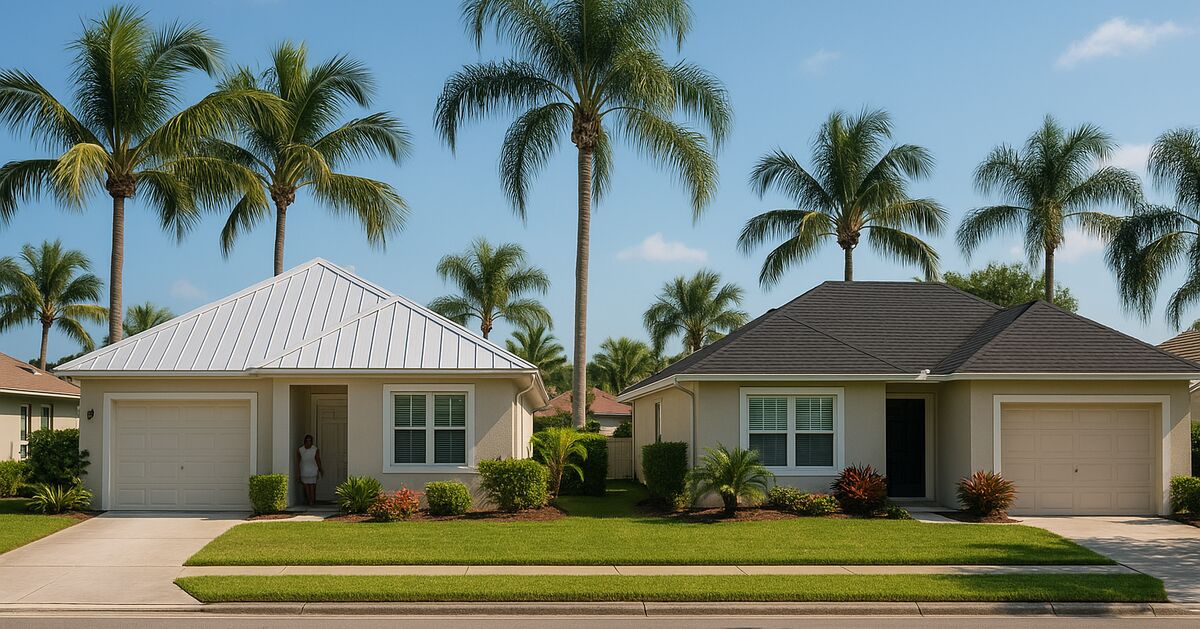
Your roof is doing two jobs at once: keeping rain out and keeping your insurer happy. In Sarasota, Manatee, and Charlotte counties those two jobs have become more financially linked than most homeowners realize. The roof material and even the color you pick at replacement time can move your annual insurance premium and your wind mitigation score in ways that show up immediately on your policy renewal.
This post breaks down the mechanics behind both effects so you can make a smart choice before you sign a roofing contract.
Why insurers care so much about roof material in Florida
Florida's property insurance market is shaped almost entirely by wind risk. After a string of major storms reshaped the actuarial math for this state, carriers began writing underwriting rules that tie directly to roof characteristics. The result is that two identical homes on the same street in Lakewood Ranch or Osprey can carry noticeably different premiums simply because one was re-roofed with a different material.
The big drivers insurers look at are:
- Impact resistance - how well a roof covering survives windborne debris
- Attachment method - how securely the covering is fastened to the deck
- Age and condition - newer roofs get better rates; many carriers now refuse to renew policies on roofs older than 15 years
- Material durability - how likely the material is to sustain widespread damage in a named storm
Concrete tile, clay tile, and metal roofing consistently perform better on those first two points than standard three-tab asphalt shingles. Architectural (dimensional) shingles fall somewhere in the middle. Each of those differences feeds directly into what your carrier charges.
Our full roofing services page walks through the material options we install, but here is a plain-language breakdown of how each category typically sits with underwriters in this region.
The three main material categories and how they rate
Asphalt shingles
Architectural shingles have largely replaced three-tab on new Florida installations, and for good reason. They carry a higher wind-speed rating, usually 110 to 130 mph when properly installed, which satisfies the current Florida Building Code minimum for most of our counties. Three-tab shingles, if you still have them, are viewed unfavorably by most carriers and can trigger surcharges or non-renewal notices.
The weak point of asphalt in Southwest Florida is longevity. The combination of UV intensity, humidity cycling, and occasional hurricane-force gusts shortens the effective lifespan compared to what you might see quoted in national manufacturer literature. That shorter lifespan means carriers are watching the clock. In Charlotte County and coastal areas like Englewood and Venice, some carriers have started treating asphalt roofs over 10 years old with heightened scrutiny.
Concrete and clay tile
Tile has dominated Florida construction for decades for good reason. It is heavier, it interlocks, and when properly installed on a solid deck with hurricane straps engaged, it resists uplift very effectively. Insurers know this and typically reward it. A tile roof on a home in Sarasota or Bradenton will almost always earn a better wind mitigation credit than a comparably aged shingle roof, assuming the inspection finds the fastening pattern and hip geometry that the rating form rewards.
The caveat is installation quality. A tile roof that was set on an inadequate underlayment, or where flashings were not correctly detailed at valleys and penetrations, can still perform poorly in a storm and fail an inspection. The material earns the credit; the installation has to back it up.
Metal roofing
Standing seam metal in particular has become the material of choice for homeowners who want the maximum wind mitigation benefit. Because there are no exposed fasteners for wind to pry against, and because the panels interlock continuously, standing seam systems routinely achieve the highest ratings on the wind mitigation inspection form. Insurers have noticed. Premium savings after switching to standing seam metal can be meaningful, and in some cases the cumulative insurance savings over the life of the roof offset a significant portion of the higher upfront cost.
If you want a deeper technical comparison of standing seam versus exposed fastener metal systems, our post on standing seam vs. exposed fastener metal roofs in coastal Southwest Florida covers the structural and cost differences in detail.
How the wind mitigation inspection form works
Florida uses a standardized form called the OIR-B1-1802, commonly just called the wind mitigation inspection form, to document the features of your roof that reduce wind damage risk. A licensed inspector, usually a home inspector or engineer, visits your property and checks specific attributes. The results go to your insurer, who then applies credits to your premium.
The sections of the form that are most directly tied to roof material and installation are:
- Roof covering - this is where material type and its compliance with the Florida Building Code are recorded
- Roof deck attachment - the nail pattern and nail size used to fasten the decking to the trusses
- Roof-to-wall connection - whether hurricane clips or straps tie the trusses to the wall structure
- Roof geometry - hip roofs earn better credits than gable roofs because hips shed wind more evenly
- Secondary water resistance (SWR) - whether a self-adhering underlayment was used beneath the covering
Of those five elements, your material choice directly controls the first one, and it influences the fifth because some re-roofing projects trigger a code requirement to install a peel-and-stick SWR layer. Our blog post on Florida building codes and your next roof replacement explains when that trigger applies and what it adds to project cost.
The practical takeaway is that replacing a roof is one of the few moments when you can improve multiple rows on that inspection form simultaneously. A homeowner in Port Charlotte who upgrades from old three-tab shingles to standing seam metal on a hip roof, with proper deck nailing and a peel-and-stick SWR layer, could check the favorable box on nearly every row of the form.
Where roof color enters the picture
Color does not appear on the wind mitigation form, so it does not change your mitigation rating directly. Where color matters is in two separate but related areas: energy performance and, in some newer or revised HOA communities around Anna Maria Island and Siesta Key, community compliance rules that can affect the ease of resale and insurance transfers.
The energy performance angle is meaningful. A dark charcoal shingle roof in a Sarasota summer absorbs significantly more radiant heat than a light gray, tan, or white surface. That heat transfers into the attic, which raises cooling loads, which raises your power bill. Florida's energy code now encourages or in some cases requires roofing products with higher solar reflectance values, particularly on re-roofing projects in certain occupancy categories.
From an insurance standpoint, some carriers are beginning to offer modest premium credits for roofs that meet Energy Star reflectance standards, because cooler attic temperatures can reduce the incidence of thermal cycling that degrades roofing materials over time. This is still an emerging area rather than a standard line item, but it is worth asking your carrier or agent about specifically when you are choosing between a light and dark shingle color.
Metal roofing again has an advantage here. Most metal panel finishes, particularly the lighter colors available in standing seam systems, carry high Solar Reflectance Index ratings out of the box, which helps on both the energy and the potential insurance credit side.
For a fuller explanation of how heat and humidity degrade what is underneath the visible surface, see our post on what Florida humidity and heat do to your roof underlayment.
Practical steps before you choose your next roof
Get a wind mitigation inspection before you replace the roof. If your current roof was installed after 2002 and has any positive attributes, you want documentation before demolition. Once the old roof is gone, those records are harder to reconstruct.
Ask your insurance agent to run numbers on materials before you sign a contract. Many homeowners in Nokomis, Venice, and Englewood are surprised to learn their agent can provide a rough premium comparison between a shingle replacement and a tile or metal alternative. The difference in annual premium, multiplied over the life of the roof, is part of the true cost of ownership calculation.
Understand the SWR requirement. If your replacement triggers the secondary water resistance requirement, factor that into budget comparisons between materials. It adds cost but also adds an inspection credit that benefits every material type.
Check HOA guidelines early. Communities in Lakewood Ranch, in particular, have detailed architectural guidelines that specify approved colors and sometimes approved materials. Getting pre-approval before ordering materials avoids costly change orders.
Choose a contractor who will pull the permit correctly. A permitted re-roofing job in Sarasota, Manatee, or Charlotte County is inspected by the county, which means the code-compliant nail pattern that earns you the inspection credit is actually verified. Unpermitted work cannot generate a valid wind mitigation inspection report. Our locations page covers all the counties and communities we serve with permitted installations.
What to realistically expect from premium savings
We will not invent specific dollar figures here because the savings depend on your current roof age, your carrier, your home's geometry, and the material you choose. What we can say plainly is that the difference between the worst-case and best-case scenarios on a wind mitigation form is large enough that it regularly surprises homeowners who see the before-and-after premium comparison.
Homeowners who switch from an aging shingle roof to a metal or tile roof on a hip-shaped home, with a proper deck nailing pattern and SWR underlayment, commonly see meaningful reductions on renewal. Those savings can make a more durable material financially competitive with a cheaper shingle option when evaluated honestly over a 30-year horizon.
If you are also thinking about how a new roof affects your home's value or a pending sale, our post on roof warranties when selling or buying a Florida home covers how buyers, sellers, and their agents typically handle roof age and documentation at closing.
The bottom line for Sarasota, Manatee, and Charlotte county homeowners
Roof color is a secondary consideration. Material, installation quality, and geometry are the primary levers. If you are replacing a roof anywhere from Bradenton to Port Charlotte, the conversation with your roofing contractor should include a frank discussion of what the wind mitigation inspection will likely show for each material option, and your insurance agent should be part of that conversation before you commit.
Getting that right at replacement time costs nothing extra. Getting it wrong means leaving premium credits on the table for the entire life of the roof.
If you have questions specific to your home's situation, reach out to us directly and we can walk through the material options that make sense for your roof geometry, your neighborhood's HOA rules, and your insurer's current guidelines.