
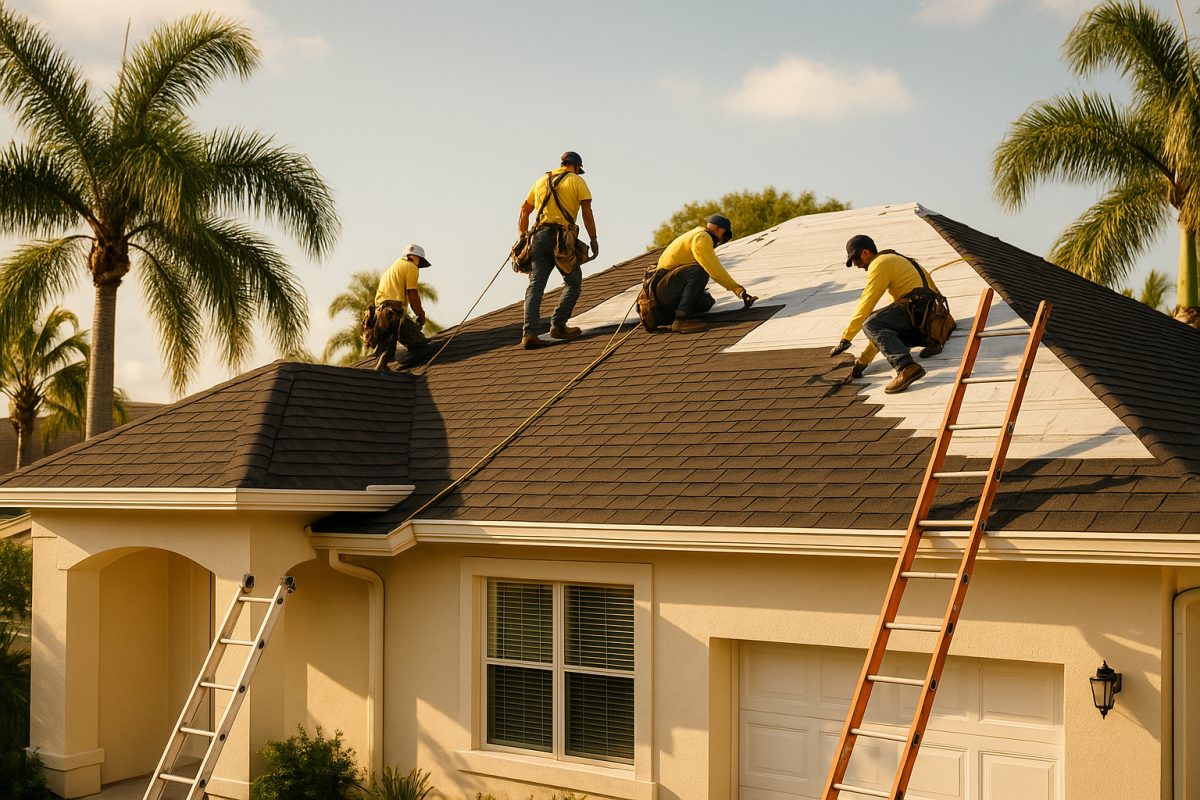
Roof Replacement & Re-Roofing
When patching stops making sense, a full replacement gives you decades of protection - done to Florida code, built for Gulf-Coast weather.
A roof replacement is the biggest single thing most homeowners do to protect their house, and on the Suncoast it carries extra weight. Our roofs fight blistering UV, salt-laden air, wind-driven rain, and the occasional named storm all year long, and they do it without a break - there is no gentle season here that lets a roof rest and recover. A roof that would last decades in a milder climate gets used up far faster on the Gulf Coast, which is why the timing of a replacement here is less about the calendar and more about what our weather has actually done to the system over the years.
The honest question is always the same: repair or replace? Not every problem needs a new roof, and we'll never tell you it does when it doesn't. But there's a real tipping point where replacement stops being the expensive choice and becomes the cheaper one. When repairs start stacking up, when the same roof is leaking in a third or fourth spot, when the shingles are curling and shedding granules across the whole surface rather than in one bad patch, or when the deck underneath has started to soften - that's when nursing an old roof along becomes throwing good money after bad. Add Florida's insurance market flagging the roof's age at renewal, and the math usually tips decisively toward replacing the whole system.
We replace roofs end to end: a full tear-off down to the deck, inspection and repair of any rotten or soft sheathing, a fresh secondary water barrier, new flashing at every penetration, new drip edge and valley metal, proper ridge ventilation, and the shingle, tile, or metal system that fits your home and budget. Nothing gets covered up and hoped for. If the deck under your old roof is compromised, you'll see the photos and we'll make it right before the new roof goes on - because the finest shingles in the world are worthless nailed to wood that's already failing.
Just as important, we install to current Florida Building Code, including the enhanced nailing and secondary-water-barrier requirements that matter both for surviving a storm and for qualifying for wind-mitigation insurance credits. Code on the Gulf Coast isn't a formality; it's the accumulated lesson of every hurricane that came before, written into the way a roof has to be fastened and sealed. A properly documented new roof can lower your premium, and we hand you the paperwork your insurer needs to apply the credits you've earned.
And we do all of it as a local, licensed, and insured contractor who lives and works on this coast year-round. That matters most exactly when it's hardest to tell the difference - after a storm, when out-of-town crews roll through chasing insurance money and vanish before the warranty ever comes due. Our name is on your roof, we pull the permit under it, and we'll be here in the years that follow to stand behind the work. A roof replacement is a decades-long relationship with whoever installed it, and we don't take that lightly.
What a full replacement includes
- Complete tear-off of the old roof down to the wood deck (no layering over the old shingles)
- Deck inspection with any rotten or soft sheathing replaced - and shown to you in photos
- A new secondary water barrier (peel-and-stick or synthetic underlayment) for wind-driven rain
- New drip edge, valley metal, and flashing at every wall, vent, chimney, and penetration
- Code-compliant enhanced nailing and balanced ridge and intake ventilation
- A manufacturer-backed shingle, tile, or metal system matched to your home and budget
- A wind-mitigation-ready packet for your insurance credits, plus a workmanship warranty
When replacement beats repair
The first thing we do on any call is figure out whether you even need a replacement, because a lot of the time you don't. A single failed pipe boot, a patch of wind-lifted shingles, or flashing that's pulled away from a wall are repairs, not replacements, and we'll say so. The tipping point is when the problem stops being local. When shingles are curling, cracking, and shedding their protective granules across the entire roof - not in one spot but everywhere - the surface has reached the end of its service life, and patching one area just means chasing the next leak around the roof for the next several years.
Age is the quiet driver behind most replacements here. Our sun bakes the oils out of asphalt until it turns brittle, so a roof can be genuinely worn out before it ever drips inside. By the time you see a ceiling stain, the system has often been failing for a while. That's also why so many Suncoast replacements are triggered not by a leak but by an insurance renewal letter - the carrier flags the roof's age, and suddenly the decision is on the table whether you were ready for it or not.
On tile roofs the calculus is different, and we're careful to get it right. A concrete or clay tile roof that's leaking often doesn't need replacing at all - the tile can last decades while the waterproof underlayment beneath it wears out in a fraction of that time. When the tile is still sound, we can lift it, replace the underlayment, and relay the same tile for far less than a full tear-off. So before anyone talks replacement on a tile roof, the honest question is whether it's the tile that's failed or just the layer underneath. We'll tell you which, and we'll never sell you a whole new roof when a lift-and-relay is the right call.
The tear-off, layer by layer
A real replacement starts with a complete tear-off, stripping the old roof all the way down to the bare wood deck. We don't layer new shingles over old ones, and it's worth understanding why: covering the old roof hides whatever damage is underneath, adds dead weight, traps heat, voids most manufacturer warranties, and fails a wind-mitigation inspection outright. The only way to know what your roof is actually sitting on - and to build the storm-ready system underneath it that Florida requires - is to take it down to the deck and start clean.
With the deck exposed, we inspect the sheathing itself. Years of small leaks, condensation, or old fastener holes can leave wood soft, delaminated, or outright rotten, and none of that is visible until the old roof is off. Any compromised sheathing gets replaced, and you'll see the photos of what we found. This is the step cut-rate crews skip and the step that decides whether your new roof lasts, because every layer above it depends on being fastened into sound, solid wood.
Then the new system goes on in the right order. First the secondary water barrier - a peel-and-stick membrane or synthetic underlayment that seals the deck and provides a genuine second line of defense against wind-driven rain if water ever gets past the surface. Then the metal that does the unglamorous, critical work: drip edge along the eaves and rakes to shed water off the edges, new valley metal where two roof planes meet and water concentrates, and fresh flashing woven in at every wall, chimney, skylight, vent, and penetration. Flashing and valleys are where the overwhelming majority of leaks begin, which is exactly why we replace them rather than reuse tired old metal. Finally the shingle, tile, or metal surface itself goes down over the top, fastened to code, and the ridge is capped with proper ventilation to let the attic breathe.
Choosing the right roof system
Most Suncoast homes land on architectural asphalt shingles - high-wind-rated, budget-friendly, and available in colors that hide heat. Modern architectural shingle installed to Florida code performs far better than the thin three-tab roofs many older homes started with, and for the majority of mainland houses it's the sensible, cost-effective choice. Tile - concrete or clay - is the classic Florida look and can last decades, though it needs a home built to carry the weight and it comes with the underlayment catch that trips up so many owners: the tile outlives the waterproof layer beneath it, so plan on refreshing that underlayment along the way.
Standing-seam metal costs more up front but earns it near the water, where it shrugs off salt and wind and can genuinely outlive the mortgage - provided it's installed with corrosion-resistant fasteners and clean edge detailing, because on the coast those details are the whole game. On lanais, additions, entry roofs, and any low-slope or flat section, we switch to membrane systems - modified bitumen, TPO, or coatings - that keep water out with a sound, well-drained surface rather than relying on pitch. A flat section handled like a pitched one will pond and leak, so matching the system to the slope isn't a detail, it's the difference between a roof that drains and one that fails.
We'll walk your roof, talk through how long you plan to stay in the house, factor in where your home sits relative to the Gulf, and give you honest trade-offs - not a hard sell on the priciest option. If your community has an HOA with appearance standards governing color, material, and tile profile, we'll work within them and handle the documentation your association needs. The right roof is the one that fits your house, your exposure, your timeline, and your budget, and it's our job to help you find it, not to talk you into the biggest ticket.
Florida code, permits, and wind-mitigation credits
Every roof replacement on the Suncoast is permitted and inspected, and that isn't red tape - it's your protection. We pull the permit, build to the current Florida Building Code, and schedule the required inspections so your new roof is fully documented and legal. Skipping the permit, as some cut-rate operators do, can void your warranty, complicate a future sale, and leave you with a roof your insurer won't stand behind. A permitted, inspected roof is one an appraiser, a home inspector, and a future buyer can all trust, and that documentation follows the house.
The code itself exists because of our weather. Enhanced nailing - a tighter fastening pattern than older roofs were built to - is what keeps the roof deck and the covering attached when hurricane-force wind is trying to peel them off. The secondary water barrier is the backup that keeps the house dry if the surface is breached in a storm. These aren't upgrades we upsell; they're the baseline a Gulf-Coast roof has to meet, and building to them is simply how a roof gets done right here.
Those same code features are what earn wind-mitigation insurance credits, and in Florida's current market that has become a major reason to replace a roof properly rather than cheaply. Carriers have grown strict about roof age and condition, and many won't write or renew a policy on a roof past a certain age. A new, code-compliant roof with a documented wind-mitigation report resets that clock and can unlock premium credits - the roof's shape, its deck attachment, the secondary water barrier, and the roof-to-wall connections are exactly the features an inspector documents. We hand you everything your insurer needs: the permit, the inspection sign-off, and the wind-mitigation documentation, so the paperwork works for you instead of against you.
What replacement day looks like - and the warranties behind it
A typical single-family re-roof takes one to three days, and we run it so your home is never at risk. We start by protecting what's around the house - landscaping, the pool cage, the driveway, the AC unit - then tear off and haul away the old roof. We dry the house back in the same day the old roof comes off, so your home is never left open to the sky overnight, no matter where we are in the job. Then the new system goes on, and before we leave we run a magnetic sweep across the yard, beds, and driveway to pull up every stray nail. You get a clean site and a roof that looks and performs brand new.
Behind the finished roof stand two different warranties, and it's worth knowing the difference. The manufacturer's warranty covers the roofing material itself - a defect in the shingles, tile, or metal. The workmanship warranty covers the installation - the labor and the way the system was put together. Both matter, because a roof can fail from a bad product or from a bad install, and you want to be covered either way.
This is also where being genuinely local pays off. A manufacturer's warranty is only as good as the company that has to come back and honor the labor side of it, and a storm-chasing crew that has already left the state is no help at all when something needs attention years down the road. We live and work on this coast, our name is on the permit and the roof, and we'll be here to stand behind the workmanship long after replacement day is done. That long-term backing is as much a part of what you're buying as the roof itself.
Common questions
How do I know whether to repair or replace my roof?
It comes down to whether the problem is local or system-wide. A single failed boot or a patch of wind-lifted shingles is a repair; shingles curling and shedding granules across the whole roof, a deck that's gone soft, or a roof leaking in several places is usually telling you the system is done. We inspect the whole roof, show you the photos, and give you a straight answer - including telling you when you have good years left.
How long does a roof replacement take?
Most Suncoast homes are torn off and re-roofed in one to three days, weather permitting. We dry the house back in the same day the old roof comes off, so your home is never left exposed to the sky overnight. Larger or more complex roofs - steep pitches, heavy tile, cut-up rooflines - can take longer, and we'll give you a realistic timeline before we start.
Can you put a new roof over my old one?
We don't recommend it, and we don't do it. Layering hides deck damage, adds weight, traps heat, voids most manufacturer warranties, and fails your wind-mitigation inspection. A full tear-off down to the deck is the only way to know what's under there, replace any rotten sheathing, and install the code-compliant secondary water barrier a Gulf-Coast roof needs.
Why does the old roof have to come all the way off?
Because everything that keeps water out lives below the surface you can see. Tearing off to the bare deck lets us inspect and repair the sheathing, lay down a fresh secondary water barrier, and replace the flashing and valley metal where most leaks actually start. Covering all of that up and hoping is how a roof looks fine for a year and then fails from underneath.
My tile roof is leaking but the tile looks perfect - do I need a full replacement?
Usually not. On tile roofs the waterproof underlayment beneath the tile wears out long before the tile does, so the roof can leak while every tile still looks flawless. When the tile is sound, we can lift it, install fresh underlayment, and relay the same tile for far less than a full tear-off. We'll inspect it and tell you honestly whether it's a lift-and-relay or a true replacement.
Which roof system should I choose - shingle, tile, or metal?
It depends on your home, your budget, how long you plan to stay, and how close you are to the Gulf. Architectural shingle is the budget-friendly workhorse for most mainland homes; tile delivers the classic Florida look and decades of life; standing-seam metal costs more up front but excels near the salt and wind. Low-slope and flat sections need a membrane system instead. We walk your roof and give you honest trade-offs rather than pushing the priciest option.
Will a new roof lower my insurance?
Often, yes. A new roof installed to current code with documented enhanced nailing and a secondary water barrier can earn wind-mitigation credits, and a documented replacement also resets the roof-age clock that many Florida carriers use to decide whether to renew a policy at all. We provide the permit, inspection sign-off, and wind-mitigation paperwork your insurer needs to apply the credits.
Do I really need a permit and inspections for a re-roof?
Yes - every roof replacement on the Suncoast is permitted and inspected, and that protects you. A permitted, code-compliant roof holds up at resale, keeps your warranty valid, and satisfies your insurer. Cut-rate crews who skip the permit can leave you with a roof that fails inspection later, voids coverage, and complicates a future sale, so we always pull it and schedule the required inspections.
What warranties come with a new roof?
Two kinds. The manufacturer's warranty covers the roofing material itself against defects, and the workmanship warranty covers our installation. Both matter, because a roof can fail from a bad product or a bad install. Being local, we're here to honor the workmanship side long after the job - which is exactly what a warranty from an out-of-town storm-chasing crew can't promise.
How much does a new roof cost?
It depends on size, pitch, the number of old layers to remove, the condition of the deck underneath, and the system you choose - shingle, tile, or metal. Coastal and tile roofs cost more than a straightforward mainland shingle roof. Rather than give a vague per-square guess over the phone, we come out, inspect it, and hand you a clear, written, fixed-price quote for free.
Roof Replacement & Re-Roofing across the Suncoast
We handle roof replacement & re-roofing in every town we serve - matched to its homes and weather.
Ready when you are
Book a free inspection and get an honest assessment of your roof - with a clear written quote and no obligation.
Get a Free Quote