
Port Charlotte vs. Sarasota building dept: how roof permit requirements actually differ
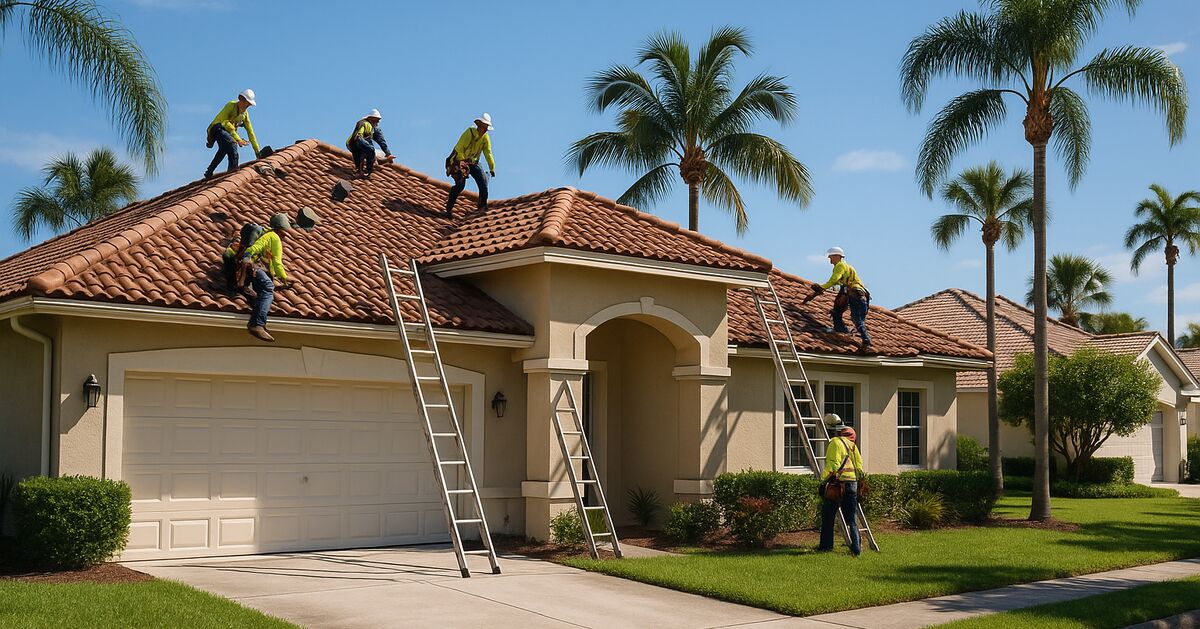
Two neighbors sharing a fence can sit in two completely different regulatory worlds when it comes to replacing a roof. If your home is in Port Charlotte, the rules that govern your permit, your inspection schedule, and even your contractor's paperwork obligations are set by Charlotte County's Building Construction Services division. If your home is in Sarasota or Lakewood Ranch, the Sarasota County Building Department or the City of Sarasota's own permitting office calls the shots. These agencies operate under the same statewide umbrella - the Florida Building Code - but they interpret, supplement, and enforce that code in ways that matter to you as a homeowner.
This post walks through the real differences, county by county, so you can go into your project without surprises.
Why two neighboring counties can have different roofing rules at all
Florida's building code system works in layers. The Florida Building Code, administered by the Florida Department of Business and Professional Regulation (DBPR), sets a minimum standard for every county in the state. Local jurisdictions are then allowed to adopt local amendments that raise the bar above that minimum - they cannot go below it, but they can go further.
On top of that, each county operates its own building department with its own staff, its own permit application portal, its own fee schedule, and its own inspection pipeline. The difference between Port Charlotte and Sarasota is not that one county ignores the Florida Building Code. Both follow it. The difference is in the local amendments, the administrative procedures, and the volume of work flowing through each office at any given time.
Wind speed maps are also jurisdiction-specific. Per the Florida Building Code (8th Edition), the design wind speed for a given address is determined by its location on the state's wind speed contour maps. Charlotte County and Sarasota County both contain areas designated as Risk Category II with design wind speeds ranging from 130 mph to 160 mph closer to the coast, but the exact contour lines do not trace county borders. This means a home in Port Charlotte near the Peace River and a home in Englewood near Lemon Bay might sit on different contour lines even though they're geographically close. Your contractor needs to confirm the specific design wind speed for your address before submitting drawings.
What Charlotte County's Building Construction Services requires for a roof permit
Charlotte County's Building Construction Services office handles permitting for unincorporated areas of the county, which includes Port Charlotte. Here is what a typical re-roofing permit application requires:
- A completed permit application with the property address, contractor license number, and scope of work clearly described.
- Contractor licensing verification. Florida requires roofing contractors to hold a state-issued license (either a Certified Roofing Contractor license or a Registered Roofing Contractor license). Charlotte County checks this during the application review. The contractor's license must be in good standing with the DBPR at the time of application.
- Product Approvals. Any roofing material used must carry a Florida Product Approval (FL number) issued through the DBPR's system, or a Miami-Dade Notice of Acceptance (NOA) for products reviewed by Miami-Dade County's product approval office. Charlotte County plan reviewers will verify that the submitted FL numbers match the materials being installed.
- A Roofing Permit Application with a signed Uniform Mitigation Verification Instrument (UMVI) or equivalent wind mitigation documentation if the project will change the roof's wind-mitigation characteristics.
- Permit fees. Charlotte County calculates permit fees based on the project's declared construction value. For a full re-roof, this typically means a percentage of the total job cost, but the exact fee schedule is published on Charlotte County's Building Construction Services portal and can change annually.
Inspections in Charlotte County for a re-roofing project generally include a dry-in inspection (once the underlayment is installed but before final covering) and a final inspection. If decking is being replaced, there may be an additional nail-pattern or decking inspection required before dry-in.
What Sarasota County and the City of Sarasota require
Sarasota County's Building and Development Services department handles permits for unincorporated Sarasota County, which covers a large geography including Nokomis, Osprey, and much of the Lakewood Ranch area that falls within county (rather than city of Sarasota) jurisdiction. The City of Sarasota has its own building department for properties within city limits.
The core document requirements overlap significantly with Charlotte County because both are anchored to the Florida Building Code. However, there are procedural and fee-structure differences:
- Online permitting portals differ. Sarasota County uses its own online portal (CSS - Citizen Self-Service). Charlotte County has its own separate system. Contractors who work across both counties must maintain active logins and familiarity with both platforms. A contractor who primarily works in Charlotte County may need extra lead time to navigate Sarasota's system for the first time, and vice versa.
- Plan review timelines. Sarasota County's building department has, according to local contractors, seen higher permit volume in recent years, particularly since the construction surge of 2020-2022. As noted in our earlier post on the Lakewood Ranch construction boom and what it means for your roof replacement, permit queues in that corridor can extend the timeline meaningfully. Charlotte County has its own volume pressures, particularly after storm events, but the day-to-day baseline queue tends to differ from Sarasota's.
- Local amendments. The City of Sarasota has adopted local amendments to the Florida Building Code that address historic districts and coastal overlay zones. Properties in Downtown Sarasota or near Siesta Key may face additional review for materials that affect visual character or coastal resilience.
- Re-roofing vs. repair thresholds. Both counties follow the Florida Building Code's 25 percent rule: if you are replacing more than 25 percent of the roof area within a 12-month period, the entire roof must be brought into compliance with the current code. This rule applies identically in both counties. Where interpretation differences can emerge is in how inspectors measure "roof area" on complex hip-and-valley roofs or on buildings with attached structures like lanais.
The wind mitigation documentation difference that matters most
Wind mitigation documentation is where the practical impact on homeowners is most felt. Both counties require that re-roofing work be performed to current wind-load standards, and both require a licensed inspector to verify the finished work with a Uniform Mitigation Verification Instrument (commonly called a wind mitigation report) if you want your insurer to recognize the upgrade.
But the order of events and who initiates the UMVI can feel different between the two counties, and this creates confusion. In Charlotte County, some homeowners have reported that their insurer requests the UMVI be submitted alongside the permit application documentation, while in Sarasota County, the UMVI is typically completed after the final inspection is passed and then submitted separately to the insurer. This is not a code difference - it is an insurer preference layered onto permit process. Your contractor should coordinate with your insurance agent before breaking ground so you know exactly what documentation your insurer will require and when.
For a deeper look at how the hip roof shape affects your insurance credit, see our post on what Sarasota County's hip roof discount really means for your insurance bill. The same credit logic applies to Charlotte County properties, but the specific discount percentage depends on your individual insurer's rating structure, not the county's rules.
Flood zone overlays and how they interact with roofing permits
Both Sarasota and Charlotte counties contain a significant number of properties in FEMA-designated Special Flood Hazard Areas (SFHAs). Flood zone designation does not directly control which roofing materials you use, but it does affect the overall scope of code compliance when you are doing substantial work on a structure.
If your re-roofing project is part of a larger renovation and the total cost of the renovation triggers "substantial improvement" thresholds (typically 50 percent of the structure's market value under FEMA's National Flood Insurance Program rules), the entire structure may need to be brought into current floodplain management standards. This threshold calculation is handled by each county's floodplain administrator, and the process differs in timing and documentation between Charlotte County and Sarasota County's offices.
We have covered this intersection in more detail in our post on re-roofing and flood insurance ratings in Sarasota and Charlotte County flood zones. If your address falls in an AE, VE, or X-500 flood zone, it is worth a quick call to your county's floodplain administrator before you sign a roofing contract, just to confirm whether your project could trigger a substantial improvement review.
Contractor licensing: what is the same and what is not
Florida contractor licensing is state-level, so a Certified Roofing Contractor licensed by the DBPR can legally pull permits in both Charlotte County and Sarasota County without any additional local license. This is one area where the two counties are genuinely identical: the state license is the license.
However, both counties require that the licensed contractor be the entity of record on the permit - not a subcontractor, not a salesperson, and not the homeowner's name if the homeowner is not a licensed contractor. A common problem reported by homeowners in both areas is discovering mid-project that a company they hired handed the actual work off to an unlicensed crew while keeping the licensed contractor's name on paper only. Both Charlotte and Sarasota county inspectors are trained to verify the contractor of record is actually supervising work on-site.
If you are evaluating contractors, our roofing services page outlines what to look for in a licensed crew, and you can also browse frequently asked questions about the permit process for more detail on license verification.
Permit fees: a real-world comparison
Neither Charlotte County nor Sarasota County publishes a single flat fee for a re-roofing permit. Both use a value-based fee schedule, meaning the permit fee scales with the declared construction value of the job. This creates a built-in alignment of incentives for homeowners to make sure the declared value is accurate - underdeclaring construction value to reduce the permit fee is a violation that can complicate your insurance claim and your certificate of occupancy.
That said, the fee schedules themselves are structured differently. Sarasota County uses a tiered valuation table with a base fee plus an incremental rate above certain value thresholds. Charlotte County uses a similar structure but with different tier breakpoints and rates. For a typical residential re-roof, the permit fees in both counties are a relatively small fraction of the overall project cost, but on large tile or metal roofs, the difference in fee structures can produce a noticeable difference in the permit fee line item.
The administrative fees around permits (like zoning review fees, technology fees, or inspection fees for re-inspections) also differ between the two counties. Your contractor should itemize permit costs as a separate, transparent line in your estimate rather than rolling them into a lump sum.
What this means for your project timeline
If you are getting quotes and comparing timelines across contractors serving both Port Charlotte and Sarasota, be aware that the permit-to-start timeline can differ by a week or more depending on the county's current review queue. Contractors experienced in both markets often report that Charlotte County's reviews tend to run a bit faster during non-storm periods, while Sarasota County's higher construction volume has sometimes stretched residential permit reviews.
After a major storm event, both counties can see permit applications surge dramatically and review timelines lengthen. This is when the temptation to skip the permit process is highest - and when the consequences of doing so are also highest, because un-permitted roofing work can create serious problems for your property insurance coverage and for future home sales.
Homeowners in Bradenton should note that the City of Bradenton has its own building department separate from Manatee County's, and properties on Anna Maria Island fall under different coastal construction requirements still. Always confirm which jurisdiction governs your specific address before assuming a neighbor's permit experience will match yours.
A few practical takeaways for homeowners
- Ask your contractor which county your permit will be filed in and confirm they have active experience in that county's specific portal and process. A contractor who rarely works in Charlotte County may underestimate the permit timeline or miss a local procedural requirement.
- Verify your wind speed zone for your specific address, not just the county average. Your contractor's design documents need to reflect the correct design wind speed.
- Get the permit fee itemized separately in your estimate so you can see what you are actually paying for.
- Coordinate your wind mitigation report timing with your insurance agent before work begins, so there is no gap in coverage and no scramble for documentation after final inspection.
- Do not assume the 25 percent rule works the same way across inspectors. If your project is close to that threshold, ask your contractor to document the measurement methodology in writing.
For homeowners comparing notes across the county line, the big picture is this: both jurisdictions take roofing permits seriously, both enforce the Florida Building Code, and both require licensed contractors and approved materials. The differences are real but navigable when your contractor knows the local terrain. If you have questions specific to your address or your project, our contact page is the quickest way to get a straight answer from someone who works in both counties regularly.
Sources & further reading
- Florida Building Code, 8th Edition - Building (Florida Department of Business and Professional Regulation)
- Contractor Licensing and Verification (Florida Department of Business and Professional Regulation)
- Florida Product Approval System (Florida Department of Business and Professional Regulation)
- Federal Emergency Management Agency (named in this article) (Federal Emergency Management Agency)
Claim-by-claim audit (8 checked)
- “Charlotte County and Sarasota County both contain areas designated as Risk Category II with design wind speeds ranging from 130 mph to 160 mph closer to the coast, but the exact co…” (cited → floridabuilding.org)
- “Both counties follow the Florida Building Code's 25 percent rule: if you are replacing more than 25 percent of the roof area within a 12-month period, the entire roof must be broug…” (cited → floridabuilding.org)
- “Sarasota County's building department has, according to local contractors, seen higher permit volume in recent years, particularly since the construction surge of 2020-2022.” (rewritten to what the article can stand behind)
- “If your re-roofing project is part of a larger renovation and the total cost of the renovation triggers "substantial improvement" thresholds (typically 50 percent of the structure'…” (cited → fema.gov)
- “underdeclaring construction value to reduce the permit fee is a violation that can complicate your insurance claim and your certificate of occupancy.” (reasoning shown in the article)
- “un-permitted roofing work can create serious problems for your property insurance coverage and for future home sales.” (reasoning shown in the article)
- “Contractors experienced in both markets often report that Charlotte County's reviews tend to run a bit faster during non-storm periods, while Sarasota County's higher construction …” (rewritten to what the article can stand behind)
- “After a major storm event, both counties can see permit applications surge dramatically and review timelines lengthen.” (reasoning shown in the article)