
Roof Replacement & Re-Roofing
A full new roof, engineered for Gulf-Coast sun, wind, and rain - and built to pass Florida code.
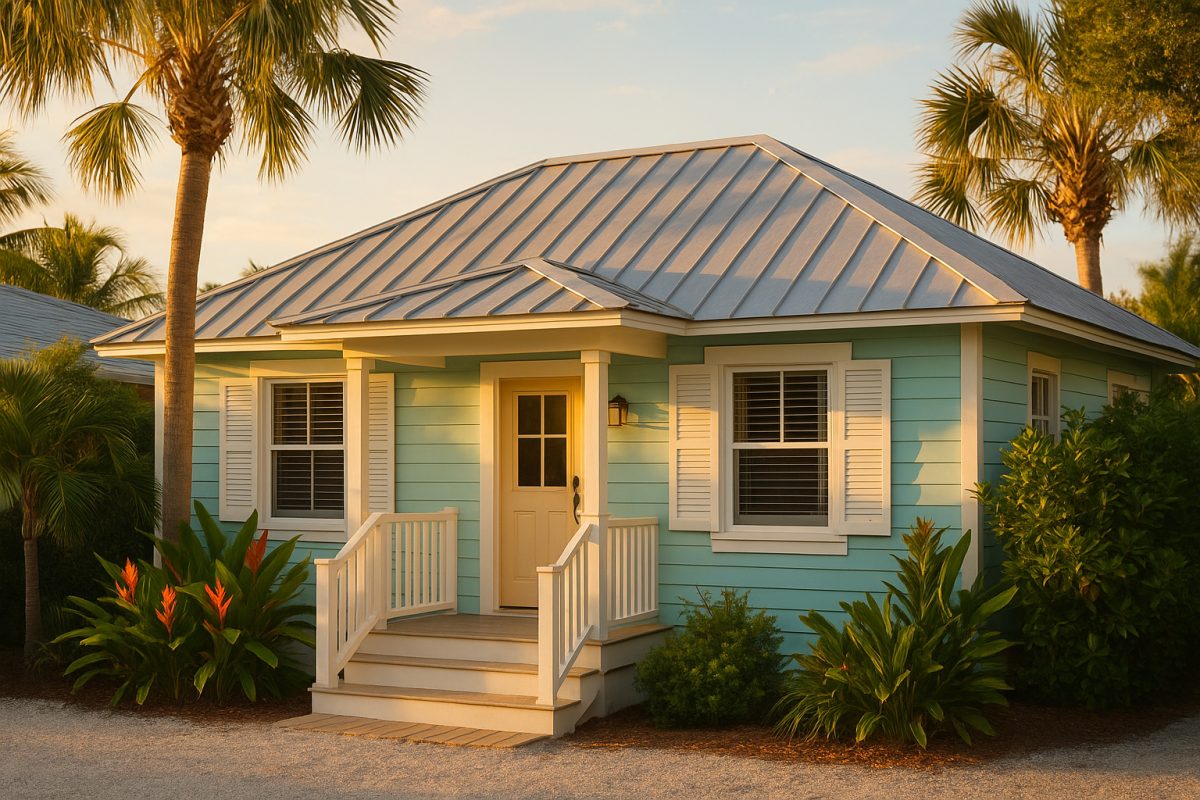
Roofing on Anna Maria Island - coastal metal and tile built for the full barrier-island beating of salt, sun, wind, and Gulf storms.
Anna Maria Island is the barrier island off Bradenton, and it's made up of three small cities strung along seven miles of sand - Anna Maria at the north end, Holmes Beach in the middle, and Bradenton Beach to the south. It's quintessential old Florida: pastel beach cottages, a laid-back, walkable, beach-town pace, and streets that feel like a different decade. That character is exactly what people come for, and it's worth protecting - starting with the roof over it.
What makes the island its own kind of roofing job is the exposure. This is a narrow strip of land with the Gulf on one side and the bay on the other, so a roof here takes salt air, full unbroken sun, steady wind, flood risk, and the direct hit of any storm that comes ashore off the water - all at once, all year. A roof that would coast along for decades a few miles inland on the mainland lives a much harder, shorter life out here unless it was chosen and built for that beating.
The island also runs on vacation rentals. A huge share of these cottages are booked much of the year and expensive to take offline, which changes the whole roofing conversation. An Anna Maria roof isn't just protecting a structure - it's protecting an income property, and a leak or a blown-off section can interrupt a booking calendar overnight. Owners here can't afford a roof that fails early, and they can't afford weeks of downtime while it gets sorted out.
That's why metal roofs are everywhere on the island. Standing-seam and other metal systems handle salt and Gulf wind far better than budget shingle, they suit the beach-cottage look, and installed right they can outlast the mortgage. Tile shows up on the higher-end homes and holds up well too. Both work beautifully here when they're specified and detailed for the coast - and both fail early when they're not, because the material is only half the story out on a barrier island.
The catch with coastal metal is the install, not the metal. Salt attacks a poorly-built roof from the edges in - through cheap fasteners and sloppy flashing - long before the field of the roof gives up, and wind finds any edge that wasn't detailed and fastened right. Get the corrosion-resistant fasteners and the clean edge and flashing detailing right and a metal roof delivers the decades it promises; get them wrong and you've bought an expensive roof you'll pay for twice. Many island homes are also elevated, which adds its own access and detailing considerations to the work. We're local, licensed, and insured, we work this coast year-round, and - unlike the mainland crews that show up a week late after a storm - we'll be here fast when it matters and here for the warranty long after.
On Anna Maria, a metal roof lives or dies on its fasteners and flashing. Salt corrodes anything that isn't corrosion-resistant, pitting and chalking hardware and eating a roof from the edges in, and it does its worst damage at the edges, valleys, and penetrations where wind-driven spray collects. Wind uplift - the real hurricane threat on a barrier island, since nothing stands between these homes and a storm off the Gulf - then pulls hardest at those same edges. We break that chain by installing coastal metal the way the island demands: corrosion-resistant fasteners and flashing, enhanced wind-uplift fastening, and clean detailing at every edge and penetration, so the roof actually delivers the decades of life metal promises.
Because so much of the island is rentals, we also plan re-roofs around the booking calendar. A job here can't drag on indefinitely when every dark week is lost income, so we schedule tightly, keep the property dried-in and protected the whole time, and move with the urgency an income property deserves. And when a storm does hit, being genuinely local means we're on the island fast for an emergency dry-in - a secured tarp or patch to stop water getting in - not a mainland crew arriving a week late to a cottage that's already taken water.
Standing-seam and other metal systems are the Anna Maria workhorse, and for good reason: installed correctly with corrosion-resistant fasteners and clean edge detailing, metal shrugs off salt and Gulf wind and can outlast the mortgage. But "installed correctly" is the entire game this close to the water. A coastal metal roof lives or dies on its fasteners and its edge and penetration detailing, so we specify corrosion-resistant hardware, detail every edge cleanly, and fasten to enhanced wind standards - because a metal roof done cheap out here doesn't save money, it just fails from the edges in and costs you the whole thing again.
Tile - concrete and clay - appears on the island's higher-end homes and holds up well against sun and salt when it's detailed for the coast, though it brings the catch our climate makes unavoidable everywhere: the waterproof underlayment beneath the tile wears out long before the tile does, so an island tile roof can leak while every tile still looks perfect. When that happens the smart move is often a lift-and-relay - pulling the tile, replacing the failed underlayment, and resetting the same tile - rather than paying for a whole new roof, and near the water we pair it with corrosion-resistant fasteners and flashing so the refreshed roof actually lasts.
A full new roof, engineered for Gulf-Coast sun, wind, and rain - and built to pass Florida code.
Leaks, missing shingles, cracked tiles, flashing failures - found fast and fixed right.
Emergency tarping, honest damage assessment, and help documenting your insurance claim.
Free, no-pressure inspections for buyers, sellers, insurers, and peace of mind.
When a coastal metal roof fails early, it's almost never the metal - it's the fasteners and flashing. Salt attacks anything that isn't corrosion-resistant and works a roof from the edges in, and wind finds any edge that wasn't detailed and fastened right. We prevent it by specifying corrosion-resistant hardware, detailing every edge, valley, and penetration cleanly, and fastening to enhanced wind standards, so the roof delivers the decades of life metal actually promises out here.
Yes - that's the norm here, not the exception. So much of the island is rentals that we plan re-roofs around the booking calendar, because every dark week is lost income. We schedule the work tightly, keep the property dried-in and protected the whole time so it's never exposed, and move with the urgency an income property deserves, with the goal of getting you back to rentable as fast as a quality coastal roof can honestly be installed.
Both beat budget shingle on a barrier island, and the right choice comes down to your home and your budget. Metal is the island workhorse - it handles salt and Gulf wind exceptionally well, suits the beach-cottage look, and can outlast the mortgage. Tile gives you a more upscale look and holds up well too, though its underlayment will need refreshing along the way. We'll look at your home, your exposure, and your budget and give you a straight recommendation rather than pushing one over the other.
It matters a lot out here. Salt air corrodes fasteners and flashing, pits and chalks older metal, and shortens the life of anything that isn't rated and installed for coastal exposure - and it does its damage at the edges, valleys, and penetrations where wind-driven spray collects. That's why an island roof is judged at its edges, not its middle, and why we use corrosion-resistant materials and obsess over the detailing at every edge and penetration.
Wind uplift - the wind getting under the roof at the edges and peeling it off - is the threat that matters most on a barrier island, because nothing stands between your home and a storm coming ashore off the Gulf. We install to enhanced fastening standards so the roof stays attached when it's tested, and we pay special attention to the edges and corners where uplift forces are highest. That same enhanced fastening is also what earns your wind-mitigation insurance credits.
It can. A documented, code-compliant roof installed to enhanced wind standards earns wind-mitigation credits, and on a barrier island - where carriers scrutinize roof age and coastal condition hardest - those credits are exactly the ones worth capturing. We install to those standards and make sure you get the right wind-mitigation report, so the roof both stays on in a storm and helps hold down a premium.
Yes. Plenty of island homes are elevated, and it's a normal part of coastal work for us. It affects access and how we stage and detail the job, but it doesn't change the fundamentals - corrosion-resistant materials, enhanced fastening, and clean edge and flashing detailing built for barrier-island exposure. We plan for the elevation and the site so the work is done safely and correctly.
Yes on both. We're a fully licensed and insured Florida roofing contractor, and we work this coast year-round rather than driving in from out of state after a storm. That matters most on Anna Maria after weather comes ashore, when out-of-town crews flood the island and then vanish. We're here fast for an emergency dry-in when it counts, and we're here for the warranty long after the chasers have moved on.
We're not a storm-chasing outfit passing through Anna Maria Island. We live and work on the Suncoast year-round, we're licensed and insured, and our name is on every roof we build.