
Roof Replacement & Re-Roofing
A full new roof, engineered for Gulf-Coast sun, wind, and rain - and built to pass Florida code.
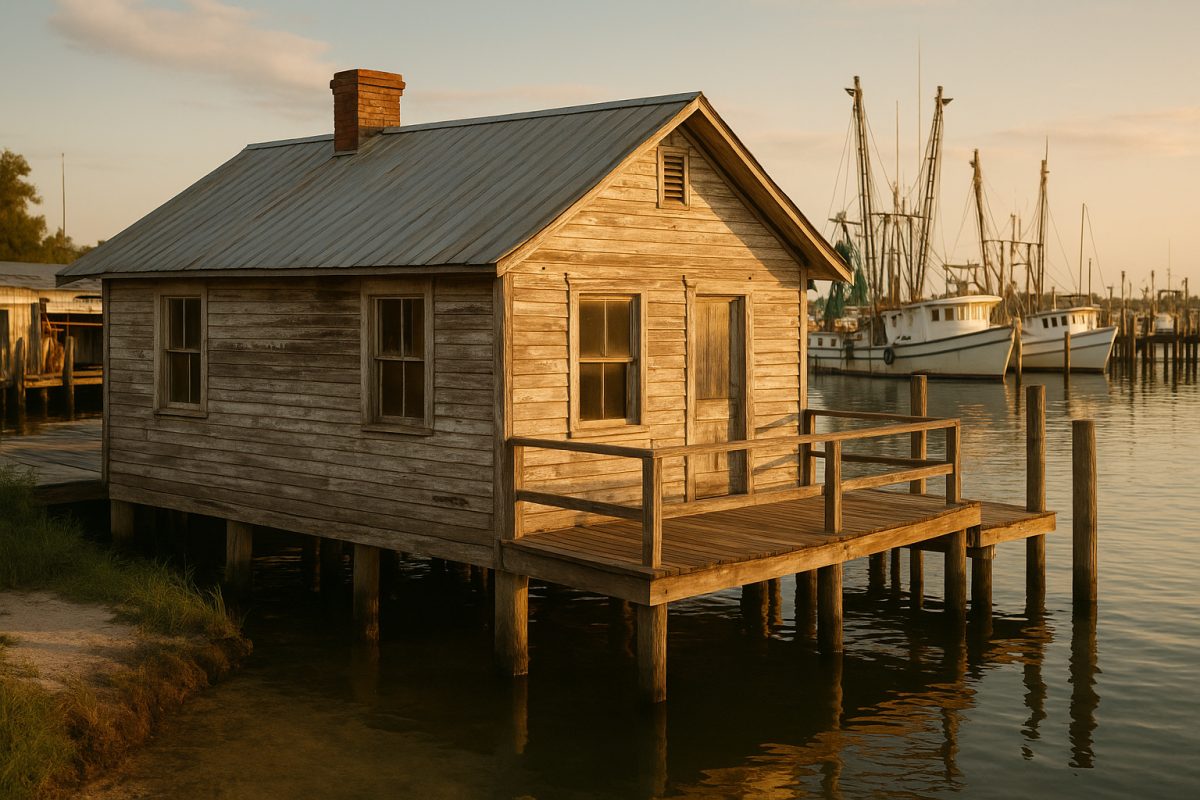
Roofing for Cortez - honest, weather-ready work on one of Florida's last genuine working fishing villages.
Cortez is not like anywhere else we roof. It's one of the last real commercial fishing villages left in Florida - a still-working waterfront on the western edge of Bradenton, where the boats go out, the fish houses run, and the streets are lined with weathered cottages and outbuildings that have stood here for generations. It's humble, affordable, and full of character in a way you can't fake. People don't come to Cortez for fancy; they come for the real thing. And roofing here means respecting that - keeping the water out without stripping away the honest, salt-worn look that makes the place what it is.
The defining fact about a Cortez roof is that it sits right on the water. This isn't a home a mile inland that gets a little coastal air on a windy day - this is a village on Sarasota Bay and the intracoastal, where salt is in the wind every single day. That relentless salt is hard on a roof in ways a lot of people underestimate: it corrodes fasteners, it eats away at flashing, and it pits and chalks older metal from the edges in. A roof that would last for decades a few miles inland gives up far sooner out here if it wasn't built and installed for this kind of exposure.
A lot of Cortez roofs are also simply older. This is a village that values what works and what lasts, not what's new, so it's common to find cottages and waterfront buildings wearing roofs that have been on for a long time. Age and salt together are a tough combination - an older roof that's been taking salt for years is often closer to the end of its useful life than it looks from the ground, and the honest thing a roofer can do is tell you plainly where yours actually stands rather than sell you something you don't need.
Being right on the water also means Cortez takes the full force of a storm. There's no buffer between the village and the Gulf weather that comes across the bay, so wind and wind-driven rain hit these roofs directly. And when a roof this close to the water gets breached - a lifted panel, a failed seam, a torn edge - it doesn't stay a roof problem for long. Water gets inside fast, and a small opening becomes interior damage before you know it. That's why fast response matters so much here, and why being genuinely local instead of a crew driving in from out of the area is the difference between a quick dry-in and a ruined ceiling.
So the balance in Cortez is a specific one: preserve the character of a village that has earned it, keep the relentless salt and storm water out, and be here fast when the weather does its worst. We're local, licensed, and insured, we know exactly what this waterfront does to a roof, and we'll be here for the warranty long after the job is done - not gone with the next tide like the storm-chasing crews that show up after a hurricane and vanish.
The defining Cortez roof problem is salt, and it starts at the edges. This close to the water, salt attacks anything that isn't built to resist it - it corrodes fasteners until they lose their grip, works at flashing and edge metal until they fail, and chalks and pits older metal roofs from the perimeter in. That's why we steer Cortez homeowners toward corrosion-resistant materials and obsess over the fasteners, flashing, valleys, and penetrations where salt-driven failure actually begins. A roof out here doesn't usually fail in the middle of a nice flat run; it fails at a detail somebody rushed, and on a working waterfront those details are the whole game.
The other reality is that storms come ashore hard and a breached roof becomes an interior problem fast. With no buffer between the village and the Gulf, wind and driven rain hit these roofs straight on, and a lifted panel or torn seam lets water inside in a hurry. When that happens we prioritize an emergency dry-in - a secured tarp or patch to stop the water - and because we're genuinely local, we can get there before a small opening turns into ruined decking and ceilings. We handle older roofs the same honest way: if a roof that's been taking salt for years is genuinely at the end of its life, we'll tell you it's time rather than patch it forever, and if it has good years left, we'll say that too.
Metal is the honest answer in Cortez, and it always has been. Standing-seam and other metal systems stand up to salt and wind far better than budget shingle, and they suit the weathered, workmanlike character of the village in a way a slick suburban roof never would. Installed with corrosion-resistant fasteners and clean, careful edge detailing, a metal roof out here can last for decades and shrug off the salt that eats lesser roofs alive - but this close to the water, "installed correctly" is the entire difference between a roof that lasts and one you pay for twice.
Plenty of Cortez cottages and outbuildings also wear shingle, and for many of them a quality, high-wind-rated shingle roof is a sound, affordable choice that keeps costs down without pretending to be something it's not. We install shingle to Florida code and enhanced fastening standards so it holds in a blow, and for the flat and low-slope sections these older buildings often have - porches, add-ons, and outbuilding roofs - we install membrane and coating systems that keep water out by draining properly rather than relying on pitch.
A full new roof, engineered for Gulf-Coast sun, wind, and rain - and built to pass Florida code.
Leaks, missing shingles, cracked tiles, flashing failures - found fast and fixed right.
Emergency tarping, honest damage assessment, and help documenting your insurance claim.
Free, no-pressure inspections for buyers, sellers, insurers, and peace of mind.
It's the single biggest factor out here. Being right on the water means salt is in the wind every day, and it corrodes fasteners, eats at flashing and edge metal, and pits and chalks older metal roofs from the edges in. A roof that isn't built and installed for this exposure gives up years sooner than it would inland. That's why we use corrosion-resistant materials in Cortez and obsess over the edges, flashing, and penetrations where salt-driven failure actually starts.
Because it stands up to what Cortez throws at a roof. Standing-seam and other metal systems handle salt and Gulf wind far better than budget shingle, and they fit the honest, weathered character of the working waterfront. Installed with corrosion-resistant fasteners and careful edge detailing, metal out here can last decades. The catch is that this close to the water, it has to be installed correctly - get the fasteners and flashing wrong and salt undoes it from the edges no matter how good the panel looked on paper.
Yes - that's exactly how we approach Cortez. The whole point out here is keeping the water and salt out without stripping away the honest, salt-worn look that makes the village what it is. We match the roof to the building and the place rather than stamping a generic suburban roof onto a cottage that has earned its character, and we keep the details clean and appropriate to a working waterfront.
Fast - and that matters more here than almost anywhere, because there's no buffer between the village and Gulf weather. We're genuinely local, not a crew driving in from out of the area after a storm, so we can get out quickly to do an emergency dry-in - a secured tarp or patch - before a breached roof turns into water inside the house. Then we do a thorough, photographed inspection you and your insurance adjuster can rely on.
A lot of roofs out here are older, and years of salt exposure age a roof faster than most people expect, so an older Cortez roof is often closer to the end of its life than it looks from the ground. The only honest way to know is to have it inspected. We come out, look at it straight, and tell you plainly whether you have good years left or whether it's smarter to plan a replacement before salt or a storm forces the timing.
It depends on the roof's real condition, and we'll give you a straight answer either way. If the roof is sound overall and the problem is localized - a section of failed flashing, a lifted panel, a leak at one penetration - a repair is the honest, cheaper fix and we'll tell you so. But if it's an older roof that salt has worked over for years and it's genuinely near the end, patching it just delays a replacement you'll pay for anyway. We tell you which situation you're actually in, with no pressure.
Yes. Cortez is a humble, working village, not a fancy one, and we price and spec our work that way. For many cottages and outbuildings a quality, high-wind-rated shingle roof is a sound, affordable choice, and where metal makes more sense for the salt exposure, we'll explain the trade-off honestly so you can decide. We give you a clear written quote for free and won't upsell you into a roof you don't need.
Yes - we're a fully licensed and insured Florida roofing contractor, and we work throughout Cortez, Bradenton, and the rest of Manatee County year-round. That matters most on a working waterfront after a storm, when out-of-town crews roll through chasing insurance money and then disappear. We're local, we stand behind our work, and we'll be here for the warranty long after the job is done.
We're not a storm-chasing outfit passing through Cortez. We live and work on the Suncoast year-round, we're licensed and insured, and our name is on every roof we build.