
Roof Replacement & Re-Roofing
A full new roof, engineered for Gulf-Coast sun, wind, and rain - and built to pass Florida code.
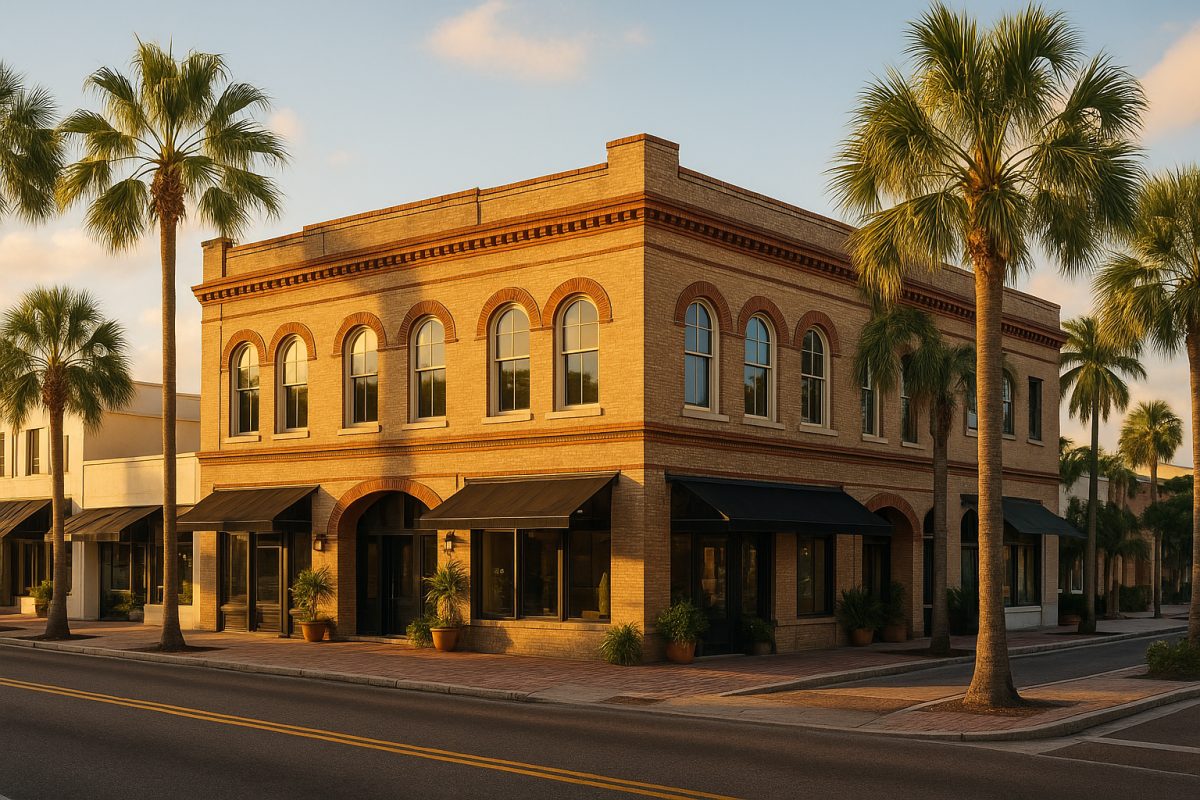
Roofing for Downtown Sarasota's flat-roofed low-rises, mid-rise condos, and the historic bungalows of Burns Court and Laurel Park.
Downtown Sarasota is the walkable urban core, and it roofs like one. Instead of block after block of pitched suburban homes, you get historic low-rise commercial buildings along Main Street and Palm Avenue, mid-rise condo towers, and - tucked just off the center - the small older bungalows of Burns Court and Laurel Park and the reinvented streets of the Rosemary District. That mix means the roofing work down here looks nothing like a re-roof in Gulf Gate or Palmer Ranch, and treating it the same way is how buildings end up leaking.
The single defining fact about downtown is that a large share of these roofs are flat or low-slope, which is a genuinely different craft than a pitched roof. A pitched roof keeps water out by shedding it fast down a steep slope; a flat roof has nowhere to shed it to, so it relies on a continuous waterproof membrane and proper drainage to move water off the roof before it can find a way in. Different problem, different materials, different skill set - and plenty of crews who are good on pitched shingle are out of their depth on a flat commercial roof.
On the older downtown buildings, the trouble is almost never one dramatic failure. It's the slow accumulation of decades of patches layered on top of each other, added rooftop equipment - HVAC units, condensers, vents - that punched new penetrations through the membrane, tired seams that have baked in the sun for years, and ponding, which is water that sits in a low spot after rain and works through a seam instead of draining away. Any one of those is manageable; a roof carrying all four at once is a roof living on borrowed time.
The historic bungalows nearby ask for a lighter, more careful hand. Burns Court and Laurel Park are full of small character homes that have stood for the better part of a century, and roofing them well means keeping the weather out without stamping a generic suburban roof onto a building that has earned its look. We treat these homes as what they are - worth preserving - and match our work to the character rather than fighting it.
And because so much of downtown is condos and shared buildings, the job often comes with a layer the suburbs don't have: condo or HOA approval. A roof over a mid-rise or a shared low-rise usually means a board, a budget, and a set of appearance and documentation requirements before anyone sets foot on the roof. We're used to working inside that process - providing the scope, materials, and paperwork an association needs - so the actual roofing isn't held up by the approval side. We're local, licensed, and insured, we live and work here year-round, and we'll be here for the warranty long after the job wraps.
The classic downtown problem is ponding - water that sits on a low-slope roof after a rain instead of draining, quietly working at a seam until it finds a way in. The mistake is treating the wet spot inside as the problem; the wet spot is the symptom. We diagnose why the water is pooling in the first place - a clogged or undersized drain, a deck that has sagged into a low spot, a failed taper that no longer slopes water toward the outlets - and fix that cause. Chase the leak without fixing the drainage and you'll be back up on the same roof next rainy season.
The other recurring downtown story is the roof that has simply been patched too many times. Older commercial buildings tend to accumulate repairs - a dab here after one leak, a new penetration there when an HVAC unit went in - until the roof is a quilt of mismatched patches and tired seams with no single sound surface left. At that point another patch just buys a month. We'll tell you honestly when a roof still has good life and a targeted repair makes sense, and when the smarter money is a clean membrane replacement that resets the whole surface at once.
Rooftop equipment is its own downtown challenge. Every HVAC curb, condenser, vent, and pipe is a place where the membrane has been cut and re-sealed, and those details are where flat roofs leak first. We detail carefully around the equipment older buildings accumulate - flashing the curbs and penetrations properly rather than smearing sealant and hoping - because a flat roof is only as watertight as its weakest penetration.
For the flat and low-slope roofs that define downtown, we install and repair modified-bitumen, TPO, and coating systems - the three workhorses of commercial and low-slope roofing. Modified-bitumen is a tough, multi-layer membrane well suited to buildings with heavy foot traffic and lots of rooftop equipment; TPO is a single-ply membrane that reflects heat and welds into continuous watertight seams; and roof coatings can extend the life of a sound existing membrane by sealing it and adding a reflective, waterproof layer. Which one is right depends on the roof's condition, its drainage, and how much rooftop equipment it carries - and we'll walk you through the trade-offs honestly rather than defaulting to whatever's easiest for us.
On the historic bungalows of Burns Court and Laurel Park, the roofing shifts back toward pitched systems - architectural shingle, and in places tile or metal - and the priority shifts toward preserving character. Here the job is a careful replacement or repair that keeps a century-old home watertight without erasing the look that makes the neighborhood what it is. Whether it's a flat membrane on a Main Street low-rise or a pitched roof on a Burns Court cottage, we install to Florida code and stand behind the work.
A full new roof, engineered for Gulf-Coast sun, wind, and rain - and built to pass Florida code.
Leaks, missing shingles, cracked tiles, flashing failures - found fast and fixed right.
Emergency tarping, honest damage assessment, and help documenting your insurance claim.
Free, no-pressure inspections for buyers, sellers, insurers, and peace of mind.
Yes - flat and low-slope work is a core part of what we do downtown. Many of Downtown Sarasota's low-rise commercial buildings and mid-rise condos have flat roofs that keep water out with a membrane and proper drainage rather than pitch, and we install and repair modified-bitumen, TPO, and coating systems built for exactly that. It's a genuinely different craft than a pitched suburban roof, and it's one we specialize in.
It can be. Water that sits on a low-slope roof after a rain instead of draining is called ponding, and over time it works at the seams until it finds a way through. The fix isn't just to patch where it leaks - it's to find why the water is pooling, whether that's a clogged drain, a sagging deck, or a failed taper, and correct the drainage. We diagnose the cause so the ponding stops instead of just chasing the leak.
Yes, and it's one of the most common downtown calls we get. Every rooftop unit, curb, vent, and pipe is a spot where the membrane was cut and re-sealed, and those penetrations are where flat roofs leak first. We re-flash and detail around the equipment properly rather than smearing on sealant, because a flat roof is only as watertight as its weakest penetration.
Yes, and we treat them with the care an older home deserves. The small character bungalows around Burns Court and Laurel Park have stood for the better part of a century, and roofing them well means keeping the weather out without stamping a generic suburban roof onto them. We match the work to the home's character and account for the surprises older buildings tend to hide.
It depends on your roof's condition, its drainage, and how much rooftop equipment it carries. Modified-bitumen is a tough multi-layer membrane that suits buildings with heavy foot traffic and lots of penetrations; TPO is a single-ply membrane that reflects heat and welds into continuous seams; and a coating can extend the life of a sound existing membrane. We inspect the roof and walk you through the trade-offs honestly rather than defaulting to one answer.
We'll give you a straight answer after we look at it. If the roof is sound overall and the trouble is localized, a targeted repair is the honest, cheaper fix. But older commercial roofs often accumulate so many mismatched patches and tired seams that there's no good surface left, and another patch just buys a month. When that's the case, a clean membrane replacement that resets the whole roof is the smarter money, and we'll tell you which situation yours is actually in.
It depends on the size of the roof, the membrane system you choose, how much old material has to come off, the condition of the deck and drainage underneath, and how much rooftop equipment has to be detailed around. A heavily patched roof with lots of penetrations takes more work than a clean, simple one. Rather than guess over the phone, we come out, inspect it, and give you a clear written quote for free.
Yes - we're a fully licensed and insured Florida roofing contractor, and we work throughout Downtown Sarasota year-round. For condo and shared buildings, we're used to working inside a board or HOA's approval process and providing the scope and documentation an association needs. We're local and here for the warranty, not an out-of-town crew that disappears after the job.
We're not a storm-chasing outfit passing through Downtown Sarasota. We live and work on the Suncoast year-round, we're licensed and insured, and our name is on every roof we build.