
Florida insurance market changes: what Sarasota homeowners need to know before replacing a roof
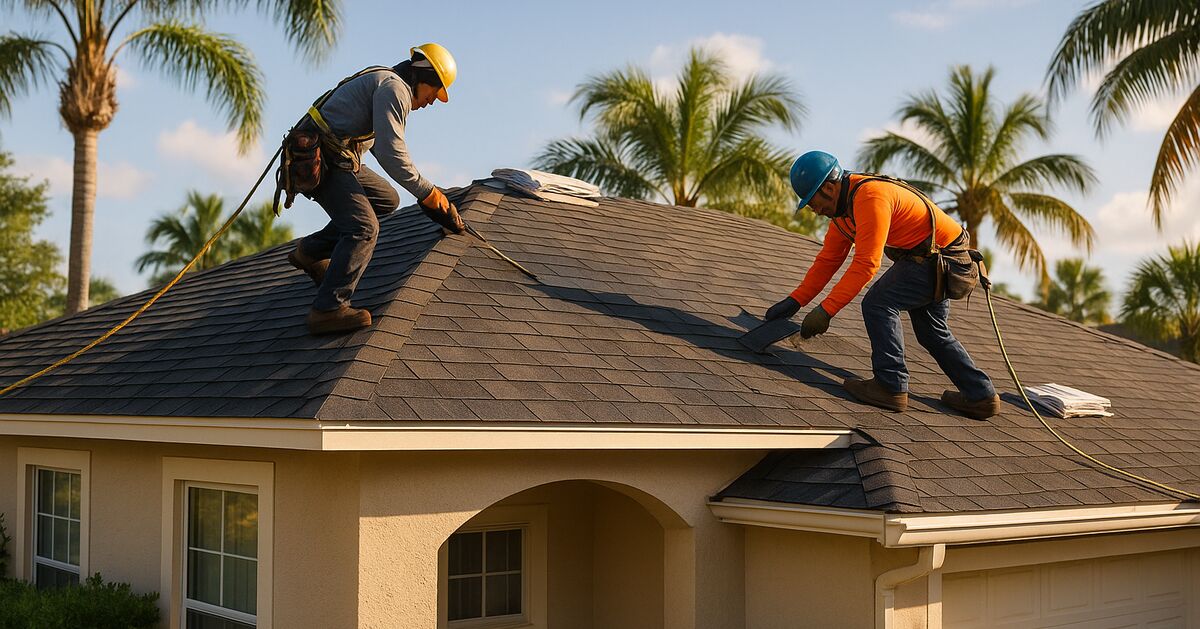
Florida's home insurance market quietly rewrote the rules on roof replacement between 2023 and 2025, and most Sarasota-area homeowners are still catching up with what that actually means for their wallets and their choices.
This isn't abstract policy talk. If you own a home in Sarasota, Bradenton, Venice, Lakewood Ranch, Englewood, or anywhere else along the Suncoast, the changes affect when you need to replace your roof, how much of the cost your insurer will cover, and what happens to your policy if you wait too long. Let's break it down clearly so you can make a confident decision.
Why the Florida Insurance Market Shifted So Dramatically
To understand the new rules, it helps to know why they exist at all. Between 2020 and 2022, Florida's property insurance market was in crisis. Several carriers went insolvent, others simply stopped writing new policies in the state, and premiums spiked dramatically for homeowners who could find coverage at all. Legislators and regulators responded with a sweeping series of reforms aimed at making the market more stable and more attractive to insurers willing to do business here.
The key legislative moments were Senate Bill 2D (passed in a 2022 special session) and then additional reforms in 2023 that tightened specific provisions around roofing. The goal was to reduce the volume of inflated or fraudulent roofing claims that had been squeezing insurers, but the ripple effects landed squarely on ordinary homeowners making completely legitimate decisions about aging roofs.
What changed? Broadly speaking, four things:
- How insurers are allowed to handle roof-age depreciation when settling claims
- The roof age thresholds that trigger policy non-renewal or refusal to bind new coverage
- The way Actual Cash Value (ACV) versus Replacement Cost Value (RCV) applies to your roof
- Assignment of Benefits (AOB) restrictions that change who can negotiate with your insurer on your behalf
The Roof Age Rules That Are Reshaping Decisions Across the Suncoast
Before the reforms, some insurers were willing to insure homes with roofs up to 20 or even 25 years old, especially if an inspection showed the roof was still in decent condition. That flexibility largely disappeared for asphalt shingle roofs.
Today, many Florida carriers set a hard ceiling of 15 years for a shingle roof to be covered under a standard homeowner's policy. Once a shingle roof crosses that threshold, insurers can require an inspection before renewal, and if the roof shows significant wear, they can non-renew the policy outright. Some carriers in the Sarasota and Bradenton markets have been doing exactly that.
Concrete and clay tile roofs get somewhat more lenient treatment because they carry rated lifespans of 30 to 50 years, and metal roofs are similarly favored. If you have a tile or metal roof, insurers are generally more willing to assess condition rather than calendar age, though a tile roof with broken or missing tiles is still going to raise flags. If you're curious about what those inspections actually examine, our post on what a roof inspection actually checks (and how often you need one) walks through every checkpoint.
The practical takeaway for homeowners in communities like Lakewood Ranch, Nokomis, and Osprey where a lot of construction happened in the late 2000s: many of those asphalt shingle roofs are now approaching or have already crossed the 15-year mark. Your insurer may already be watching the calendar.
Actual Cash Value vs. Replacement Cost: Why the Difference Now Matters More
One of the most consequential changes in the 2023 reforms concerns how insurers can value your roof at claim time. Under the old framework, many policies paid out Replacement Cost Value for the roof, meaning if a storm damaged it, your insurer would pay to replace it with a new equivalent roof minus your deductible. That was generous, and insurers argued it encouraged inflated claims.
Under the revised rules, many policies now contain language that limits roof payouts to Actual Cash Value once the roof exceeds a certain age, often around 10 years for shingles. Actual Cash Value means the replacement cost minus depreciation. On an older shingle roof, that depreciation can be substantial, leaving you responsible for a much larger out-of-pocket share than you might expect.
Here's what that means in practice: a homeowner in Venice or Englewood with a 12-year-old shingle roof that gets damaged in a named storm might receive an ACV settlement that covers only a portion of replacement costs. The gap between what the insurer pays and what a new roof actually costs falls on the homeowner.
The smart move is to read your current policy's roof-coverage section carefully, or call your insurance agent and ask directly: "How will you value my roof if I have a claim today?" Knowing whether you have RCV or ACV coverage on your roof changes the financial math significantly when you're deciding whether to replace now or wait.
Our roofing services page can give you a sense of what's involved in a full replacement so you can have an informed conversation with your agent about coverage gaps.
What Assignment of Benefits Reform Means for You
Before the AOB reforms, Florida had a practice where homeowners could sign over their insurance claim rights to a contractor, who would then deal with the insurer directly. In theory this protected the homeowner. In practice it created a wave of inflated claims and litigation, which contributed heavily to the market meltdown.
The 2023 reforms effectively ended AOB for property insurance claims. You can no longer sign away your claim rights to a roofing contractor. This means:
- You are responsible for managing your own claim and dealing directly with your insurer.
- A contractor cannot file suit against your insurer on your behalf by holding an AOB agreement.
- You have more control, but also more responsibility.
This is not necessarily a bad thing. Homeowners who understand their policy and their contractor's role are actually better protected than those who handed off the process without oversight. But it does mean you need to be more engaged. If you haven't already, it's worth reading up on how Florida building codes affect your next roof replacement, because code-compliance requirements during a replacement can affect the total cost your insurer is asked to cover.
How These Changes Affect the Timing of Your Roof Replacement Decision
Given everything above, a lot of Sarasota-area homeowners are asking the same question: should I replace my roof now, before my insurer forces the issue, or wait and see?
Here's the honest answer: if your shingle roof is 12 years old or older, the calculus has changed. Waiting until your insurer sends a non-renewal notice means you'll be shopping for a new carrier with an aging roof on your home, which is increasingly difficult and expensive in this market. Some homeowners in Siesta Key and Anna Maria Island have found themselves scrambling to replace roofs quickly after non-renewal notices arrived, which often means accepting less favorable contractor scheduling and pricing than they would have had with more lead time.
Replacing proactively, before the insurer acts, gives you several advantages:
- You choose the timing and can schedule during lower-demand periods.
- You regain the ability to shop for competitive insurance rates with a new roof, which typically earns meaningful premium discounts.
- You avoid the gap in coverage that can occur when a non-renewal catches you flat-footed.
- A new roof installed to current Florida Building Code standards (including enhanced wind-resistance requirements) can qualify you for wind mitigation credits that further reduce premiums.
If your roof is showing any of the physical warning signs of age beyond just its birthday, replacement rather than patching becomes even more urgent. Our detailed post on physical signs your roof needs replacing, not just patching covers the specific things to look for.
What Insurers Are Looking for in a Sarasota-Area Roof Inspection
Many carriers are now sending their own inspectors, or requiring homeowner-submitted inspection reports, before renewing policies on older homes. Knowing what they look at helps you prepare.
Common inspection checkpoints include:
- Overall remaining useful life: inspectors estimate how many years of serviceable life remain based on material condition, not just age.
- Shingle granule loss: heavy granule loss in gutters and on downspouts suggests the roof is in the later stages of its life.
- Flashing integrity: deteriorated flashing around chimneys, vents, and skylights is a red flag.
- Visible sagging or structural issues: any hint of decking damage accelerates the insurer's concern.
- Evidence of previous repairs: multiple patch repairs suggest an ongoing problem rather than isolated incidents.
- Wind damage indicators: lifted, cracked, or missing shingles trigger deeper scrutiny in hurricane-prone areas like Port Charlotte and Englewood.
A contractor inspection before your insurer sends their own inspector can give you a clearer picture and time to address minor issues that might otherwise trigger a negative report. Our Sarasota roofing team and Bradenton roofing team both offer thorough assessments that can help you understand exactly where your roof stands.
Citizens Insurance and the Depopulation Push
No discussion of the Florida insurance market is complete without mentioning Citizens Property Insurance, the state-backed insurer of last resort. Citizens has been aggressively depopulating its policy rolls, meaning it has been moving customers to private carriers when those carriers are willing to take them. If you're currently insured through Citizens and your roof is aging, there's a real possibility you'll receive a takeout offer or face Citizens' own inspection requirements.
Citizens has its own roof-age rules that have become stricter. For homes where Citizens is asked to write a new policy (not existing renewals), the roof generally needs to have remaining useful life. The specific thresholds and inspection requirements have been updated, so the best approach is to call your Citizens agent or check the Citizens website directly for current guidance on your specific roof type.
The broader point is that whether you're with Citizens or a private carrier, the direction of travel is the same: older roofs face more scrutiny, more restrictions, and less favorable claim settlements. Getting ahead of this trend rather than reacting to it is almost always the smarter financial position.
What a New Roof Actually Does for Your Insurance Situation
A brand-new roof, properly permitted and installed to current Florida Building Code, resets the clock in a way that most home improvements simply cannot match. Here's what typically happens:
- Most carriers will insure a new roof without age-related restrictions for the first several years.
- A new roof installed with qualifying wind-resistance features (enhanced nailing patterns, secondary water barriers, specific fastener schedules) can earn significant wind mitigation credits. These credits directly reduce your premium, sometimes by hundreds of dollars per year.
- You regain the ability to shop your policy competitively among multiple carriers, restoring leverage you may have lost with an aging roof.
- If you ever sell the home, a newer roof is a meaningful selling point that buyers and their lenders look for.
The cost of a replacement varies considerably based on roof size, pitch, material choice, and current material and labor markets. We believe in being straightforward about costs rather than giving numbers that may not match your specific home. The best way to understand your actual replacement cost is to contact us for a free quote, where we can look at your specific home and give you a real number to work with.
Practical Steps for Sarasota-Area Homeowners Right Now
If you've read this far, you're taking this seriously, which is the right instinct. Here's a concrete action list:
- Find your policy's roof section and confirm whether your roof is covered for Replacement Cost Value or Actual Cash Value. If it's ACV, ask your agent what the depreciation schedule looks like.
- Know your roof's age and material. If you don't know the installation year, a contractor inspection can often estimate it from the materials and their condition.
- Request a roof condition inspection before your insurer does. Understanding the findings yourself first puts you in a better position.
- Ask your agent directly whether your roof age is approaching any renewal concern threshold for your specific carrier.
- Get at least one replacement quote so you know the financial scope of a proactive replacement versus a reactive one.
- Look into wind mitigation credits before you replace. Choosing materials and installation methods that qualify for credits can offset a meaningful portion of the replacement cost over time through premium savings.
For homeowners across the Suncoast, from Venice down through Englewood and over to Lakewood Ranch, the insurance landscape of 2025 rewards homeowners who plan ahead. The rules have changed, the stakes are real, and the homeowners who understand the new environment will navigate it far better than those who wait for their insurer to force the issue.
If you have questions about where your roof stands and what your options are, our team is here to help you think it through, with no pressure and straight answers. Visit our FAQ page for common questions, or reach out directly and we'll start with a conversation about your specific situation.