
What a roof inspection actually checks (and how often you need one)
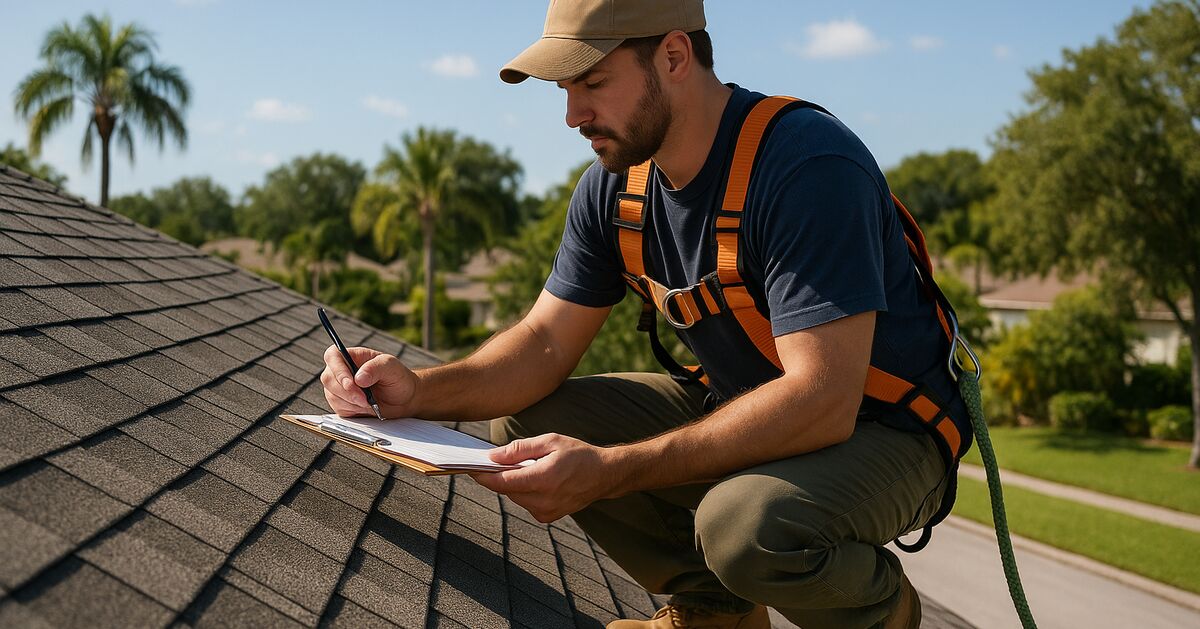
Most homeowners only think about their roof when something has already gone wrong - a water stain on the ceiling, a shingle in the yard after a storm, a neighbor's repair bill that made them wince. A professional roof inspection is how you find problems before they reach that stage, and it covers a lot more ground than most people realize.
This guide walks through exactly what a trained inspector looks at, why each item matters in our Southwest Florida climate, and how often you should be scheduling inspections to stay ahead of trouble.
Why roof inspections matter more here than almost anywhere else
The Suncoast is a genuinely demanding environment for roofing materials. Between the intense UV radiation that bakes shingles and tiles from April through October, the torrential afternoon thunderstorms that push water into every tiny gap, the salt air that accelerates corrosion along the coast from Anna Maria Island down through Englewood, and the hurricane threat that arrives every June, roofs here age faster and fail in more ways than roofs in most of the country.
That reality means an inspection isn't a luxury or something you do before selling the house. It's routine maintenance, the same way you change the oil in a car. A small issue spotted during a routine check - a cracked tile, a failing sealant bead, a clogged valley - costs a fraction of what it costs once water has found its way into the decking and framing beneath.
If you're curious about typical lifespan in our area, our post on how long a roof really lasts on the Suncoast gives a realistic breakdown by material and local conditions. The short answer: not as long as the manufacturer's warranty might suggest.
What a thorough roof inspection actually covers
A professional inspection isn't a contractor glancing at your roof from the driveway. A good one is methodical, covering every system that keeps water out of your home. Here's what that looks like in practice.
1. The roofing surface itself
This is the most visible layer and the starting point. Depending on your home, this means asphalt shingles, concrete or clay tiles, metal panels, or flat membrane roofing. The inspector looks for:
- Shingles: curling edges (cupping or clawing), missing granules that leave the mat exposed, cracking, blistering, or missing shingles entirely. Granule loss is particularly important to catch early because it accelerates UV degradation dramatically.
- Tiles: cracked, broken, or slipped tiles. A single cracked tile is usually a minor repair, but several in one area can indicate an underlying issue with the battens or the mortar bed.
- Metal roofing: fastener back-out, panel gaps, rust at cut edges, and sealant failure at seams and penetrations.
- Flat or low-slope roofing: ponding water areas, membrane blistering or cracking, and lap seam integrity. Flat roofs on homes in Osprey, Nokomis, and some older neighborhoods in downtown Sarasota are common, and they require a different inspection checklist than pitched roofs.
The inspector also checks the overall condition and approximate age of the surface. If you're wondering whether what they find means a repair or a full replacement, our guide on physical signs your roof needs replacing, not just patching walks through those distinctions clearly.
2. Flashings
Flashings are the thin metal pieces - usually galvanized steel or aluminum - installed wherever the roof surface meets a vertical element: chimneys, skylights, vent pipes, dormers, and walls. They are, statistically, where most roof leaks begin.
An inspector checks every flashing for:
- Lifting, gaps, or separation from the surface it seals against
- Rust or corrosion (common near the coast in areas like Siesta Key or on homes a few blocks from the water in Venice)
- Cracked or dried-out sealant at the edges
- Step flashing at sidewalls that may have shifted or separated
Flashing problems are often invisible from the ground, which is exactly why an inspector needs to get on the roof and get close.
3. Gutters and drainage
Gutters aren't technically "the roof," but they're part of the drainage system that protects your roof deck, fascia, and foundation. An inspector looks at:
- Gutters for proper slope, secure attachment, and standing water that never drains (which adds weight and causes rust)
- Downspouts to confirm they're clear and directing water away from the foundation
- The fascia boards behind the gutters for rot or soft spots caused by overflowing water
- Valley channels - the low points where two roof planes meet - for debris buildup that traps moisture and accelerates wear
During the heavy rainy season that Lakewood Ranch and Bradenton homeowners know well, a clogged valley can back water up under shingles before you ever notice anything inside.
4. Roof penetrations
Every pipe, vent, skylight, and HVAC unit that pokes through your roof is a potential leak point. Inspectors examine:
- Pipe boots (the rubber or metal collars around plumbing vent pipes) for cracking or shrinkage. Rubber boots degrade faster than almost anything else on the roof in Florida's UV environment, and a split pipe boot is one of the most common sources of interior water stains.
- Skylight frames and glass/plastic domes for seal failure, cracking, or shifting
- HVAC curbs and equipment pads for proper flashing and sealant condition
- Attic fans and ridge vents for secure installation and screen integrity
5. The roof deck and structure (from the attic)
A complete inspection includes time inside your attic. This is where you find problems the surface view can miss:
- Decking condition: soft spots, staining, mold, or delaminating plywood indicate past or current moisture intrusion
- Rafters and trusses: signs of cracking, sagging, or pest damage (termites are a real concern across our region)
- Ventilation: whether the attic is breathing properly. Poor attic ventilation traps heat and moisture, which degrades roofing materials from below and can push moisture into your living space. A well-ventilated attic also keeps cooling costs lower, which matters a lot in Port Charlotte and Sarasota in July.
- Insulation: not the inspector's primary focus, but obvious compression, staining, or gaps get noted because they affect both energy performance and moisture management
6. Soffits, fascia, and eaves
The edges of your roof take a beating. The inspector looks for:
- Rotted or soft fascia boards (often discovered when gutters are pulled away)
- Soffit panels that have gaps, damage, or missing screens that let birds and insects into the attic
- Paint peeling on soffits, which often signals trapped moisture from inadequate ventilation or a slow drip from the gutter system
7. Ridge and hip lines
The ridge is the highest point of your roof and takes constant wind exposure. On tile roofs, ridge caps are set in mortar or foam adhesive that can crack over time. On shingle roofs, ridge cap shingles face accelerated wear. The inspector checks that the ridge line is straight (a sagging ridge indicates structural concerns), that caps are secure, and that ridge vent openings aren't blocked.
What happens after the inspection
A good inspector provides a written report with photographs. The findings typically fall into three categories: items that need immediate attention, items to monitor, and items that are in acceptable condition. That report is your roadmap for budgeting and prioritizing repairs.
If you're dealing with storm damage and considering an insurance claim, the inspection documentation is essential. Our post on how to file a roof insurance claim in Florida the right way explains how the process works and why good documentation from the start makes everything easier.
How often should you schedule a roof inspection?
Here's the honest answer for Florida homeowners, which differs from the general advice you'll find on national home-improvement sites.
Once a year, at minimum. The standard recommendation from most roofing professionals in our area is an annual inspection. The best time is in the fall - after hurricane season has ended and before the holiday crunch - so any issues found can be repaired during the cooler, drier months when scheduling is easier and conditions are better for the work.
After any significant storm. If a named storm, a severe thunderstorm, or hail passes through your area - whether you're in downtown Sarasota, on the east side of Bradenton, or in Englewood near the bay - get on the phone and schedule an inspection within a day or two. Some damage isn't visible from the ground, and Florida's insurance carriers have strict claim-filing windows. Waiting costs you options.
When buying or selling a home. A pre-purchase inspection gives buyers a clear picture of remaining roof life and any existing issues. Sellers benefit from knowing what a buyer's inspector will find so there are no last-minute surprises.
If your roof is older than 10 years. Roof systems in Florida tend to show accelerated wear after the first decade. For a home in Venice or Nokomis with a 12-year-old tile roof, an annual inspection is a reasonable minimum; some homeowners in that situation schedule two per year.
If you notice anything unusual. Water stains on ceilings, granules collecting in gutters, or visible sagging are signs you should get in touch with a roofing professional right away rather than waiting for a scheduled appointment. Our FAQ page also covers common questions homeowners ask about when to call.
Common mistakes homeowners make with roof inspections
Relying on a visual check from the ground. You simply cannot see flashing gaps, pipe boot cracking, or early-stage granule loss from the yard. A meaningful inspection requires getting on the roof.
Skipping the attic. As noted above, some of the most important information about your roof's health is visible only from inside. Any inspection that doesn't include the attic is incomplete.
Waiting for a leak to appear. By the time water stains show up on a ceiling, the moisture has typically traveled through the decking and framing first. That path of water damage is almost always more expensive to fix than the original roof defect would have been.
Assuming a new roof needs no inspection. New construction and recent re-roofing jobs still benefit from an inspection a year or two in. Installation errors - improper nail placement, missed sealant, poorly seated flashing - often don't show up until the first few storm seasons.
Putting it all together
A roof inspection is a relatively small investment that gives you clear, documented knowledge about one of the most expensive components of your home. In a climate like ours - where UV intensity, salt air, storm frequency, and humidity all work against roofing materials simultaneously - that knowledge is genuinely valuable.
Our team serves homeowners across the Suncoast, from Sarasota and Bradenton to Lakewood Ranch, Venice, Port Charlotte, and every community in between. You can see our full list of service areas and learn more about our roofing services if you'd like to know what we offer beyond inspections.
If your last inspection was more than a year ago - or you've never had one - it's a good time to schedule. A conversation costs nothing, and the information you get back is worth a lot more than the cost of the visit.