
How to File a Roof Insurance Claim in Florida the Right Way
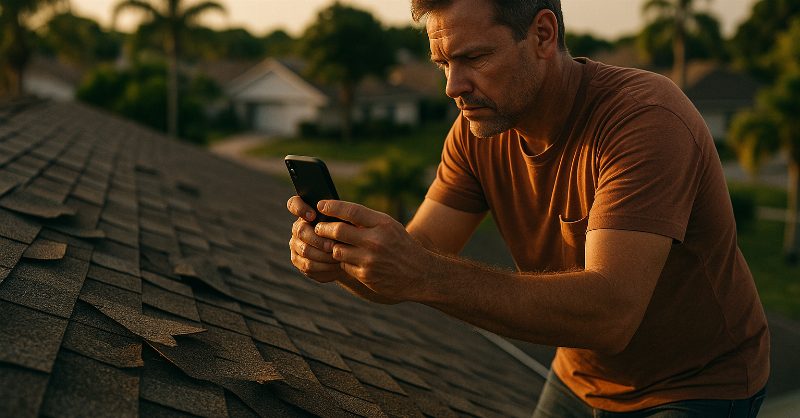
Your neighbor got a full roof replacement covered. You filed the same claim after the same storm and got denied. What went wrong? More often than not, the answer comes down to process - what you did (or didn't do) in the hours and days after the damage happened.
Florida's property insurance market is one of the most complicated in the country. Insurers here are under enormous financial pressure, and they have well-trained adjusters looking for any reason to reduce or reject a claim. That doesn't mean you're helpless. It means you need to know the rules and follow them precisely. This guide walks you through every stage of the process, from the moment a storm rolls through Sarasota or Bradenton to the day your repaired or replaced roof is signed off and paid for.
Understand what your policy actually covers - before you file
Most homeowners in Southwest Florida don't read their roof coverage section until they need it. By then, it's too late to be surprised. Pull your policy out now and look for a few key terms.
Replacement Cost Value (RCV) vs. Actual Cash Value (ACV). An RCV policy pays to replace your roof with materials of like kind and quality. An ACV policy pays only the depreciated value of the old roof - which, on a 15-year-old shingle roof, might be a fraction of what replacement actually costs. Many policies have shifted to ACV for roofs in Florida, so read closely.
Covered perils. Wind and hail are almost always covered. Water intrusion caused by wind-driven rain usually is too, but only if there's first a covered peril (like a wind event breaking a seal or tile). Gradual leaks from age and wear are maintenance issues, not insurance claims.
Deductibles. Florida policies commonly carry a separate hurricane deductible, often 2% to 5% of your home's insured value. On a $400,000 home, that's $8,000 to $20,000 out of pocket before insurance pays a dollar. Know your number before you file.
Roof age and condition clauses. Some Florida policies now limit or exclude coverage on roofs over a certain age (often 15 or 20 years), or require a roof inspection before renewal. Check your declarations page.
If you're unsure what your roof's current condition or age means for your coverage, a professional roof inspection can give you a documented baseline before any claim is ever filed.
Step 1: Document the damage thoroughly - right away
Time is your most valuable asset after a storm. The first thing to do is document everything before you touch a single shingle or tarp.
- Walk your property and photograph every area of visible damage from the ground. Get wide shots for context and close-ups for detail.
- If it's safe to access (and only if it's safe), photograph the roof surface itself. Look for missing shingles, cracked or displaced tiles, dented metal flashing, torn underlayment, and debris impact marks.
- Go inside. Look at ceilings, attic spaces, and walls for water staining, wet insulation, or active drips. Photograph all of it.
- Document the date and time of each photo. Your phone does this automatically in the metadata, but writing it down doesn't hurt.
- Keep any debris that fell from the roof. A pile of granules in your gutters or a cracked tile on your lanai is physical evidence.
The goal is to make it undeniably clear that the damage occurred during a specific weather event and not from slow deterioration. Insurance adjusters are trained to distinguish between storm damage and deferred maintenance. Your documentation is what tips that balance in your favor.
Step 2: Prevent further damage - but don't make permanent repairs
Your policy requires you to take reasonable steps to prevent additional damage after a covered loss. This typically means tarping open areas of the roof, boarding up broken skylights, or placing buckets to catch active leaks. Keep every receipt for materials you buy and every invoice from any emergency service provider.
Here's the critical rule: do not make any permanent repairs before your insurance adjuster has inspected the damage. If you re-shingle a section of damaged roof before the adjuster sees it, you've destroyed their ability to document it. Your claim can be reduced or denied on that basis alone. Emergency mitigation is fine and expected. Permanent repair is not.
Step 3: File your claim promptly
Call your insurance company's claims line as soon as you've completed your initial documentation - ideally within 24 to 48 hours of the event. Many Florida policies have prompt-notice requirements. Waiting too long gives the insurer grounds to argue that you allowed additional damage to occur.
When you call, have the following ready:
- Your policy number
- The date and approximate time of the damaging event
- A brief description of the damage you observed
- The photos or videos you've taken (you'll submit these formally later)
Get the claim number and the name of the person you spoke with. Write it down. Every interaction from this point forward should be documented.
Step 4: Get a roofing contractor involved early
Here's where many Florida homeowners make a costly mistake: they let the insurance adjuster's estimate drive the entire process without getting an independent professional opinion first.
Before the adjuster visits, or at the same time if possible, have a licensed roofing contractor inspect the damage and prepare their own written assessment. A good contractor knows how to identify all storm-related damage - not just the obvious missing shingles, but damaged flashing, compromised underlayment, cracked pipe boots, and wind-lifted edges that may not be leaking yet but will be.
Having a contractor's written scope of work in hand when the adjuster arrives gives you a credible, line-by-line comparison. If the adjuster's estimate misses items your contractor documented, you have a basis for a supplement.
Our team provides roof inspections and damage assessments across the Suncoast, from Siesta Key to Englewood, and we're familiar with how local insurance adjusters document claims. We can walk a job with your adjuster if needed.
Step 5: Be present for the adjuster's inspection
This is not the time to leave a key under the mat and go to work. Be home for the adjuster's visit and walk the roof with them if they allow it (some will, some won't). If your contractor can be there too, even better.
Point out every area of damage you documented. Don't exaggerate - just make sure nothing gets missed. Adjusters cover a lot of properties, especially after a major storm event across Lakewood Ranch or Port Charlotte, and a rushed inspection can miss real damage. Your presence and your documentation are your best tools.
Ask the adjuster for their business card, get their name and license number, and ask when you can expect the written estimate. Follow up if you don't hear within the timeframe they give you.
Step 6: Review the adjuster's estimate carefully
When the estimate (called a "scope of loss") arrives, read every line. Compare it against what your contractor documented. Common items that get missed or undervalued include:
- Drip edge and flashing replacement - adjusters sometimes price only the visible damaged section, when full replacement may be required by Florida Building Code
- Underlayment - required by code on a re-roof even if not visibly damaged
- Code upgrade allowances - if your roof is being replaced, current Florida Building Code requirements may differ from what was originally installed; your policy may cover this
- Permit and inspection fees - a legitimate cost that should be in the estimate
- Overhead and profit (O&P) - if a general contractor is coordinating the work, O&P is a standard line item; adjusters sometimes omit it on roofing-only claims
If the estimate is short, your contractor can prepare a supplemental claim with line-item justification. This is a normal part of the process and a skilled contractor handles it regularly.
What to do if your claim is denied or underpaid
A denial or a drastically low estimate is not the end of the road. Florida law gives you several options.
Request a re-inspection. Ask your insurer to send a different adjuster or a field supervisor to review the damage again.
File a supplemental claim. If new damage is discovered during the repair process, or if the original scope was simply incomplete, a supplement can be filed.
Invoke the appraisal clause. Most Florida homeowners' policies include an appraisal process. Each party hires their own appraiser, and an umpire resolves disputes. This can be faster and less expensive than litigation.
Consult a public adjuster or attorney. Public adjusters work on your behalf (not the insurer's) to document and negotiate your claim. If bad faith is involved, a property insurance attorney can advise you.
For guidance on what physical signs mean your roof may need full replacement rather than patching - which directly affects the size of your legitimate claim - see our post on signs your roof needs replacing, not just patching.
Florida-specific rules you need to know
The 25% rule. Florida Building Code requires that if 25% or more of a roof's area is replaced within a 12-month period, the entire roof must be brought up to current code. This can work in your favor - if storm damage covers more than a quarter of your roof, the insurer may owe you a full replacement under code requirements.
Assignment of Benefits (AOB) restrictions. Florida significantly restricted AOB agreements in 2019. Be cautious about signing over your insurance rights to a contractor. Work with a contractor who invoices you directly or works under a direction to pay, not one who takes over your claim entirely.
Statute of limitations. Under Florida law, you generally have three years from the date of loss to file a claim for windstorm or hurricane damage. Don't let time slip by on damage you haven't reported yet.
Citizens Property Insurance. If your insurer is Citizens, the state-run insurer of last resort, the claims process has some differences. Citizens has its own adjusters and inspection timelines; make sure you understand their specific requirements.
How roof age and condition affect your claim
Insurance companies in Florida are increasingly scrutinizing roof age and condition. If your roof was already near the end of its useful life, the insurer may argue that the damage was primarily due to wear rather than the storm. Understanding how long a roof realistically lasts in the Southwest Florida climate helps you have informed conversations with adjusters and, if necessary, contest depreciation calculations.
If you're weighing whether your situation calls for a repair or a full replacement after the claim settles, our guide on when to repair versus replace your Florida roof lays out the decision clearly.
Work with a contractor who knows the claims process
Not every roofing contractor has experience with insurance work. The difference between one who does and one who doesn't can be thousands of dollars in your pocket.
A claims-savvy contractor knows how to write a scope of work in the language adjusters use, how to identify every code-required item, how to file a supplement, and how to communicate professionally with the insurer throughout the project. They also know the local permit requirements across municipalities like Venice, Nokomis, Osprey, and Anna Maria Island, which matter when the adjuster is calculating what a compliant repair actually costs.
We've worked on insured roofing projects throughout Sarasota, Bradenton, and the surrounding communities for years. We're happy to walk through your claim with you at no charge and tell you honestly whether the insurer's estimate is reasonable or worth pushing back on.
The bottom line
Filing a roof insurance claim in Florida isn't complicated - but it is unforgiving of mistakes. Document early and thoroughly. Don't make permanent repairs before the adjuster visits. Get a contractor's independent assessment. Review every line of the estimate. And know your rights if the number comes back too low.
If you've just come through a storm and you're not sure where to start, reach out to our team. We'll come out, assess the damage, and help you understand exactly what you're dealing with before you pick up the phone to call your insurer.