
What happens to your roof warranty when a Florida contractor goes out of business mid-project?
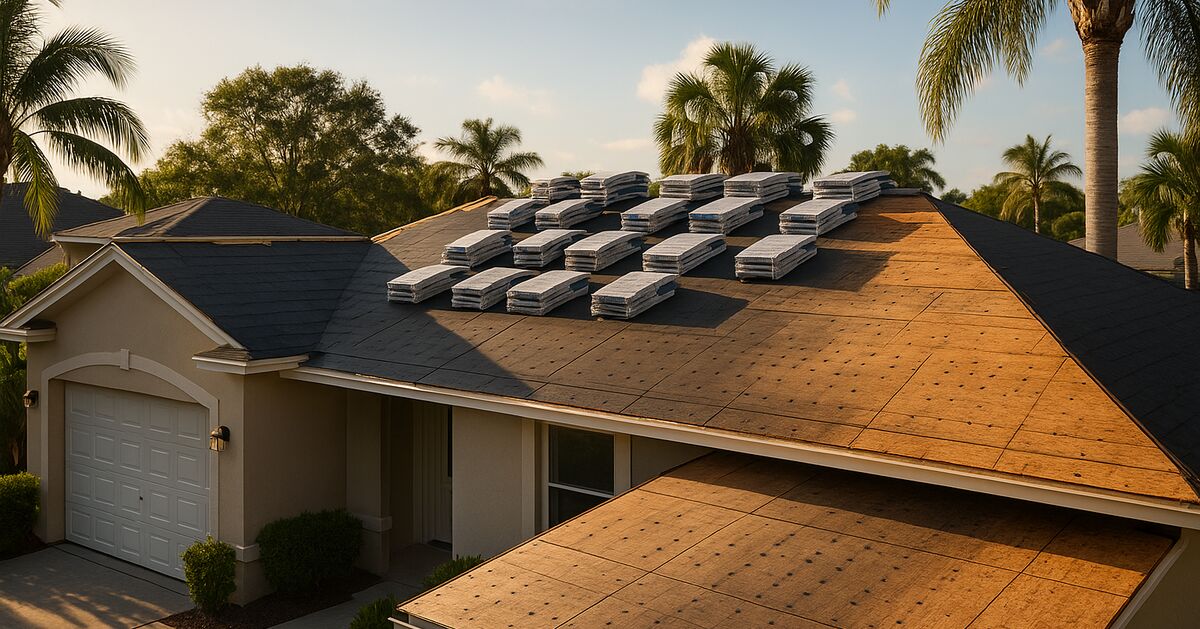
Signing a contract with a roofing contractor feels like the hard part is over. Then you get a call saying the company has shut its doors, and suddenly your half-finished roof is sitting open to the next afternoon thunderstorm. This scenario plays out in Southwest Florida more than most homeowners realize, and knowing what protects you, and what does not, can save you thousands of dollars and months of stress.
Why contractor failures happen more often in Florida than you might expect
Florida's construction industry runs hot. During the post-hurricane rebuilding surges that follow storms hitting Sarasota, Bradenton, and Port Charlotte, small roofing operations sprout up fast to chase the work. Some are solid companies that have been around for decades. Others are thin on capital, thin on experienced staff, and one bad quarter away from folding. Even established firms occasionally collapse due to insurance losses, supply chain debt, or ownership changes.
The result: homeowners across the Suncoast have found themselves mid-project with no roofer, no finished roof, and a contract that is suddenly worth the paper it is printed on. If you are shopping for a contractor right now, our roofing services page outlines what a professionally managed project looks like from first call to final inspection. And if you are already in the middle of a crisis, keep reading.
The two completely separate warranties on every roofing project
Before you can understand what you lose when a contractor disappears, you need to understand that a roofing project almost always carries two distinct warranties.
The manufacturer's material warranty covers defects in the shingles, metal panels, underlayment, or tiles themselves. This warranty comes directly from the manufacturer, not your contractor, and it does not automatically disappear because your contractor went out of business. A GAF, Owens Corning, CertainTeed, or Boral warranty is tied to the product and, in many cases, to the registered project, not to the company that installed it.
The contractor's workmanship warranty covers the quality of the installation itself: the nail patterns, the flashing details, the sealing around penetrations, the proper overlap of courses. This warranty lives and dies with the company that issued it. When a contractor closes its doors, the workmanship warranty is effectively gone. Nobody is there to honor it.
That distinction matters enormously for homeowners in Nokomis, Osprey, and Venice whose mid-project roofer vanished. The materials already installed may still be manufacturer-warranted, but the labor guarantee is almost certainly void.
What a manufacturer's warranty actually requires to stay valid
Here is where it gets complicated, and this is the part most homeowners never think to ask about. Many premium manufacturer warranties, especially the enhanced or "system" warranties that go beyond a basic limited warranty, require that the installation be performed by a contractor who holds a certification from that manufacturer.
GAF's Golden Pledge warranty, for example, requires a GAF Master Elite contractor to install the system and register the project with GAF before the warranty is issued. If your contractor was certified and registered the project before they went under, you may still have that warranty in force. If the project was never registered, or if the contractor lost their certification before folding, you may only have the basic limited warranty, which covers materials but not workmanship, and may have more conditions.
Your first call after learning your contractor has shut down should be directly to the manufacturer of the roofing materials being installed. Ask them:
- Was this project ever registered with you?
- Is there a warranty already in place on this address?
- What are the conditions for that warranty to remain valid if a different licensed contractor completes the project?
Get those answers in writing. Manufacturers will usually work with you to transfer or maintain coverage if you bring in a new certified contractor to complete or inspect the work, but you have to initiate that conversation.
The contractor's license bond: a protection you may be able to use
Florida requires licensed contractors to carry a surety bond. The bond exists precisely to protect consumers when a contractor fails to complete work or fails to correct defective work. If your contractor was properly licensed and bonded, their disappearance is not necessarily the end of the road financially.
You would file a claim against the bond, which is issued by a bonding company. The process involves documenting what work was contracted, what was paid, what was completed, and what was left undone or done improperly. Keep every document you have: the signed contract, all payment records, any text messages or emails from the contractor, photos you took during the project, and the permit paperwork.
The Florida Department of Business and Professional Regulation (DBPR) is the starting point for verifying a contractor's license and bond status. If the contractor was operating unlicensed, which does happen, especially with some of the storm-chasing outfits that move through areas like Englewood and Anna Maria Island after a big blow, you have significantly fewer formal remedies, which is one more reason to verify a license before any work begins.
What the permit and inspection system does to protect you
Every legitimate roofing project in Florida requires a permit, and every permitted project requires inspections by the local building department before it is considered complete. This is not red tape. It is one of the most meaningful consumer protections in the construction process.
If your contractor pulled a permit and then disappeared, that permit is still open. The work cannot be closed out without a final inspection. A new licensed contractor can apply to take over a permitted project, although the specific process varies by county between Sarasota County, Manatee County, and Charlotte County, so you will want to call your local building department directly.
The open permit also means that if the partial work does not meet Florida Building Code, an inspector will not sign off on it, and the next contractor will be required to bring it up to code before proceeding. That is frustrating if it means tearing out and redoing work you already paid for, but it protects you from living under a roof that was installed wrong.
Our frequently asked questions page covers how the permit and inspection process works in more detail, and it is worth reviewing before you engage any new contractor to complete the job.
Protecting your payments: escrow, draws, and deposits
One of the best ways to limit your exposure when a contractor goes under is to have structured your payments correctly from the start. Florida law limits how much a contractor can require as a deposit before work begins, and for good reason.
A responsible payment schedule ties each draw to a verifiable milestone. A typical structure might look like this:
- A modest deposit upon signing, enough to cover permit fees and material orders
- A draw when materials are delivered to the site
- A draw when the tear-off and decking work is complete and inspected
- A final payment only after the project passes its final inspection
If you paid a large lump sum upfront and the contractor disappeared after only partial completion, recovering that money is harder. If your payments were milestone-based, you may owe very little for the work that was actually done, and the money you have not yet paid becomes leverage in finding a new contractor willing to step in.
How to find a new contractor to take over
Taking over another contractor's unfinished work is not something every roofer wants to do. There are liability questions: they did not install what is already on the roof, and they may not want to warranty work they cannot fully inspect or stand behind. Being straightforward about the situation from the first conversation will save you time.
When you reach out to a new contractor, have ready:
- A copy of the original contract
- The permit number and the issuing municipality
- Photos of the current state of the roof
- Documentation of what materials are on-site
- Any manufacturer registration information you obtained
A reputable local contractor who knows the area, whether you are in Lakewood Ranch, Downtown Sarasota, or Siesta Key, will be able to assess the situation clearly and tell you honestly what they can take on, what they will warranty, and what has to be redone. Our Sarasota roofing page and Bradenton roofing page are good starting points if you are searching for established local help.
The role of your homeowner's insurance
Your standard homeowner's insurance policy is unlikely to cover losses caused by contractor default. That falls into a different category than storm damage or sudden accidental loss. However, if the partial work resulted in water intrusion that damaged your home's interior, that damage may be covered depending on your policy language and the circumstances.
Call your insurer and explain the situation. Ask specifically whether contractor default or resulting damage is addressed anywhere in your policy. Some policies include contractor dispute coverage as a rider. If you financed the project or paid with a credit card, those may be additional avenues for dispute resolution that your insurer can point you toward.
Understanding how material choices and project quality affect your insurance in the long run is also worth a read. Our post on how roof color and material affect your insurance premium in Southwest Florida covers some of those downstream effects, and it is relevant if you are now choosing replacement materials with a new contractor.
What to look for before you ever sign with a contractor
The cleanest solution to contractor default is avoiding the risk in the first place. Here are specific things to verify before you hand over any money.
Verify the license yourself. Go directly to the Florida DBPR website and search for the contractor's license number. Do not rely on the business card or a photocopy. Make sure the license is current, active, and in the name of the company or individual you are contracting with.
Ask for proof of insurance. A certificate of general liability and workers' compensation insurance should be readily available from any legitimate contractor. Ask to be listed as a certificate holder so you receive notice if the policy lapses.
Check how long they have been in business. This is not a guarantee of anything, but a company that has been operating in the Suncoast area for multiple years has at least demonstrated some ability to survive Florida's volatile construction market.
Understand the warranty structure upfront. Ask specifically: what manufacturer warranty comes with this installation, will you register the project with the manufacturer, and what workmanship warranty do you provide in writing?
Read the contract carefully. Make sure the payment schedule is milestone-based, the scope of work is specific, and there is a clear process for resolving disputes.
The Suncoast Roofing Pros home page and our locations page give you a sense of the communities we serve and the approach we take to long-term accountability on every project.
The bigger picture: contractor stability matters as much as price
When comparing roofing quotes, it is tempting to focus entirely on the bottom number. But the cheapest quote from a company with thin margins, no track record, and no local presence is not actually cheaper if they disappear before the job is done. The true cost of a roofing project includes the reliability of the people installing it.
Saltwater air, intense UV exposure, and hurricane-season wind loads make Southwest Florida one of the most demanding environments for a roofing system anywhere in the country. Our post on how saltwater air corrodes roof fasteners and flashing on the Suncoast goes into detail on why installation quality, not just material quality, determines how long a roof performs here. A contractor who installs flashing incorrectly and then closes shop leaves you with no recourse when that flashing fails in the first tropical storm.
If you are currently dealing with an abandoned project, or you want to make sure you are protected before signing anything new, reach out to us directly. We will give you a straight assessment of where things stand and what your realistic options are, no pressure, no runaround.
Summary: the key steps if your contractor goes out of business
- Contact the material manufacturer immediately and ask about warranty registration status
- Pull all your documentation together: contract, payments, photos, permit number
- Call the Florida DBPR to verify the contractor's bond and file a claim if applicable
- Contact your local building department about the open permit and how to proceed
- Reach out to your homeowner's insurer to document any resulting damage
- Find a licensed local contractor willing to assess and take over the project
- Get any new agreements in writing with a milestone-based payment structure
An unfinished roof is a serious problem, especially heading into Florida's storm season. But there are real protections in place, and taking the right steps quickly makes a significant difference in how this kind of situation resolves.