
Anna Maria Island roof replacement: coastal flood zone rules, materials, and timelines
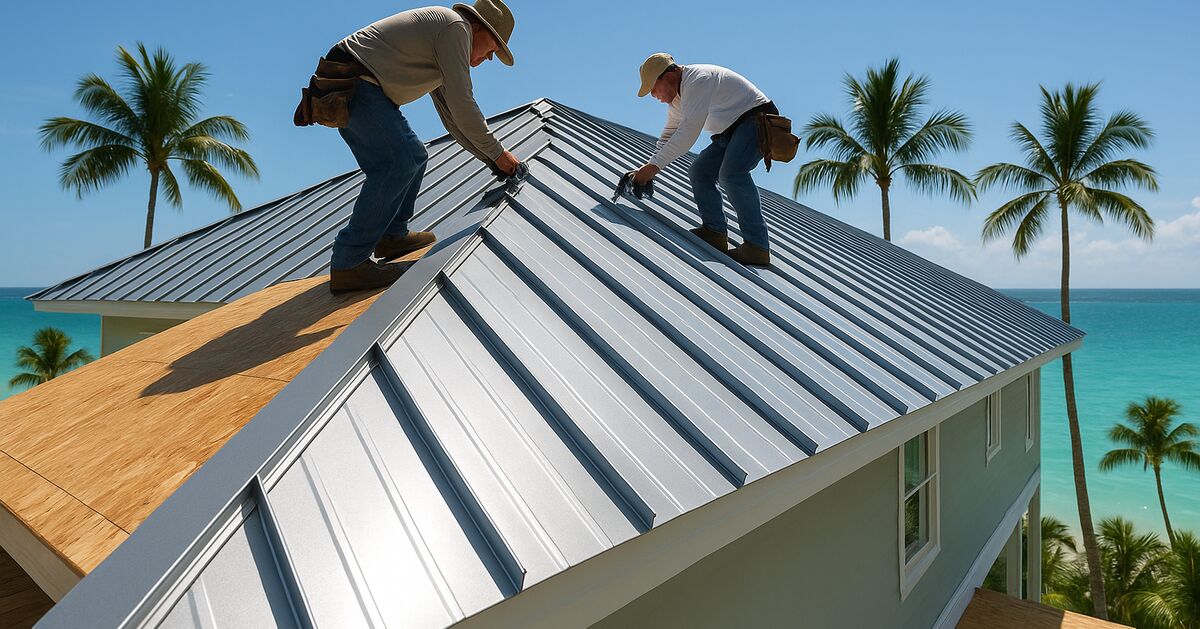
Replacing a roof on Anna Maria Island is not the same as replacing one in Lakewood Ranch or even in downtown Bradenton. The moment your property sits inside a FEMA Special Flood Hazard Area, which covers virtually the entire island, a whole layer of building science, code compliance, and insurance math gets added to what looks like a straightforward re-roofing project. Understanding those layers before you sign a contract saves money, prevents permit headaches, and can shave weeks off your timeline.
Why the flood zone classification changes everything
Anna Maria Island is classified almost entirely as FEMA Zone AE or VE. Zone AE means the property has a 1-percent annual chance of flooding and a defined Base Flood Elevation (BFE). Zone VE, which covers beachside parcels and some bayside properties, adds wave-action hazard on top of that flooding risk.
Why does that matter for a roof? Because FEMA's National Flood Insurance Program ties directly to local building codes. Manatee County participates in the Community Rating System (CRS), which rewards stricter enforcement with lower NFIP premiums for residents. To keep that rating, the county inspects coastal projects closely. When a roof replacement triggers a "substantial improvement" determination, which happens when the total cost of improvements to the structure exceeds 50 percent of its pre-improvement market value, the entire structure may be required to be brought into current flood-zone compliance. That can mean raising the home to the current BFE, which is a far bigger project than a new roof.
The practical takeaway: before you budget for materials and labor, ask your contractor to help you request a pre-construction determination from the Manatee County Building Department. Knowing whether your project crosses the substantial-improvement threshold early prevents expensive surprises mid-permit.
How elevation requirements shape your material choices
Once you know where your home stands relative to the BFE, material selection becomes a lot clearer. Homes in Zone VE face the most demanding requirements because wave action can exert tremendous uplift pressure on roof assemblies. The Florida Building Code, High-Velocity Hurricane Zone provisions apply along much of the island's Gulf-facing side, and even where they don't technically apply by code, the wind loads used in engineering calculations are severe.
Here is how the three common roof materials shake out in that environment:
Asphalt shingles Architectural shingles rated for 130 mph or higher are code-minimum in Manatee County's coastal wind zone. They are the least expensive option and can work well on homes with conventional pitched roofs. The downside in a flood-zone context is that shingles have the shortest lifespan of the three main options, often 15 to 20 years in the salt-laden air of the Suncoast. You may be replacing them again before the mortgage is paid off.
Metal roofing Standing seam metal is the most popular upgrade choice on Anna Maria Island, and for good reason. A concealed-fastener standing seam panel rated for 160 mph or higher resists uplift without the corrosion vulnerability that exposed screws create in a saltwater environment. (If you want to understand exactly why exposed fasteners corrode faster near the coast, our post on how saltwater air corrodes roof fasteners and flashing on the Suncoast explains the electrochemical process in detail.) Metal also reflects heat, which matters for upper-story rooms on an island where AC costs are already high.
Concrete or clay tile Tile is common in Florida but requires a structural evaluation before installation on any elevated or stilt-style home. The added weight of tile can exceed the load capacity of older framing, and in a VE zone the attachment method must be engineered specifically for uplift. When the engineering works out, tile lasts 40 to 50 years and handles the UV and humidity of island life exceptionally well.
For most Anna Maria Island homeowners, standing seam metal or high-rated architectural shingles are the practical choices. Your roof contractor should pull the FBC product approval numbers for whatever system they propose, not just give you a brand name.
The permit process: slower than the mainland, for good reason
Pulling a roofing permit on Anna Maria Island takes longer than pulling one in, say, Sarasota or Bradenton, and that is not the county being difficult. The additional review steps exist because the stakes of a poorly executed coastal roof are higher: structural failure during a storm in a VE zone can mean total loss, and a code violation can void your flood insurance.
Here is the typical sequence for an island re-roofing project:
- Contractor submits permit application with product approvals, a signed and sealed engineering report if required, and proof of contractor licensing and insurance.
- Manatee County Building Department reviews for compliance with the Florida Building Code and local flood-zone ordinances. In some cases a floodplain administrator review is required before the building department will issue.
- Permit is issued. For a standard re-roof with no structural changes, this typically takes 5 to 15 business days on the island versus 3 to 7 business days for comparable projects in Lakewood Ranch or other inland areas.
- Inspections occur at rough-in (after underlayment is installed, before finish material goes on) and final. Inspectors look at fastener patterns, underlayment laps, flashing details, and ridge ventilation.
- Certificate of Completion is issued. This is the document your insurer and any future buyer will want to see.
Do not let any contractor skip the permit. An unpermitted roof in a flood zone creates enormous liability when you go to sell, and it can invalidate your homeowner's insurance coverage entirely. Our FAQ page covers more questions about what to expect during the permitting process.
Underlayment matters more than people think in a flood zone
In Zone VE especially, the roof deck and underlayment are the true waterproofing layer during a major storm when finish materials are at risk of partial failure. Florida's coastal environment is punishing: heat cycles, UV exposure, and humidity degrade standard felt underlayment faster here than almost anywhere else in the country. For more on what that actually looks like over time, see our post on Florida humidity and heat: what they do to your roof underlayment.
On Anna Maria Island, the practical standard has moved well past 30-pound felt. Most experienced coastal contractors spec a self-adhering modified-bitumen underlayment, often called "peel-and-stick," for the full deck or at minimum for the first several feet at eaves and all penetrations. This creates a secondary water barrier that performs even if shingles or panels are damaged during a hurricane. It costs more upfront but it is the right call when your home sits on a barrier island.
How flood zone rules affect your insurance premium calculation
One of the best reasons to choose materials carefully on Anna Maria Island is the direct effect on your insurance premium. Florida insurers scrutinize coastal roofs intensely. A roof that passes a wind mitigation inspection with strong results, specifically for features like hip geometry, rated sheathing attachment, and a qualifying roof covering, can generate meaningful credits on your policy.
Metal roofing, particularly standing seam, tends to score well in wind mitigation inspections because the concealed-fastener system creates continuous attachment along every panel seam. Shingles can also score well if the installation uses a six-nail pattern and the correct product approval. The material choice interacts with the installation method: a perfectly good product installed with the wrong fastener pattern fails the inspection.
If you are curious how material choices ripple into your premium, our post on how roof color and material affect your insurance premium in Southwest Florida covers the wind mitigation credit structure in detail.
Realistic timeline expectations for an island project
Homeowners who have replaced roofs on the mainland are often surprised by how long an Anna Maria Island project takes from first call to final inspection. Here is a realistic picture:
- Initial inspection and estimate: 1 to 2 weeks, accounting for contractor travel to the island and scheduling.
- Material lead time: Metal panels are typically fabricated to order. Standing seam panels for a custom-cut island home often run 3 to 6 weeks from the date of order. Shingles are usually available faster.
- Permit review: As noted above, 5 to 15 business days for a straightforward re-roof.
- Active construction: A typical single-family island home takes 2 to 4 days of active roofing work, though stilt homes and multi-level properties take longer.
- Final inspection and certificate: 3 to 7 business days after calling for inspection.
All in, a homeowner who calls in January might have a completed, inspected roof by March if they move quickly on decisions. Waiting until May or June to start the process risks running into hurricane-season backlogs, when every coastal contractor from Englewood to Port Charlotte is booked out.
Common mistakes Anna Maria Island homeowners make
Hiring a contractor without coastal experience. An inland contractor who rarely works in VE zones may not know to request the floodplain administrator review, may spec the wrong product approval, or may miss the underlayment requirements. The result is a permit that fails inspection or a roof that fails in a storm.
Assuming like-for-like replacement avoids extra scrutiny. Even replacing the same material on the same footprint triggers a full permit review in a flood zone. There is no "minor repair" exemption for a full roof replacement.
Underestimating the substantial improvement threshold. If you are also doing kitchen renovations, adding a room, or upgrading windows at the same time as the roof, the combined project value could push you over the 50-percent threshold. Coordinate timing carefully.
Skipping the wind mitigation inspection after completion. A new roof is the single best opportunity to earn wind mitigation credits. Schedule the inspection before your next insurance renewal and send the updated form to your insurer.
What to look for in a contractor for this specific project
Not every roofer who serves the Suncoast regularly works on Anna Maria Island. When you are interviewing contractors, ask specifically:
- Have you pulled permits with the Manatee County floodplain administrator before?
- What product approvals are you using, and can you show me the FBC listing?
- Do you carry enough liability coverage for elevated coastal structures?
- Will you provide the completed Notice of Commencement and the permit card before work begins?
A contractor who hesitates or gives vague answers to any of those questions is not the right fit for an island project. Our full guide to roofing services explains what a professionally managed replacement looks like from start to finish, and you can see all the communities we serve on our locations page.
Putting it all together
Anna Maria Island is one of the most beautiful places to own a home on Florida's Gulf Coast, and protecting that investment starts at the top. The flood zone rules that can feel like bureaucratic obstacles are, in practice, a framework that produces better-built roofs and lower long-term risk for homeowners. Choose a material rated for the actual wind loads your island home faces, work with a contractor who knows the Manatee County permit process in a coastal zone, and plan your timeline early enough to avoid the summer rush.
If you are ready to talk through your specific situation, contact us for a no-pressure inspection and estimate. We work across the island and throughout the Suncoast, and we are glad to help you figure out what your home actually needs before you commit to anything.