
Flat roof vs. pitched roof maintenance on the Suncoast
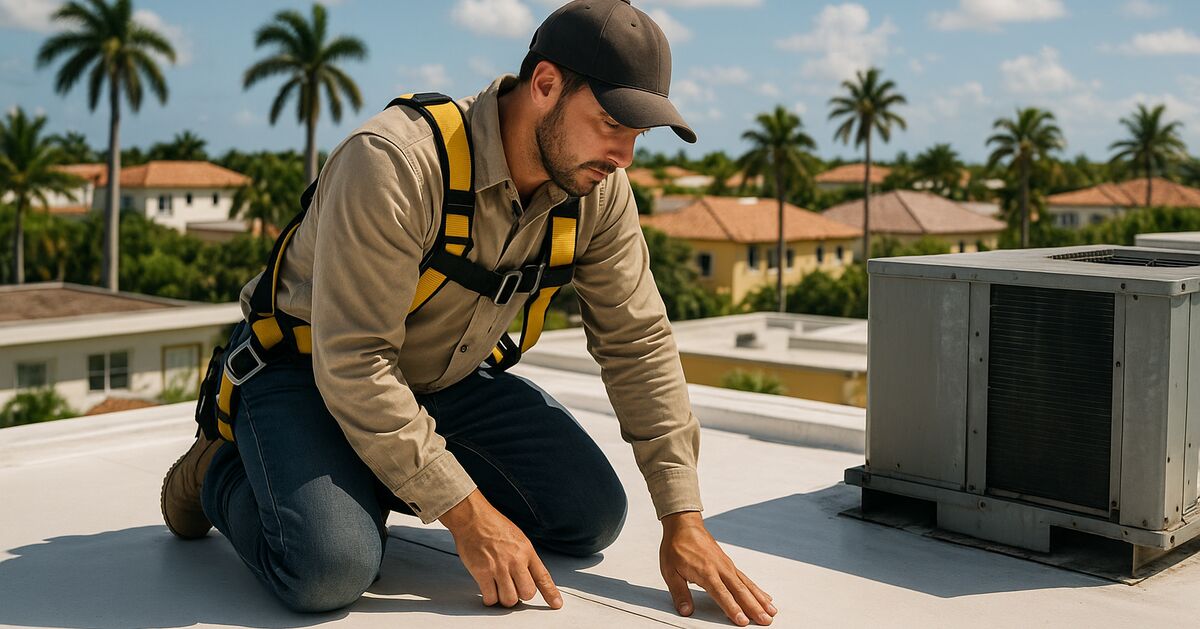
Your roof's shape is not just an aesthetic choice - it is the single biggest factor in how you maintain it, how often you inspect it, and where things go wrong first.
On the Suncoast, that matters more than almost anywhere else in the country. Sarasota, Bradenton, Venice, Port Charlotte, Anna Maria Island - every community here deals with a punishing combination of intense UV radiation, heavy seasonal rain, salt-laden coastal air, and the occasional hurricane. A flat commercial-style roof and a steeply pitched tile roof can sit side by side on the same street and have almost nothing in common when it comes to upkeep. Understanding the differences is not just interesting trivia. It is the difference between a roof that lasts 25 years and one that quietly rots away in 12.
This guide breaks down exactly what each roof type demands in this climate, the mistakes homeowners most commonly make, and the maintenance calendar that keeps either system performing well.
Why roof geometry changes everything in Florida
Before getting into checklists, it helps to understand the physics at play.
A pitched roof - anything with a noticeable slope - sheds water quickly. Rain hits the surface and runs off within seconds. That fast drainage is its biggest advantage. The trade-off is that a steep roof has far more exposed surface area, more seams at ridges and valleys, and more flashings around penetrations. Wind also has more to grab.
A flat roof (or low-slope roof, since truly level roofs are rare and problematic) holds water longer by design. Modern flat roofing systems are built to handle that, but the margin for error is much smaller. A tiny crack, a clogged drain, or a failing seam can pond water for days, and ponding water will find its way inside.
In Florida's climate, both roof types face an accelerated aging process. UV breaks down membrane materials and shingle granules faster than in northern states. The wet season (typically June through September) delivers sustained moisture stress. Salt air near the coast corrodes metal flashings and fasteners more quickly than inland locations. These are not abstract concerns - they shape every maintenance decision you make.
Flat roof maintenance on the Suncoast: what it actually involves
Flat roofs are common on mid-century homes in Downtown Sarasota, on commercial buildings throughout Bradenton, and on modern architectural builds in Lakewood Ranch and Osprey. The most common membrane systems you will encounter are TPO (thermoplastic polyolefin), EPDM (rubber), and modified bitumen.
Drainage is your top priority
The most important thing you can do for a flat roof is keep water moving. Florida's summer rainstorms can drop several inches of water in a matter of hours. Every drain, scupper, and overflow outlet on your flat roof needs to be clear before the wet season begins.
Clogged drains are the number-one cause of flat roof failures in this region. When water ponds more than an inch deep for 48 hours or longer, the membrane is under constant hydrostatic pressure. Even a quality TPO or EPDM membrane was not engineered to function as a permanent pond liner.
Check and clear drains at least twice a year - once in late spring before the rainy season and again in November after leaves and storm debris have accumulated. If you have overhanging trees (a common situation in older Nokomis and Englewood neighborhoods), quarterly checks are smarter.
Seam and membrane inspections
Flat roof membranes are joined at seams, and seams are where failures begin. Heat-welded TPO seams can separate if the original weld was incomplete or if the membrane shifts with thermal expansion over many years. EPDM seams bonded with adhesive can lift at the edges. Modified bitumen laps can crack where the material has stiffened with age.
Walk the roof (or have a professional do it) and look for:
- Seams that have lifted, bubbled, or separated
- Blistering in the membrane surface, which indicates trapped moisture or air beneath the material
- Surface cracks or alligatoring, especially on older modified bitumen roofs
- Any area where the membrane has pulled away from a parapet wall or curb
Catching a seam separation early means a simple weld repair. Left alone, the same seam becomes a water entry point, and water entry into a flat roof assembly is notoriously hard to trace back to its source.
Flashings and penetrations
Every pipe, HVAC unit, skylight, or vent that punches through a flat roof is a potential leak point. The flashing around those penetrations - typically a collar of membrane material or sheet metal - takes the most abuse from thermal cycling and UV exposure.
On the Suncoast, HVAC equipment is nearly universal and sits on rooftop curbs on many flat-roof homes and buildings. Check that the membrane wraps tightly up the sides of each curb, that no gaps have opened at the corners, and that any metal counter-flashing is still sealed and fastened.
Surface coatings
Many flat roofs benefit from a reflective coating applied every five to ten years. In the Sarasota and Bradenton heat, a white reflective coating does two things: it reduces surface temperature (which slows UV degradation of the membrane) and it can meaningfully cut cooling costs. This is not a repair strategy - it is a maintenance strategy for a roof that is otherwise in good condition.
Pitched roof maintenance on the Suncoast: what it actually involves
Steeply pitched roofs are the dominant style across most of the Suncoast, from the older bungalows of roofing in Nokomis neighborhoods to the tile-roofed communities throughout roofing in Lakewood Ranch. Whether your pitched roof is covered in asphalt shingles, concrete tile, clay tile, or metal panels, the maintenance priorities are similar - but the details differ by material.
Gutters and downspouts
A pitched roof moves water fast, and your gutters need to handle that volume without overflowing. Overflowing gutters drive water against fascia boards and soffits, which rot quietly and expensively. In communities with mature tree canopy - much of roofing in Venice and Englewood, for example - gutters can fill with debris within weeks of a cleaning.
Clean gutters at minimum twice a year. Check that downspouts discharge water well away from the foundation. Look for gutters that have pulled away from the fascia, which is a sign the fascia board beneath may already be soft.
Shingle inspection (asphalt and fiberglass shingles)
Florida's UV environment is hard on asphalt shingles. The granule surface that protects the underlying fiberglass mat from UV degradation gradually wears off, especially on south- and west-facing slopes that receive the most sun exposure. Once granule loss becomes significant, the shingles will fail faster.
After any significant storm, do a ground-level check. Look for:
- Shingles that are missing, lifted, or visibly cracked
- An unusual amount of granules in the gutters or on the ground after rain
- Shingles with curled edges or cupped centers, which indicate age-related shrinkage
If you are unsure how much life is left in your shingles, a professional inspection can tell you. Our post on what a roof inspection actually checks (and how often you need one) explains exactly what that process involves.
Tile roof maintenance: concrete and clay
Tile roofs are everywhere on the Suncoast, and for good reason - they handle heat and UV exceptionally well, and a properly maintained tile roof can outlast the house beneath it. But tile is not maintenance-free, and several misconceptions cause homeowners to neglect problems until they are serious.
The most important thing to understand about tile roofs is that the tiles themselves are not the waterproofing layer. The underlayment beneath the tiles is what keeps water out. Tile is essentially armor that protects the underlayment from UV and physical damage. When a tile cracks or goes missing, the underlayment is exposed - and once that happens, the clock is ticking.
Inspect your tile roof after every significant storm. A single cracked or displaced tile is a quick repair. A dozen of them after a major weather event may point toward an insurance claim. Read our guide on storm damage vs. normal wear: what your insurance will and won't cover before you call your adjuster.
Also watch for:
- Cracked ridge caps, which are among the first tiles to fail
- Tiles that rock when lightly pressed (they should be firm)
- Evidence of old repairs made with foam or caulk, which are temporary fixes that mask underlying issues
One critical rule: do not walk on a tile roof without knowing where to step. Tiles are not designed to bear point loads from a person's weight in random locations. Hire a professional who knows how to move across a tile roof without cracking it.
Metal roof maintenance
Metal roofing is increasingly popular in roofing in Bradenton, roofing in Port Charlotte, and coastal communities because of its wind resistance and longevity. Maintenance is genuinely minimal compared to shingles or tile, but not zero.
Check fasteners periodically. Exposed-fastener metal panels can develop leaks at screw locations as the rubber washers under the screw heads degrade. Standing-seam metal roofs are more forgiving on this point since fasteners are hidden beneath the seam. Inspect flashings and any sealant at penetrations, and remove any debris that accumulates in valleys or behind HVAC equipment where moisture can sit.
The maintenance calendar both roof types share
Regardless of whether your roof is flat or pitched, several habits apply across the board.
Spring (April - May):
- Clear all drains, gutters, and downspouts before the wet season
- Inspect flashings at every penetration and at roof-to-wall transitions
- Schedule a professional inspection if it has been more than a year
After any named storm or significant wind event:
- Walk the perimeter and look for debris, displaced materials, and granules on the ground
- Check the attic interior for any signs of daylight or new water staining
- Document anything unusual with photos before you call a contractor or insurer
Fall (October - November):
- Clear gutters again after the rainy season
- Trim any branches that overhang the roof
- Re-inspect flashings and sealants going into the drier months
Common mistakes that shorten a roof's life on the Suncoast
Skipping inspections because the roof "looks fine." Most roofing problems are not visible from the ground or from a quick glance. Underlayment deterioration, flashing failures, and early membrane separation are all invisible until they cause a leak inside the house.
Pressure washing a tile or shingle roof. High-pressure washing strips granules from shingles and can crack tiles or force water up beneath them. Soft washing with appropriate solutions is the right approach for algae and mildew, which are ubiquitous in this humid climate.
Using the wrong sealant for temporary repairs. Roofing tar, expanding foam, and consumer-grade caulk are not long-term roofing materials. They can actually trap moisture and accelerate decay in the surrounding area. A proper repair uses materials that are compatible with the existing roofing system.
Waiting on a repair because the roof is "almost old enough to replace anyway." A $300 flashing repair today is not a consolation prize compared to replacement. It may buy you three to five more years of service from an otherwise sound roof - and it protects your home in the meantime. Understanding physical signs your roof needs replacing, not just patching helps you make that call with clear eyes.
Getting professional eyes on your roof
There is a limit to what any homeowner can safely assess from the ground or from a careful walk around the perimeter. A professional inspection by a licensed roofing contractor gives you documentation of current condition, an honest assessment of remaining useful life, and a list of repairs that are actually worth doing.
Our team works across the full Suncoast region, from roofing in Sarasota and Siesta Key to Englewood, Anna Maria Island, and everywhere in between. You can learn more about how we approach roofing services or read about our background and approach if you are newer to working with us.
If you have specific questions about what your roof type needs, our frequently asked questions page covers many of the most common scenarios, or you can reach out directly and talk to someone who knows this climate and these materials from the ground up.
Flat or pitched, the Suncoast is a demanding environment. The roofs that perform well here are the ones with owners who pay attention - not obsessively, just consistently.