
Storm damage vs. normal wear: what your insurance will and won't cover
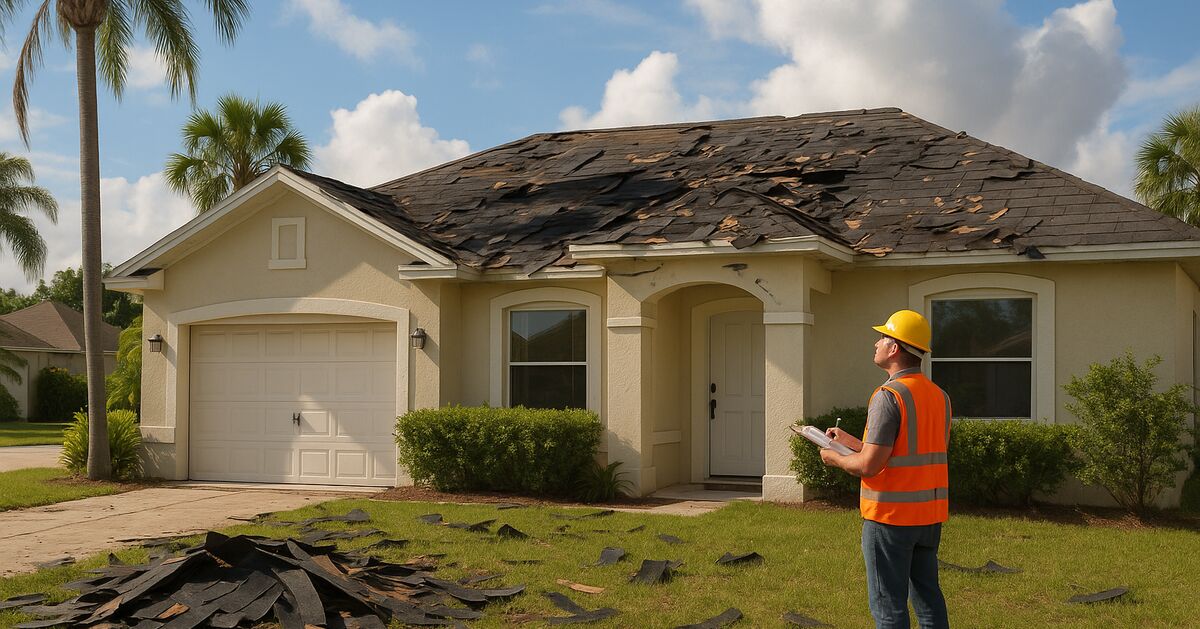
Your insurance adjuster is not your enemy, but they are not your advocate either. Understanding the difference between storm damage and normal wear and tear before you pick up the phone to file a claim can be the difference between a covered repair and a denied claim that leaves you holding a very large bill.
This matters a lot on the Suncoast. Homeowners in Sarasota, Bradenton, Venice, and Port Charlotte deal with a storm season that runs nearly half the year. Wind, hail, flying debris, and heavy rain are not rare events here. But Florida's insurance market has tightened dramatically, and carriers are looking harder than ever at every roof claim. Knowing the language, the logic, and the traps ahead of time puts you in a far stronger position.
What "storm damage" actually means to an insurer
Insurance policies are written around what the industry calls a "sudden and accidental" loss. Storm damage qualifies because it has a specific cause, a specific date, and a before-and-after distinction that can be documented.
Covered storm events typically include:
- Wind damage - lifted, cracked, or missing shingles from hurricane or tropical-storm-force winds
- Hail impact - bruised or cracked shingles, dented metal flashing, or granule loss concentrated in circular impact patterns
- Falling objects - tree limbs, utility poles, or debris driven into the roof surface
- Wind-driven rain - water intrusion that results directly from a wind-created opening, not from a pre-existing leak
- Lightning strikes - direct strikes that crack decking or cause fire damage
The key word in every one of those bullets is sudden. Something happened on a specific day, likely tied to a named storm or a documented weather event, and the roof was damaged as a direct result. Adjusters will often pull National Weather Service data for your zip code to confirm wind speeds or hail reports on the date you claim.
If you live in areas like Anna Maria Island, Englewood, or Osprey, you are in corridors that see some of the highest wind-exposure ratings on the Gulf Coast. That means storm events are common, but it also means carriers have adjusted their expectations and their scrutiny accordingly.
What "normal wear and tear" means, and why it is never covered
No homeowner's insurance policy covers a roof simply because it got old. Wear and tear is the gradual, expected deterioration that happens to every roof over time, and it is explicitly excluded from virtually every residential policy.
Examples that fall squarely in the wear-and-tear category:
- Shingles that have lost most of their granules over years of UV exposure
- Cracked or curling shingles caused by age and thermal cycling
- Dried-out or shrunken flashing around vents, chimneys, or skylights
- Moss, algae, or lichen buildup that has slowly lifted shingle edges
- Sagging or rotted decking caused by slow, long-term moisture infiltration
- Sealant or caulk that has failed from years of sun and heat
The logic is straightforward: insurance replaces what storms take, not what time takes. If your roof is 20 years old and the shingles have been slowly breaking down since year 12, the storm that finally let water in did not cause the underlying problem. The carrier will argue, often correctly, that the roof was already compromised and would have needed replacement regardless.
This is the gray zone where most disputes happen, and it is worth reading our post on physical signs your roof needs replacing, not just patching if you are unsure which side of the line your roof is on.
The gray zone: when storm damage and wear and tear overlap
Here is where things get genuinely complicated, and where Florida homeowners most often end up frustrated.
Imagine a roof with 18-year-old shingles that still had a few years of useful life left. A tropical storm passes through Lakewood Ranch or Nokomis with sustained 70 mph gusts. Several shingles are torn off and a section of ridge cap is gone. Water enters. The adjuster shows up and says: "Your shingles were already in poor condition. The storm may have accelerated pre-existing deterioration, but the primary cause was the age of the roof."
That determination can result in a partial payment, a depreciated payment, or a full denial.
Florida law and most policy language does not actually require a roof to be in perfect condition to receive storm-damage coverage. The storm has to be a "contributing cause" of the loss. But proving that is harder without documentation, and that is where preparation matters.
A few key points about this overlap:
- Age is not disqualifying on its own. A 15-year-old roof that was in good condition and was clearly damaged by a documented storm event should still have a legitimate claim.
- Pre-existing damage is disqualifying. If your roof had open gaps, rotted decking, or visibly failing shingles before the storm, the carrier will argue those conditions caused the leak, not the storm.
- Documentation changes everything. Dated photos, prior inspection reports, and maintenance records can demonstrate the roof was in serviceable condition before the storm hit.
This is one of the biggest reasons we encourage homeowners across our Suncoast service area to get a professional roof inspection every year, not just after storms. An inspection report showing your roof was sound before storm season is one of the most valuable documents you can have when a claim comes up.
How adjusters spot wear and tear vs. storm damage
Adjusters are trained to look for specific physical evidence. Knowing what they look for helps you understand their findings and pushes back on incorrect determinations more effectively.
Signs adjusters associate with storm damage:
- Granule loss in circular, concentrated patterns consistent with hail impacts
- Shingles torn from the same side of the roof (consistent with a directional wind event)
- Damage that matches the direction of the recorded wind in the storm
- Clean breaks or cracks at shingle tabs, not gradual fraying
- Dents in metal flashing, gutters, or vents consistent with hail size
Signs adjusters associate with wear and tear:
- Granule loss evenly distributed across the entire roof surface
- Shingles that are brittle, cracked, and cupped from UV exposure
- Flashing that has pulled away gradually from thermal expansion cycles
- Soft, spongy decking from long-term slow moisture
- Leaks at the same spots that have been patched or caulked multiple times
If you want a detailed breakdown of the inspection process itself, our post on what a roof inspection actually checks walks through every component an experienced roofer examines.
Florida-specific rules that affect your claim
Florida has some insurance rules that differ from the rest of the country, and they directly affect roof claims.
Actual Cash Value vs. Replacement Cost Value: Many Florida policies, especially those rewritten after recent market reforms, now pay Actual Cash Value (ACV) for roofs over a certain age rather than Replacement Cost Value (RCV). ACV factors in depreciation. On a 15-year-old asphalt shingle roof, an ACV payout could be 50-60 percent less than what a replacement actually costs. Read your policy declarations page carefully, and ask your agent to clarify which method applies to your roof.
The 25 percent rule (now modified): Florida previously required a full roof replacement if more than 25 percent of the roof was damaged or replaced. Recent legislative changes have modified this requirement, but local building codes in Sarasota County and Charlotte County still have specific thresholds. A licensed roofing contractor familiar with local permitting, like our teams in Sarasota and Port Charlotte, can tell you exactly what applies to your home.
Concurrent causation clauses: Some Florida policies include language that denies claims when both a covered cause (wind) and an excluded cause (wear and tear) contribute to the same loss. These clauses are one of the most common tools used to deny or reduce partial-damage claims. If your claim is denied on these grounds, it is worth consulting a public adjuster or a property insurance attorney.
Assignment of Benefits restrictions: Florida law now restricts Assignment of Benefits (AOB) arrangements where contractors collect insurance proceeds directly. You, as the homeowner, need to be the one managing the claim and signing the paperwork. Be cautious of any contractor who asks you to sign over your benefits before work begins.
What you can do right now to protect yourself
You do not need to wait until after a storm to strengthen your position. These steps make a real difference:
- Get a professional inspection annually. A written report before storm season establishes a documented baseline. If a storm hits and you file a claim, that pre-storm report is evidence of prior good condition. Read up on how long your roof realistically lasts in this climate so you know where you stand.
- Photograph your roof every year. Dated photos from a safe vantage point or from a drone give you a timestamped record. Do this in spring before hurricane season opens.
- Keep records of any repairs. Every patch, every re-nail, every tube of sealant should be documented with a receipt or a work order. This shows maintenance, not neglect.
- Review your policy before you need it. Understand whether you have ACV or RCV coverage, what your wind/hail deductible is (it is often a percentage of insured value in Florida, not a flat dollar amount), and whether your policy has any age-based exclusions.
- After a storm, act quickly but carefully. Tarping or boarding to prevent further damage is almost always covered and is your duty to mitigate. But avoid starting permanent repairs until an adjuster has documented the damage. If you need guidance on next steps after a storm, our detailed guide on how to file a roof insurance claim in Florida covers the process from start to finish.
When to get a roofer involved before the adjuster
This is a point many homeowners miss entirely. You are allowed, and we would argue wise, to have a licensed roofing contractor inspect your roof before or alongside the insurance adjuster's visit. A roofer who documents damage thoroughly, using photos, measurements, and a written scope of damage, gives you an independent record to compare against the adjuster's report.
If the adjuster's findings come back significantly lower than the contractor's assessment, you have grounds to negotiate or to request a re-inspection. You can also hire a public adjuster who works on your behalf (for a percentage of the settlement) to dispute a low or denied claim.
Our roofing services team does storm-damage assessments and can provide written documentation of our findings. We work in the Sarasota, Bradenton, Lakewood Ranch, Venice, and Bradenton areas, and we understand what local adjusters look for because we see these claims every season.
The bottom line
Storm damage and normal wear and tear are genuinely different things, and Florida insurance policies draw that line clearly. Where it gets complicated is the overlap, and that overlap is where most denied or underpaid claims live.
Your best protection is a well-maintained roof with a documented history, an annual inspection before storm season, and a clear understanding of your policy before you ever need to use it. If a storm does hit, having a trusted roofing contractor in your corner from the first call makes the entire process smoother.
If you have questions about your specific roof's condition or want a pre-season inspection, reach out to our team. We serve homeowners across the Suncoast and are happy to take a look, give you an honest assessment, and help you understand what you are working with before the next storm rolls in.