
Repair or replace? How to know when your Florida roof is done
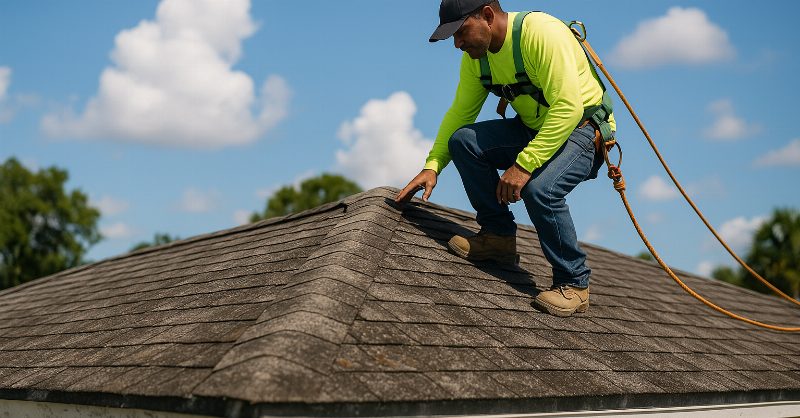
Florida sun, salt air, and hurricane season are a punishing combination, and your roof absorbs every bit of it. At some point, every homeowner on the Suncoast faces the same uncomfortable question: is it time to patch this thing again, or am I throwing good money after bad?
Getting that call wrong in either direction is costly. Repair when you should replace and you will be back on the phone with a roofer after the next heavy rain. Replace when a repair would have bought you five more solid years and you have spent tens of thousands of dollars you did not need to. This guide walks you through the real factors that tilt the decision one way or the other, with specific attention to the climate conditions across Sarasota, Bradenton, Lakewood Ranch, Venice, Englewood, and the rest of the Suncoast.
Start with age: the single most important number
No other factor matters more than how old your roof is, because age tells you how much useful life is left in the materials themselves.
- Asphalt shingles are the most common roofing material in Florida. A three-tab shingle roof in our climate typically lasts 15 to 20 years. Architectural (dimensional) shingles can push 25 years, but only with consistent maintenance.
- Tile roofs (concrete or clay) are far more durable. The tile itself can last 40 to 50 years, but the underlayment beneath it degrades and typically needs full replacement every 20 to 25 years.
- Metal roofs are the longest-lasting option in Florida, commonly running 40 to 70 years depending on the gauge and coating.
If your asphalt shingle roof is 18 years old and you are staring at a leak, replacement is almost always the smarter financial decision. You are near the end of the material's serviceable life, which means every repair is fighting entropy. For a deeper look at how our climate specifically affects these timelines, see how long a roof really lasts on the Suncoast.
The one-third rule: a practical financial guide
Here is a simple rule that experienced roofers use every day. Add up the estimated cost of the repair you are considering. If that repair cost equals one-third or more of what a full replacement would cost, the math almost always favors replacement, especially on an older roof.
Why? Because when one part of an aging roof fails, neighboring sections are typically at the same stage of degradation. You will likely be making another repair call within a year or two. The one-third rule forces you to think in total cost over time rather than just today's bill.
Physical signs your roof is telling you it is done
Some damage is obvious from the ground. Other warning signs require getting up on the roof or into the attic. Here are the conditions that typically mean repair is not enough.
Widespread granule loss on shingles
Asphalt shingles are coated with granules that reflect UV radiation and protect the asphalt layer underneath. When those granules wear away, the shingle bakes in the Florida sun, becomes brittle, and loses its waterproofing ability. Finding a small pile of granules in your gutters after a storm is normal. Finding them in thick mats after every rain, or seeing large bald patches on shingles from the ground, signals systemic failure across the roof surface. Patching a few shingles does nothing for the thousands of others that are equally degraded. The physical signs your roof needs replacing, not just patching goes into this in much more detail.
Widespread cracking, curling, or cupping shingles
Shingles curl in two ways. Cupping means the edges turn upward; it is usually caused by moisture imbalance. Clawing means the middle buckles upward while the edges stay flat; it is often a sign of improper installation or age-related shrinkage. Either condition across multiple roof sections means the material has broken down and cannot be restored by spot repair.
Sagging or soft spots in the deck
Step onto your roof (carefully, or have a professional do it) and feel for soft, spongy areas. Those indicate that the roof deck beneath the shingles has absorbed moisture and begun to rot. A soft deck is a structural problem, not a surface problem. You cannot simply re-shingle over rotted wood and call it fixed. The deck must be replaced, and at that point the cost difference between a targeted deck repair and a full roof replacement narrows considerably.
Visible daylight in the attic
Go into your attic on a bright afternoon and turn off every light source. If you can see pinpricks or streaks of daylight coming through the roof deck, water is getting in every time it rains. This is a serious condition. Small isolated gaps can sometimes be addressed with a targeted repair, but if you see light in multiple areas, the roof system has failed broadly.
Flashing failure around penetrations and transitions
Flashing is the metal that seals the joints around chimneys, skylights, vents, and roof-to-wall transitions. On Florida roofs, the constant expansion and contraction from heat cycling, combined with storm-force winds, causes flashing to lift, crack, and separate. Flashing leaks are often repairable in isolation, but if the flashing throughout the roof is in similar condition, it is a sign the entire roof system has reached the end of its service life.
Moss, algae, or lichen colonization
The humidity levels across the Suncoast, from the bay neighborhoods of Downtown Bradenton and Downtown Sarasota to the more rural areas around Osprey and Nokomis, create perfect conditions for biological growth on roofs. Algae leave dark streaks and can usually be treated. Lichen and thick moss are more serious because they physically embed into roofing material and trap moisture against the surface. Widespread moss and lichen growth on an older roof signals decay beneath the surface, not just cosmetic staining.
Florida-specific factors that accelerate the decision toward replacement
Living on the Suncoast adds a few unique pressures that homeowners in other states simply do not face.
Hurricane wind ratings and insurance requirements
Florida's insurance market has tightened dramatically in recent years. Many carriers will not insure, or will charge significantly higher premiums for, a roof that is older than 15 years, regardless of its visible condition. If your insurer is asking for a roof certification or threatening non-renewal, a failing inspection finding can force a replacement decision on a timeline you did not choose. Getting ahead of that pressure by proactively evaluating your roof gives you time to plan and budget. If a storm has already caused damage, understanding how to file a roof insurance claim in Florida the right way can make a significant difference in what your insurance covers.
Secondary water damage compounds costs quickly
Florida's combination of heavy tropical rainfall and high humidity means water intrusion does not just wet things, it creates mold and rot within days. A slow leak that might sit dormant for weeks in a dry climate will produce visible mold in a Florida attic within a week or two. Every month you delay on a failing roof increases the risk that you are not just replacing the roof, but also remediating mold and replacing insulation and ceiling drywall. The cost comparison between repair and replacement shifts dramatically when secondary damage is factored in.
Salt air corrosion near the coast
Homes in Englewood, Venice, Anna Maria Island, Siesta Key, and anywhere within a few miles of the Gulf experience accelerated corrosion from salt-laden air. Metal flashings, fasteners, and even some tile coatings degrade faster in coastal exposures. A 15-year-old roof two blocks from the water may be in worse structural condition than a 20-year-old roof in an inland community like Lakewood Ranch. Location matters when estimating remaining life. Our roofing services for Venice homeowners and Englewood homeowners account for these coastal-specific conditions.
Florida Building Code requirements
When damage triggers a replacement rather than a repair, Florida's building code requires that the new roof meet current hurricane-resistant standards. This includes proper underlayment, approved fastener patterns, and in many jurisdictions secondary water barriers. These requirements exist because they genuinely reduce damage in major storms. A code-compliant new roof is a meaningfully stronger roof than what it is replacing, which is worth factoring into the value equation.
When repair genuinely is the right answer
To be fair, there are plenty of situations where repair is the smart call.
- Your roof is less than 10 years old and the damage is localized to one area (around a vent, one corner after a tree branch strike, a small section of flashing).
- A single storm event caused specific damage to an otherwise healthy roof, and a credible inspector confirms the surrounding field of shingles is still in good condition.
- You have a tile roof where the underlayment still has useful life and only a handful of tiles cracked or slipped.
- You are planning to sell within the next year and a well-documented repair closes a buyer's concern without triggering a full replacement negotiation.
Even in these scenarios, an honest inspection is the starting point. A professional who will tell you what they actually see, including the things you do not want to hear, is worth far more than a low bid from someone who just wants to patch and move on.
What a proper inspection tells you before you decide
You cannot make a well-informed repair-versus-replace decision from the ground or from a contractor's quick look from the ladder. A thorough inspection covers the entire roof surface, the attic and deck underneath, all flashings, gutters, fascia, and soffit. It documents the age and condition of the underlayment, identifies moisture intrusion whether or not a visible leak exists yet, and gives you a realistic estimate of remaining useful life.
Annual inspections, or an inspection after any significant storm, are the best investment a homeowner can make in avoiding exactly this dilemma. Catching deterioration early gives you options. Waiting until you have a ceiling stain removes them. For a detailed breakdown of what inspectors actually check and how often you should schedule one, see what a roof inspection actually checks and how often you need one.
You should also think about inspection timing relative to hurricane season. Getting a professional assessment in late winter or early spring, before the storms arrive, leaves you time to act rather than scrambling for a contractor in July when every crew on the Suncoast is booked. For a full seasonal checklist, preparing your Florida roof for hurricane season is worth reading before June.
Making the call with confidence
The repair-or-replace decision comes down to three things working together: age and remaining life expectancy, the nature and extent of the current damage, and the full cost picture including what happens if you wait.
If your roof is young, the damage is isolated, and a repair is clearly less than one-third the replacement cost, repair. If your roof is aging, the damage is widespread or structural, your insurance situation is precarious, or you have been repairing the same areas repeatedly, replace.
The worst outcome is doing neither and hoping for another season. Florida weather does not wait, and a compromised roof degrades faster in our climate than anywhere else in the country.
Our team serves homeowners across Sarasota, Bradenton, Lakewood Ranch, Port Charlotte, and the entire Suncoast region. If you are wrestling with this decision, we are happy to give you a straightforward inspection and an honest opinion before you commit to anything. Reach out and we will schedule a time to take a proper look.