
Roof ventilation: why it matters for Florida homes and energy bills
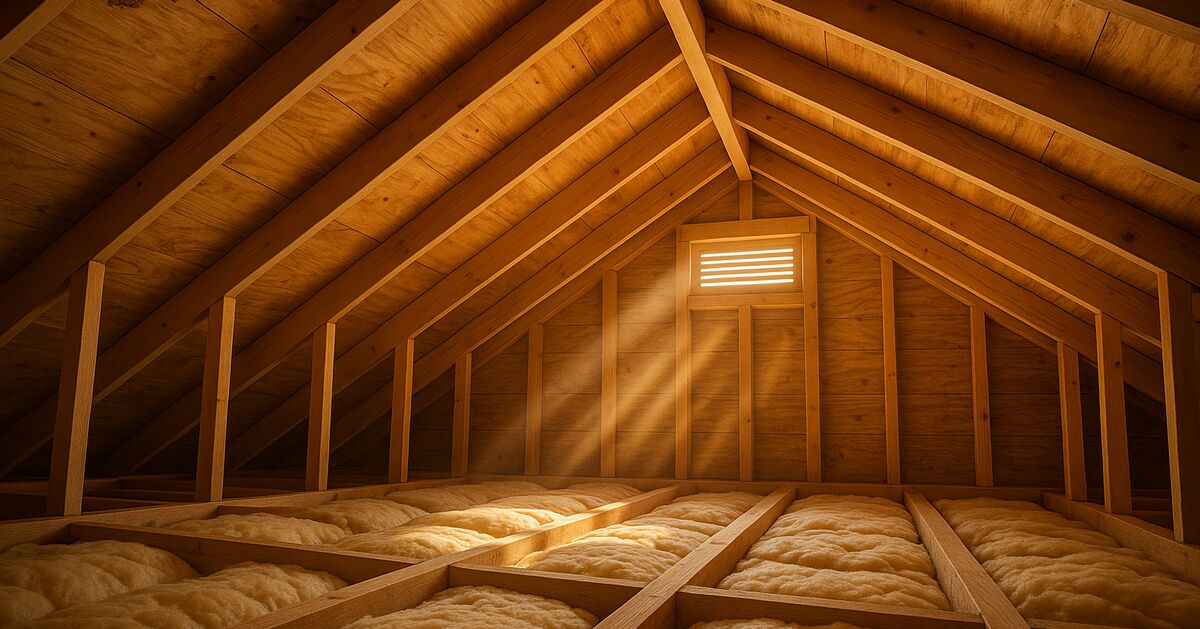
Your attic could be hitting 160°F right now, and your air conditioner is paying the price for it.
That's not an exaggeration. On a typical Sarasota summer afternoon, an under-ventilated attic routinely reaches temperatures that would warp wood, bake shingles from the underside, and force your HVAC to work overtime just to keep your living space bearable. Roof ventilation is one of those topics that sounds technical and dry until you realize it directly affects your monthly electric bill, the lifespan of your roof, and the comfort of every room in your home.
Let's break down what ventilation actually does, why Florida's climate makes it more critical than almost anywhere else in the country, and what you can do about it if yours isn't working right.
What roof ventilation actually does
Ventilation is simply the movement of air through your attic space. Fresh air enters near the lower edges of the roof (at the soffits or eaves) and hot, humid air exits near the peak (through ridge vents, turbines, or power fans). When the system works properly, it creates a continuous flow that keeps the attic from becoming a sealed oven.
There are two things this airflow accomplishes that matter enormously in Florida:
- Heat removal. Radiant heat from the sun pounds your roof surface all day. Without a path to escape, that heat saturates the decking, bakes the underside of your shingles, and radiates down into your living space. Good airflow continuously flushes that heat out.
- Moisture control. Florida's humidity is relentless. Warm, moisture-laden air from inside your home rises into the attic every day. If it has nowhere to go, it condenses on the underside of the decking and on framing members. Over time that moisture causes rot, mold, and structural softening that no repair can undo without significant cost.
Those two functions are why ventilation is baked into building codes, roofing manufacturer warranties, and every reputable roofing service recommendation you'll find.
Why Florida is the worst-case scenario for poor ventilation
Most of the conventional wisdom about roof ventilation was written for northern climates where the primary concern is preventing ice dams in winter. Florida is a different beast entirely.
The heat load is extreme. Sarasota, Venice, and Port Charlotte sit in one of the hottest, sunniest regions in the continental United States. Roof surfaces on dark shingles can exceed 180°F in July. The longer that heat lingers in your attic, the more aggressively it transfers into your conditioned living space.
The humidity never really goes away. Even in our dry season, the Gulf Coast stays humid. During the rainy season from June through September, humidity levels routinely push above 90%. Any gap in your ventilation allows that moisture to accumulate where you cannot see it.
Air conditioning is not optional. Because cooling runs nearly year-round in communities like Lakewood Ranch, Bradenton, and Anna Maria Island, the temperature differential between your cool interior and your baking attic is dramatic for more months of the year than in almost any other state. That differential is exactly what drives heat transfer downward into your living space.
Roofing materials take more punishment. Asphalt shingles are warrantied by manufacturers on the assumption that attic temperatures stay within reasonable ranges. Chronic overheating from poor ventilation voids some warranties and accelerates granule loss, cracking, and curling. If you've noticed signs that your roof may need more than just a patch, overheating could be a contributing factor even if you never connected the two.
The real cost: what bad ventilation does to your energy bill
Here's the practical number that tends to get homeowners' attention. When your attic runs 40 to 50 degrees hotter than it should, your air conditioner must compensate. Studies from Florida-based building science researchers have consistently found that improving attic ventilation and insulation together can reduce cooling loads measurably, with some homeowners in hot-humid climates reporting noticeable reductions in monthly energy costs after upgrades.
We won't invent a specific dollar figure for your home because the savings depend on your square footage, your current insulation levels, your AC system's age and efficiency, and how severe your current ventilation shortfall is. What we will say plainly: if your upstairs rooms feel stuffy and hard to cool, if your electric bill spikes in June and doesn't recover until October, and if your roof is more than ten years old, the attic is the first place worth investigating.
Types of ventilation and which ones work in our climate
Not every ventilation approach performs equally well in Southwest Florida's conditions. Here's a plain-English rundown of what you'll encounter:
Soffit vents (intake) These sit along the underside of your eaves and allow outside air to enter the attic at a low point. Without adequate soffit ventilation, even the best exhaust vents can't do their job because there's nothing to draw fresh air in. Blocked or inadequate soffits are among the most common problems we find on homes in older neighborhoods in Englewood and Nokomis.
Ridge vents (exhaust) A continuous ridge vent runs along the peak of the roof and allows hot air to exit along the entire length of the ridge. These are generally considered the most effective exhaust option for residential roofs because they work passively, require no power, and create even airflow from one end of the attic to the other. They also have no moving parts to fail.
Turbine vents (exhaust) Those spinning aluminum mushroom caps you see on many Florida roofs. They work on wind power, spinning to draw air up and out. They're inexpensive and reasonably effective when wind is blowing, but in the dead-calm mornings of a Florida summer they may underperform. They also require occasional maintenance and can become noisy as they age.
Power attic ventilators (PAV) Electric-powered fans that actively exhaust hot air. They sound appealing but come with an important caveat for Florida homes: if your attic is not perfectly sealed from your living space, a powerful fan can actually depressurize the attic and pull conditioned air up from your home, increasing your energy use rather than reducing it. They also add a mechanical component that can fail. Many building scientists have moved away from recommending them as a primary ventilation strategy without careful assessment of the whole attic envelope.
Gable vents Triangular vents in the gable ends of the attic. They're common on older homes throughout Downtown Sarasota and Downtown Bradenton. They provide some ventilation but don't work as evenly as a ridge-and-soffit system because they rely on cross-breezes rather than the natural stack effect of heat rising.
The most effective system for most Florida homes is a well-balanced combination of continuous soffit vents at the intake and a continuous ridge vent at the exhaust. The key word is balanced: industry guidelines suggest a ratio of intake to exhaust that keeps air moving without creating pressure imbalances.
Common ventilation mistakes that cost homeowners money
Blocking soffits with insulation. When blown-in insulation is added to an attic floor (which is a smart move for energy efficiency), installers sometimes inadvertently cover the soffit vent channels. Baffles should be installed first to maintain the air pathway. This is a surprisingly common oversight.
Adding exhaust without adding intake. Homeowners sometimes add a turbine or ridge vent but leave the soffit vents inadequate. The result is that the exhaust vent simply pulls air from any gap it can find, including your living space, which works against your cooling system.
Assuming new roofing fixed the problem. A roof replacement is an excellent time to address ventilation because the decking is accessible and new vents can be installed cleanly. But if ventilation wasn't part of the conversation during your last re-roof, it may still be inadequate even on a relatively new roof. Our team covers this as part of every roof inspection so you know where you stand.
Ignoring the insulation side of the equation. Ventilation and insulation work as a team. In Florida's hot-humid climate, proper insulation at the attic floor keeps conditioned air from leaking up and keeps radiant heat from pushing down. Addressing only one without the other leaves money on the table.
What to do if you're not sure about your attic ventilation
Start by asking a few simple questions:
- Are your soffit vents visible and open, or do they look painted over, blocked by debris, or missing altogether?
- Does your upstairs feel consistently warmer than your downstairs during the summer, despite the AC running?
- Has anyone checked your attic ventilation in the past few years, or ever?
- Do you know what type of exhaust vents are on your roof and whether they're functioning?
If the answers are uncertain, a professional assessment is the logical next step. A knowledgeable roofing contractor can walk your attic, measure your net free area of ventilation, check whether your soffit channels are clear, and tell you specifically what's working and what isn't. That's a very different thing from guessing based on what's visible from the driveway.
We serve homeowners across Osprey, Siesta Key, Port Charlotte, and the full Gulf Coast corridor. If you'd like an honest assessment of what's happening in your attic, our team is straightforward about what we find and what actually needs to be done about it. Learn more about how we work before you call if you like, or head straight to our contact page to get started.
How ventilation ties into your roof's overall health
Poor ventilation doesn't just raise your electric bill. It accelerates aging across your entire roofing system. Decking that cycles through extreme heat and absorbs moisture loses structural integrity faster than decking in a well-ventilated attic. Shingles that bake from underneath lose granules faster and crack sooner. Rafters and trusses exposed to chronic moisture develop mold and begin to soften.
If you're trying to decide whether a repair will hold or whether you're looking at a bigger problem, understanding the attic environment is part of that picture. The questions worth asking any roofing contractor you consider hiring should include whether they look at ventilation as part of their evaluation process, not just the surface of the roof.
And if you've had storm damage recently, keep in mind that a damaged ridge vent or soffits compromised by wind can make the ventilation problem much worse overnight. Understanding what insurance covers in those situations is worth reading up on before you file anything. Our guide on storm damage versus normal wear covers exactly what tends to be covered and what doesn't.
The bottom line
Roof ventilation is one of those systems that works silently in the background until it doesn't, and by the time you notice something is wrong, the attic decking or the shingles have already taken years of unnecessary abuse. In a climate as demanding as ours along the Gulf Coast, there's no good reason to leave the question unanswered.
The good news is that ventilation problems are generally fixable without replacing an entire roof. Adding or upgrading soffit vents, installing a proper continuous ridge vent, and clearing blockages are all relatively straightforward projects when done by someone who knows what they're looking for. The return comes in the form of lower cooling costs, a longer-lived roof, and a more comfortable home during the months when Florida makes you earn every degree of indoor temperature.
If you're in Sarasota, Bradenton, Venice, or anywhere else across our service area, we're happy to take a look and tell you what we actually find, with no pressure and no invented problems. That's how we'd want it done for our own homes, and it's how we do it for yours.