
Choosing a roofing contractor on the Suncoast: questions to ask
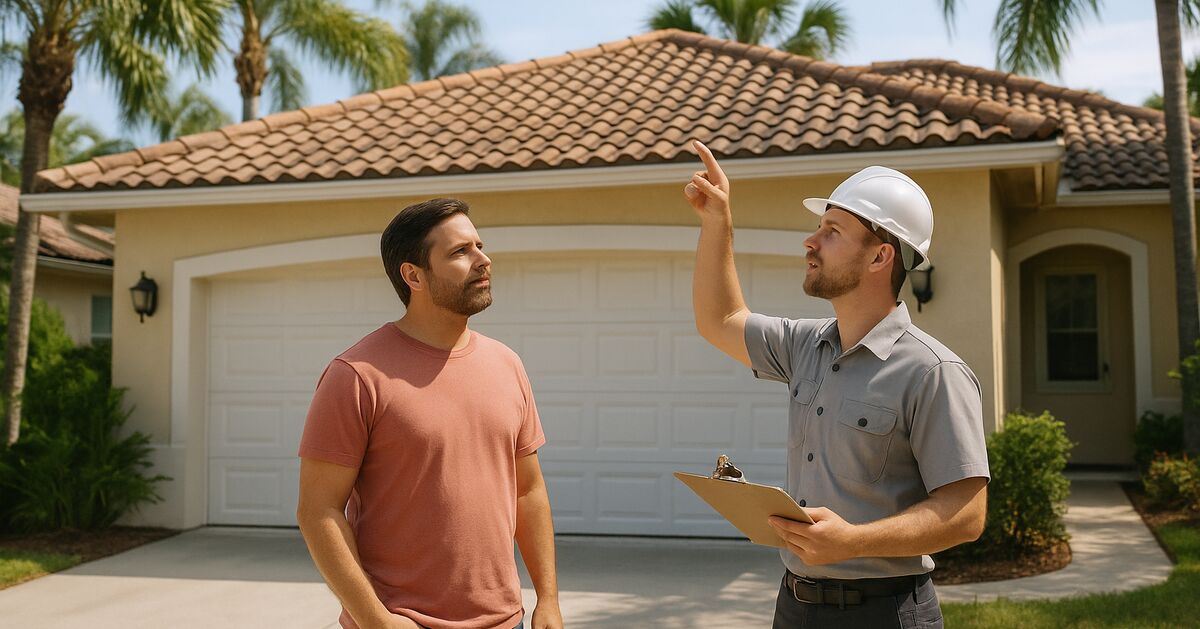
Your roof is the single most expensive component of your home to replace, and the contractor you choose matters just as much as the materials they install. On the Suncoast, that reality hits especially hard: a region that sees intense UV exposure, hurricane-force winds, salt-laden air, and torrential summer downpours demands a roofer who genuinely understands the local environment, not just someone who showed up after the last named storm and is passing out flyers in your neighborhood.
This guide gives you concrete, specific questions to ask any roofing contractor before you commit, along with plain explanations of why each question matters. Whether you are in Sarasota, Bradenton, Venice, Englewood, or anywhere else along our coast, these questions apply equally.
Start with the basics: licensing and insurance
Ask: "Can you show me your Florida roofing contractor license and your certificate of insurance?"
Florida requires roofing contractors to hold a state-issued license. A Certified Roofing Contractor license (the "CC" prefix) lets them work anywhere in the state. A Registered Roofing Contractor license is limited to the jurisdiction where they registered. Both are legitimate, but you need to know which one your contractor holds and verify it on the Florida Department of Business and Professional Regulation (DBPR) website.
Equally important is insurance. You want to see two policies:
- General liability - covers damage to your property if something goes wrong during the job
- Workers' compensation - covers the crew if someone is injured on your roof
If a worker falls off your roof and the contractor carries no workers' comp, you can be held liable as the property owner. Always ask for the actual certificate of insurance, not just a verbal assurance. Call the insurance company named on the certificate to confirm the policy is current.
Local experience is not optional
Ask: "How many roofs have you replaced in this specific area, and how long have you been working here?"
Roofing in Southwest Florida is not the same as roofing in Georgia or the Midwest. Materials behave differently under chronic heat and humidity. Fastener schedules, underlayment requirements, and ventilation strategies all shift when you are 200 feet from a saltwater bay. A contractor who relocated here recently and learned their trade in a drier climate may not instinctively know these differences.
Local experience also matters for code compliance. Sarasota County, Manatee County, and Charlotte County each have building departments with their own inspection processes. A contractor who has pulled dozens of permits in these counties knows what inspectors look for and how to avoid costly re-inspections. This is not a small thing: a permit that fails inspection can hold up your project for weeks and, in some cases, trigger a requirement to redo work.
If you are in Lakewood Ranch or Port Charlotte, ask specifically whether the contractor is familiar with permit procedures in those jurisdictions.
Subcontractors: who is actually doing the work?
Ask: "Will your own employees be on my roof, or will you subcontract the labor?"
Many roofing companies function primarily as sales organizations. They sign the contract with you, then hand the job to a subcontractor crew they may have never worked with before. That is not automatically disqualifying, but you deserve to know, and you should ask follow-up questions:
- Does the subcontractor carry their own workers' comp and liability?
- Has the general contractor used this crew before?
- Who will be the point of contact if there is a problem with the work after the job is done?
When the installing crew is the contractor's own trained employees, accountability is much cleaner. If something goes wrong, there is no question about whose responsibility it is.
Permits: non-negotiable in Florida
Ask: "Will you pull the required permit, and will the job be inspected by the county?"
In Florida, a full roof replacement almost always requires a permit. This is not bureaucratic overhead: the inspection process exists to verify that your roof was installed to the Florida Building Code, which in coastal areas includes specific requirements for wind resistance. A roof installed without a permit is a serious problem. It may void your homeowner's insurance, complicate a future sale, and leave you with no third-party verification that the work was done correctly.
Any reputable contractor will pull the permit and include it as a standard part of the job. If a contractor suggests skipping the permit to save money or speed up the timeline, treat that as a hard disqualifier and move on. To understand more about how your roof's construction affects your insurance costs, our post on storm damage vs. normal wear and what your insurance will and won't cover is worth reading before you hire anyone.
The written estimate: what it should include
Ask: "Can you give me a fully itemized written estimate before I sign anything?"
A good estimate is not a single line that says "tear off old roof, install new roof: $X." A proper written estimate should spell out:
- The brand and product line of the shingles, tiles, or metal panels being installed
- The weight and type of underlayment
- The manufacturer's warranty on the materials
- The contractor's own workmanship warranty and exactly what it covers
- Whether the price includes disposal of the old roofing material
- The permit fee (usually passed through at cost)
- A payment schedule with specific milestones
When you have three estimates in front of you, you can only make a meaningful comparison if they are all describing the same scope of work. If one is significantly lower, look closely: they may be proposing a lighter underlayment, skipping a layer of decking repairs, or using a lower-tier shingle product.
Warranties: manufacturer vs. workmanship
Ask: "What manufacturer warranty does this product carry, and what is your own workmanship warranty?"
These are two separate things and both matter. A shingle manufacturer might offer a 25-year or 50-year material warranty, but that warranty typically only covers defective materials, not installation errors. If your new roof leaks because a flashing was not properly sealed, the manufacturer's warranty does not cover that.
The contractor's workmanship warranty covers installation errors. Two years is a common minimum, but reputable contractors often offer five years or more. Ask exactly what the workmanship warranty covers, how to make a claim, and whether the warranty is transferable if you sell the house.
Some manufacturers offer enhanced warranties (sometimes called "system warranties" or "platinum" warranties) that cover both materials and labor, but only when the contractor is a certified installer of that brand. Ask whether your contractor qualifies for any enhanced warranty programs.
References and recent work in your area
Ask: "Can you give me contact information for three homeowners in this area whose roofs you replaced in the past year?"
A contractor who hesitates to provide references is a contractor who is not confident in their recent work. Good references from neighbors in Nokomis, Osprey, or Anna Maria Island are more useful than a glowing online review, because you can drive by the house, look at the finished roof, and ask the homeowner about their experience with the crew's cleanliness, communication, and how any problems were handled.
When you call a reference, ask specifically:
- Did the job finish on the day they said it would?
- Were there surprise costs at the end?
- Did anyone come back promptly when there was a concern?
- Would you hire them again?
Storm chasers: a real risk on the Suncoast
After a major storm, roofing contractors arrive from out of state in large numbers. Some do good work. Many do not. The pattern is consistent: they appear quickly when demand is high and labor is scarce, they may offer to "help you with your insurance claim" in ways that are legally murky, they collect a large deposit, and then they either do the work poorly or disappear entirely.
This is not a hypothetical risk. Florida has some of the strongest consumer protections in the country specifically because this problem is so common here. If a contractor is not based in the area, does not have a local office address (not just a P.O. box), and is pushing you to sign quickly, slow down.
Our guide on how to file a roof insurance claim in Florida the right way walks through how a legitimate claims process works, which can help you recognize when someone is steering you toward something that does not benefit you.
Payment terms: how much upfront is reasonable?
Ask: "What is your payment schedule?"
A standard and reasonable payment structure for a roof replacement looks something like this: a modest deposit at signing to cover materials ordering (often 25-30%), a progress payment when materials are delivered, and a final payment after the job passes inspection and you have walked the site.
Be cautious about any contractor who asks for 50% or more upfront, especially before materials arrive. Be very cautious about anyone who asks for full payment before the work is done. Florida law actually has provisions limiting deposits in some contractor situations precisely because prepayment disputes are so common.
The inspection before the estimate
Ask: "Will you physically inspect my roof before you write the estimate?"
Any estimate written from the ground or from Google Maps satellite imagery is a guess. A contractor worth hiring will get on your roof, look at the decking condition, examine the flashings around skylights, vents, and chimneys, check the soffit and fascia, and assess the ventilation. That inspection is what allows them to give you a realistic price.
If you are not sure what that inspection should involve, our post on what a roof inspection actually checks and how often you need one walks through the process step by step.
How to compare multiple bids fairly
Most homeowners are told to get three bids. That is good advice, but only if you compare them correctly. Price alone is a poor guide. Two bids at similar prices may describe very different scopes of work. One bid that is notably lower than the others often reflects something being left out, not a better deal.
Put the bids side by side and compare:
- Material brand and product tier
- Underlayment type and thickness
- Whether decking repairs are included or billed separately
- Permit fees (included or separate?)
- Cleanup and haul-away of old material
- Start date and estimated duration
- Workmanship warranty length and coverage
If any of these items are absent from a written estimate, ask before you assume.
A quick checklist before you sign
- [ ] Verified active Florida roofing contractor license on DBPR
- [ ] Confirmed current general liability insurance (called the insurer directly)
- [ ] Confirmed current workers' compensation insurance
- [ ] Know whether crew is in-house or subcontracted
- [ ] Confirmed permit will be pulled
- [ ] Have a fully itemized written estimate
- [ ] Understand both the material warranty and the workmanship warranty
- [ ] Have checked at least two local references
- [ ] Know the full payment schedule before signing
We make this process straightforward
Asking these questions takes a little time, but it protects an investment that can easily run into five figures. Homeowners across Sarasota, Bradenton, Venice, Englewood, Lakewood Ranch, and the surrounding communities deserve a roofer who will answer every one of these questions without hesitation, because a good contractor expects to be vetted.
You can browse all the roofing services we offer or check our full list of service areas to confirm we work in your community. If you have questions before you are ready for an estimate, our FAQ page covers many of the common ones. And when you are ready to have someone get on your roof and give you an honest assessment, reach out and schedule a free inspection. No pressure, no obligation, just a straight answer about what your roof needs.
If you are still working out whether your roof needs a full replacement or just some targeted repairs, our post on repair or replace: how to know when your Florida roof is done is a helpful next read.