
Shingle vs. Tile vs. Metal: Choosing the Right Roof for a Gulf-Coast Home
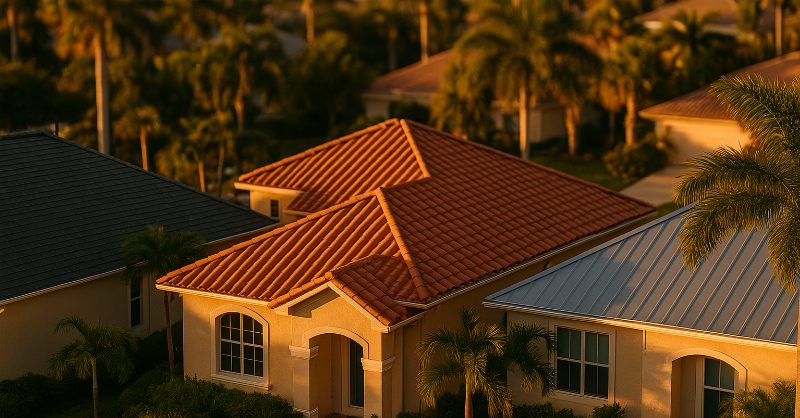
Your roof has one of the hardest jobs in Florida: absorb blistering UV radiation nine months of the year, shed sheets of rain in the other three, and hold on for dear life when a named storm rolls up the Gulf. The material you put up there isn't just an aesthetic decision - it is a long-term financial and safety decision. Get it right and you won't think about your roof again for decades. Get it wrong and you'll be dealing with leaks, wind damage, and premature replacement costs that nobody budgeted for.
This guide walks you through the three materials that dominate Suncoast roofs - asphalt shingles, concrete or clay tile, and metal - covering how each one performs in our specific climate, what it costs to own over time, and the situations where each makes the most sense.
Why Gulf-Coast Conditions Change the Equation
Before comparing materials, it helps to understand exactly what they're up against here. Homes in Sarasota, Bradenton, Venice, and the surrounding communities face a combination of stressors that most of the country simply doesn't deal with:
- Intense UV exposure. Florida receives more solar radiation than almost any other state. UV breaks down organic binders in roofing materials faster than in northern climates.
- High heat and thermal cycling. Rooftop surface temperatures regularly hit 160 to 170 degrees Fahrenheit in summer. Materials expand and contract every single day, stressing fasteners and seams over time.
- Salt-laden air. Homes on Siesta Key, Anna Maria Island, and anywhere within a mile or two of the Gulf or bay deal with salt in the air year-round. Salt is corrosive and accelerates degradation in materials that weren't designed for coastal exposure.
- Tropical storms and hurricanes. Southwest Florida sits in a historically active hurricane corridor. Wind uplift, flying debris, and wind-driven rain are design factors, not edge cases.
- Heavy seasonal rainfall. The rainy season dumps enormous volumes of water in short windows. Roof systems need to drain fast and seal reliably.
Keep those stressors in mind as we look at each material.
Asphalt Shingles: The Practical Workhorse
Asphalt shingles are the most common roofing material in the United States, and they remain a popular and perfectly legitimate choice in our area - as long as you choose the right product and set realistic expectations.
How they hold up here
Standard three-tab shingles are largely disappearing from Florida installs, and for good reason: they're rated for lower wind speeds and they age quickly under our UV load. What you want, if you go with asphalt, is an architectural (dimensional) shingle with a Class 4 impact rating and a wind rating of at least 130 mph. Several manufacturers offer shingles specifically tested for Florida's wind and humidity conditions.
Even the best asphalt shingles on a Sarasota or Bradenton home will typically last 20 to 25 years with proper installation and maintenance. That's a meaningful lifespan, but it's notably shorter than tile or metal. You can read more about realistic material lifespans in our post on how long a roof really lasts on the Suncoast.
Algae and moss growth is a real issue with asphalt in Florida's humidity. Copper or zinc granules in the shingle composition help, but you'll likely see some staining over the years. A periodic soft wash keeps it manageable.
The cost advantage
Asphalt shingles are the most affordable roofing material to install. That lower upfront cost can be genuinely important for budget-conscious homeowners, for rental properties, or when you're planning to sell within a decade and simply need a clean, functional roof without overpaying for longevity you won't use.
Where shingles make sense
- Tighter budgets where upfront cost is the primary driver
- Homes in neighborhoods with HOA restrictions that don't specify tile or metal
- Situations where you want a fast, straightforward installation with minimal structural considerations
- Replacement projects on homes with standard roof pitches and deck structures already sized for shingles
Where shingles fall short
- Homes very close to the Gulf or bay where salt exposure is constant
- Situations where you want a 40- to 50-year product and don't want to re-roof in your lifetime
- High-end homes where curb appeal and material quality are a priority
Concrete and Clay Tile: The Florida Classic
Drive through any established neighborhood in Lakewood Ranch, Venice, or the barrier island communities and you'll see tile roofs everywhere. There's a reason they've been the signature look of Florida homes for generations: when properly installed, they're exceptionally well-suited to our climate.
How they hold up here
Concrete tile and clay tile are both inorganic materials. UV radiation doesn't degrade them the way it does asphalt. They don't rot, they don't grow algae in the same way, and properly installed tile roofs routinely last 40 to 50 years on Florida homes. The color is baked in or applied with a durable coating, so a tile roof can still look sharp after three decades with minimal maintenance beyond cleaning.
From a wind resistance standpoint, modern tile installations use a combination of foam adhesive and mechanical fasteners that perform well in high-wind conditions. Florida's building code has driven significant improvements in tile attachment methods, particularly after lessons learned from major storms. That said, tile is not indestructible - individual tiles can crack from impact (falling branches, hail), and when they do, repairs are straightforward as long as matching tiles are available.
Salt air is largely a non-issue for tile itself. The underlying components, particularly the underlayment and fasteners, still need to be specified for coastal use. A good contractor will use corrosion-resistant fasteners and a high-quality underlayment that doesn't degrade prematurely. Our roofing services page covers the systems we use for coastal installations.
Weight considerations
Tile is heavy - often three to four times heavier than asphalt shingles. Most homes in our area that were built after the mid-1980s were engineered with tile loads in mind, but if you're converting from shingles to tile on an older home, a structural assessment is smart. It's not usually a dealbreaker, but it's a real consideration.
Where tile makes sense
- Homes in established Florida neighborhoods where tile is the architectural norm
- Owners who want a 40-plus-year roof and the lowest possible lifetime cost per year
- Properties where curb appeal, resale value, and neighborhood fit matter
- New construction, where the structure can be designed for tile weight from the start
Where tile falls short
- Budget-sensitive projects where the higher upfront cost is prohibitive
- Homes where the existing structure would need significant reinforcement
- Situations where a very fast installation timeline is required
Metal Roofing: The High-Performance Option
Metal roofing has grown enormously in popularity on the Suncoast over the past decade, and it's not hard to understand why once you look at the performance numbers. Standing-seam metal in particular is engineered to handle exactly the conditions we described at the top of this post.
How it holds up here
A properly installed standing-seam metal roof with Galvalume or coated steel panels can last 40 to 70 years in Florida. Metal reflects solar radiation rather than absorbing it, which means your attic stays cooler and your air conditioning works less hard during our long summers. That energy efficiency benefit is real and ongoing.
For wind resistance, concealed-fastener standing-seam systems are among the best performers available. There are no exposed screw heads to back out over time, and the interlocking seam geometry resists uplift very effectively. Homes in high-wind zones near Englewood, Port Charlotte, or Osprey are strong candidates for metal.
Metal also handles our heavy rainfall well. The smooth surface sheds water fast, and a properly designed system has no exposed penetrations that could allow wind-driven rain to enter.
The main enemy of metal in coastal environments is corrosion. This is where product selection matters enormously. Bare steel is not appropriate close to the Gulf. You want aluminum panels, or steel with a Galvalume coating and a high-quality painted finish rated for coastal exposure. When specified correctly, a metal roof performs beautifully even a block from the water on Anna Maria Island or Siesta Key.
Noise and expansion
Two concerns homeowners often raise about metal: noise and popping sounds. A well-installed metal roof over a solid deck with adequate insulation is not significantly louder in rain than other materials. The thermal expansion "ticking" that some metal roofs produce comes from poor installation details, not from metal roofing as a category. These issues are largely eliminated with experienced installation and proper clip selection.
Where metal makes sense
- Homeowners who want the longest possible lifespan and lowest lifetime maintenance
- Coastal homes where UV reflection and heat reduction are priorities
- Properties in high-wind exposure categories
- Homes with low-slope or complex roof geometries where tile isn't practical
- Owners who want to make one more roofing decision and never think about it again
Where metal falls short
- HOA communities that prohibit metal finishes (check your documents first)
- Situations where the higher upfront cost compared to shingles is a barrier
- Homes where the standing-seam aesthetic doesn't fit the architectural style
Side-by-Side Summary
| | Asphalt Shingles | Concrete/Clay Tile | Metal | |---|---|---|---| | Typical lifespan (SW Florida) | 20-25 years | 40-50 years | 40-70 years | | Upfront cost | Lowest | Mid to high | Mid to high | | Wind resistance | Good (with right product) | Very good | Excellent | | UV/heat performance | Fair | Good | Excellent | | Salt-air suitability | Fair | Good | Excellent (if specified correctly) | | Weight | Light | Heavy | Light | | Maintenance | Low-moderate | Low | Very low |
What About Insurance?
Florida's property insurance market is directly tied to roofing decisions in ways that homeowners in other states don't experience. Some insurers will not write a new policy on a home with a shingle roof older than 15 years. Others offer meaningful discounts for metal roofs or for roofs with a Miami-Dade product approval. When you're choosing a material, it genuinely pays to call your insurance agent and ask how each option affects your premium and insurability.
If you're dealing with storm damage and navigating a claim, our guide on how to file a roof insurance claim in Florida walks through the process step by step.
Don't Skip the Inspection Step
Whatever material you're leaning toward, an honest inspection of your current roof is the right starting point. You may have more life left on your existing system than you think, or you may have damage that makes replacement more urgent than you realized. Our post on what a roof inspection actually checks explains what a thorough inspector looks at and how to use that information.
If your current roof is showing visible signs of failure, our guide to physical signs your roof needs replacing, not just patching can help you separate a repair situation from a full replacement situation before you commit to anything.
Local Considerations by Community
The right material can also shift a bit depending on exactly where your home sits on the Suncoast:
- Barrier island homes (Anna Maria Island, Siesta Key) face the highest salt-air exposure. Metal specified for coastal use, or quality tile with coastal-grade underlayment and fasteners, is the smart choice.
- Lakewood Ranch and newer master-planned communities often have HOA requirements that mandate tile profiles. Confirm your community's standards before getting bids.
- Older Sarasota and Bradenton neighborhoods frequently have homes built for shingle loads. A structural consultation is wise before converting to tile.
- Port Charlotte and Englewood sit in areas with a history of significant hurricane impact. Wind ratings should be a top priority in material selection.
- Nokomis and Osprey homes often mix coastal proximity with wooded lots, where falling branches are a real hazard. Impact resistance is worth weighting heavily in your decision.
You can learn more about what we see and recommend in specific communities on our Sarasota roofing page, our Venice roofing page, and our Englewood roofing page.
Getting to a Decision
There is no single right answer that fits every home, every budget, and every homeowner's priorities. But the framework is straightforward:
- If upfront cost is your binding constraint, quality architectural shingles with proper wind ratings are a responsible, proven choice.
- If you want the traditional Florida look, a 40-plus-year lifespan, and strong resale value, tile is hard to beat.
- If you want maximum longevity, the best wind and heat performance, and you're comfortable with the investment, standing-seam metal is the high-performance choice.
The most important thing you can do is work with a contractor who is honest about the tradeoffs, who specifies materials correctly for your home's location and exposure, and who installs to code with proper underlayment, fasteners, and flashing details. The material matters, but the installation matters just as much.
If you're ready to talk through options for your specific home, reach out to our team for a no-pressure consultation. We serve homeowners across the Suncoast, from Bradenton to Lakewood Ranch and everywhere in between, and we're happy to walk you through what makes sense for your situation.