
Tile roof repair in Florida: costs, timelines, and common issues
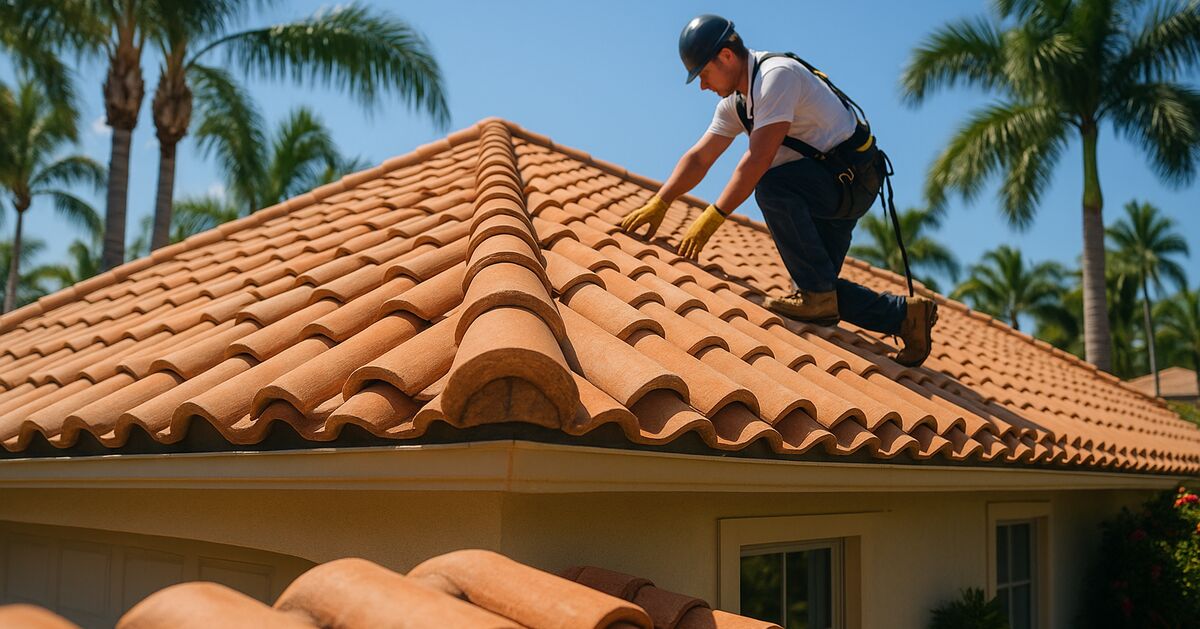
Tile roofs look nearly indestructible sitting on homes along Siesta Key or out in Lakewood Ranch, but the truth is they need attention more often than most homeowners realize. The tiles themselves can last 40 to 50 years. The materials underneath them, the underlayment, flashing, mortar, and fasteners, have a much shorter lifespan. Understanding that distinction is the key to making smart repair decisions and avoiding small problems that grow into expensive ones.
Why tile roofs need repairs even when they look fine
A concrete or clay tile is not a single sealed unit. It's a protective shell that sits over a layered system. Rain and wind get under cracked or displaced tiles and attack the underlayment. UV exposure bakes the felt paper beneath the tiles year after year. Salt air from the Gulf accelerates corrosion on metal flashings around chimneys, skylights, and roof-to-wall transitions.
In our climate, from Port Charlotte up through Sarasota and Bradenton and out to Anna Maria Island, we deal with a unique combination of intense heat, high humidity, tropical rain events, and salty coastal air. That environment is genuinely harder on roofing systems than inland areas experience. A tile roof that would sail through 30 years in Arizona may need underlayment replacement in 20 years here because moisture simply never leaves the system the way it does in a dry climate.
The other thing homeowners miss: tile is brittle. Concrete and clay tiles crack when walked on incorrectly, when hit by falling branches, or when hail strikes at the wrong angle. A cracked tile is not a cosmetic issue. Water gets through it, sits on the underlayment, and starts working through seams and nail holes within a few rain cycles.
The most common tile roof problems on the Suncoast
Cracked or broken tiles. This is the single most frequent repair call we see across the area. A single tile can crack from a falling branch, an AC tech walking the wrong path during a service visit, or even thermal expansion in older brittle tiles. Replacing individual tiles is usually straightforward, though matching color and profile in discontinued tile lines can take time.
Slipped or displaced tiles. High winds, especially during storm season, can lift tiles that have lost their mortar bond or whose fasteners have corroded. A tile sitting at the wrong angle is no longer shedding water properly, and it puts stress on neighboring tiles. This is a common post-storm finding during a thorough roof inspection.
Failed or crumbling ridge cap mortar. The ridge is sealed with mortar where tiles meet at the peak of the roof. That mortar weathers, cracks, and crumbles over time. Once it fails, water and wind can get into the ridge assembly directly. Repointing or replacing the ridge cap is one of the more common maintenance repairs on tile roofs ten or more years old.
Underlayment failure. This one is expensive because there's no easy patch. When the underlayment, the layer of synthetic or felt paper under the tiles, degrades to the point it no longer sheds water reliably, you need a full tile-off re-roof. The tiles themselves may be in excellent condition but the system underneath is spent. In South Florida and our Suncoast region, underlayment lifespans typically range from 20 to 30 years depending on the original material and how well the tiles above it held up.
Flashing leaks. Metal flashings seal tile roofs where they meet vertical surfaces: walls, chimneys, dormers, and plumbing vents. Salt air corrodes these flashings, and thermal movement opens gaps in the sealant around them over time. A flashing leak can drip water a surprising distance from where it entered the roof, making the source hard to find without a trained eye.
Valley erosion. Roof valleys concentrate enormous amounts of water during our summer downpours. The metal or peel-and-stick material protecting a valley takes a real beating. When it wears through or pulls away from the tile edge, leaks follow quickly.
What tile roof repairs cost - and what moves the price
This is the question most homeowners want answered first, and the honest answer is: it depends on the repair type, access difficulty, tile availability, and how far the damage has spread. Rather than give you numbers that won't match your actual situation, here are the factors that consistently push repair costs up or down:
Type of repair. Replacing a handful of cracked tiles costs far less than re-mortaring an entire ridge line, which costs less than replacing a section of failed underlayment. The scope determines the cost more than anything else.
Tile matching. If your tile profile is still in production, replacement tiles are relatively easy to source. If your profile was discontinued, a contractor may need to source reclaimed tiles, custom-order, or find the closest available match. That search adds time and sometimes cost.
Roof pitch and accessibility. Steeper roofs require more safety equipment and slower, more careful work. Homes with complex roof designs, multiple hips, dormers, or close proximity to trees or fencing, take longer to work on safely.
Extent of water intrusion. If water has been sitting under broken tiles for a while, there may be rotted decking to replace before new underlayment or tiles go down. That's a common finding on homes in Englewood, Nokomis, and Osprey where older tile roofs haven't been inspected in years.
Labor and material conditions. After a major storm, contractor availability tightens across the region and material lead times increase. If you're dealing with post-hurricane repair, expect longer waits and higher prices industry-wide, not just from any one company.
To get a real number for your roof, a proper inspection and written estimate is the only reliable path. Our roofing services include tile repair assessments where we walk the roof, photograph every issue, and explain exactly what needs to happen and why.
How long tile roof repairs actually take
For minor repairs, replacing a few tiles or resealing flashing, most work is completed in a single day or even a few hours. Crews can typically be scheduled within a week or two under normal (non-storm-season-surge) conditions.
Ridge cap repointing on a larger home might take a full day. Underlayment replacement, a full tile-off job, is measured in days to a week depending on the home's size, and material lead times add to the schedule.
Where delays really happen:
- Tile sourcing. If your profile needs to be ordered, expect one to three weeks before material arrives.
- Permit processing. Sarasota County, Manatee County, and Charlotte County all require permits for certain scope of work. Processing times vary but can add one to two weeks to the start date. Our team handles permit pulling as part of the job. You can read more about how local code requirements affect roofing work in our post on how Florida building codes affect your next roof replacement.
- Weather windows. Tile work cannot be done safely in high winds or rain. Summer scheduling often has to work around afternoon storms. A repair that takes two days of labor may stretch across four calendar days because of weather holds.
Tile repair vs. full replacement: how to think about it
A tile roof that has isolated damage with sound underlayment and good overall structure is an excellent repair candidate. You're preserving a system that still has real life left in it.
The calculus changes when the underlayment is at or past its expected service life. At that point, patching tiles over a spent underlayment is like putting new tires on a car with a failing engine. You'll be back on the roof again soon, and each re-entry means more tile handling, more breakage risk, and more cost. If your tile roof is 20-plus years old and hasn't been inspected recently, an honest assessment of the underlayment condition is the most valuable thing you can have before committing to repair dollars.
Homeowners in Sarasota and Bradenton often ask us whether a full tile-off re-roof makes more sense than repeated repairs. Our answer is always based on the actual condition of the system, not a sales agenda. Sometimes repair is clearly the right move. Sometimes it's throwing good money after bad. The inspection findings make that clear.
What you can and cannot do yourself
Homeowners ask about DIY tile repairs regularly, and we give them a straight answer. Walking a tile roof without tile-walking training breaks tiles. Every step you take on the wrong part of a tile cracks it. What looks like a two-tile repair can become a six-tile repair before you reach the damaged area.
Beyond the breakage risk, diagnosing the source of a tile roof leak is genuinely difficult. Water enters one place and travels along the underlayment or decking before dripping through your ceiling somewhere else entirely. Chasing the wrong location is frustrating and doesn't solve the problem.
What homeowners can do safely: clear debris from gutters and valleys from the ground or from a ladder at the eave, note any obviously cracked or displaced tiles visible from ground level, and document damage with photos after a storm. That documentation is valuable if you need to work with your insurance company. Our post on storm damage vs. normal wear and what insurance covers walks through how to think about that process.
How to stay ahead of tile roof problems
The most cost-effective thing a tile roof owner can do is schedule inspections on a regular cadence. A trained eye catches small issues before they become wet decking and mold remediation. We generally recommend an inspection every two to three years on tile roofs under 15 years old, and annually once the roof passes the 20-year mark.
After any significant storm, a post-storm inspection is worth scheduling even if you see nothing obviously wrong from the street. Slipped tiles and cracked ridge caps are not always visible from ground level.
We serve homeowners across the Gulf Coast, from Venice and Englewood in the south up through the Sarasota and Bradenton corridors and out to Lakewood Ranch. If your tile roof is overdue for a look, reach out to our team and we'll get eyes on it and give you a straight assessment of where things stand.
A tile roof is one of the best investments a Florida homeowner can make in long-term protection. Treating it as a system, tiles plus underlayment plus flashing plus mortar, rather than just a surface, is what makes the difference between a roof that delivers on its promise and one that surprises you with an interior leak on the first heavy rain of July.