
How to Prepare Your Florida Roof for Hurricane Season
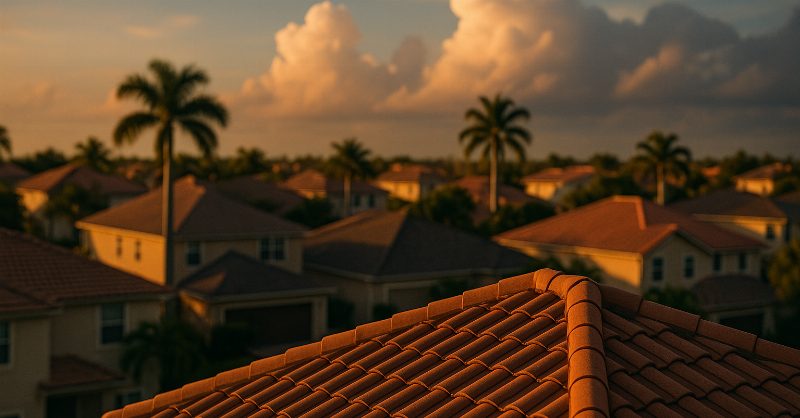
Every June 1st, the Gulf Coast holds its breath a little. If your roof isn't ready before that date, you're already behind.
Hurricane season in Southwest Florida is not a hypothetical. Sarasota, Bradenton, Venice, Port Charlotte, Englewood - all of these communities have taken direct hits or close-call scrapes that turned unprepared roofs into expensive disasters. The good news is that most serious storm damage is preventable, or at least significantly reducible, with the right preparation steps taken before a storm is ever named.
This guide walks you through exactly what to do, why each step matters, and what to watch for on a home that has spent years under the Florida sun.
Start with a Thorough Roof Inspection
You cannot prepare what you cannot see. Before you do anything else, get a clear picture of your roof's current condition. That means a real, up-close inspection, not just a glance from the driveway.
A professional inspection covers a lot more than most homeowners expect. Inspectors check for lifted or missing shingles, cracked or dried-out caulking around pipe boots and flashing, soft spots in the decking, deteriorating ridge caps, and the condition of gutters and fascia boards. If you want to know exactly what goes into that process, our post on what a roof inspection actually checks and how often you need one walks through every item in detail.
For homes in Sarasota, Lakewood Ranch, and Osprey, the combination of intense UV exposure and heavy summer rain means roofing materials age faster than in cooler climates. A roof that looked fine two seasons ago may have developed issues that aren't obvious until a 90-mph wind gust finds the weak point. Schedule your inspection in April or May at the latest. June is already hurricane season.
Understand What Makes a Roof Vulnerable in a Hurricane
Wind damage to a roof doesn't usually start in the middle of a large, intact section. It starts at the edges - the rakes, the eaves, the ridge - and it starts at any point where the roofing material is already compromised.
Here's how the failure sequence typically unfolds:
- Wind gets underneath a lifted or curling shingle at the edge of the roof
- That lifted piece creates a pocket that dramatically increases uplift force
- The decking nails begin to pull, or the decking itself starts to flex
- Water intrusion follows within minutes once the surface is breached
- Interior damage - to insulation, drywall, framing, and belongings - multiplies quickly
This is why small issues that seem cosmetic are actually serious hurricane vulnerabilities. A few missing granules on an asphalt shingle, a slightly raised nail head, a flashing joint that has begun to separate: none of these will cause a leak in a normal rainstorm. But in a Category 1 or stronger event, they are the starting points for much larger failures.
Fix Every Known Problem Before June
The single most important thing you can do to hurricane-proof your roof is to repair every problem you already know about. This sounds obvious, but a surprising number of homeowners defer small repairs, thinking they'll "keep an eye on it." That approach does not work well in a storm.
Common pre-season repairs include:
- Re-sealing or replacing pipe boots and vent flashing. These rubber or neoprene collars degrade in Florida's UV environment faster than almost any other roofing component. If yours are cracked or pulling away from the pipe, they need attention now.
- Replacing lifted or cracked shingles. Even a single shingle that has lost its seal strip adhesion can be enough for wind to begin the uplift process.
- Re-nailing loose decking. If your inspector finds soft spots or bounce in the decking when walking the roof, that's a structural issue that needs to be corrected before wind loads amplify it.
- Resealing ridge caps. The ridge cap sits at the very peak of the roof and takes the most direct wind exposure. Deteriorated ridge caps are a common failure point after storms.
- Clearing and securing gutters. Gutters loaded with debris can trap water against the fascia and cause it to wick under the roof edge. In heavy rain events, overloaded gutters can also pull away from the fascia, damaging the drip edge in the process.
If during your inspection you find damage that goes beyond simple repairs, it's worth asking honestly whether repair or replacement makes more sense for your home. Our guide on repair or replace - how to know when your Florida roof is done can help you think through that decision clearly.
Know How Old Your Roof Is
Age is one of the biggest factors in storm vulnerability, and it's one that homeowners often underestimate. A 20-year-old 3-tab asphalt shingle roof in Port Charlotte or Englewood has been through thousands of hours of direct sun, dozens of tropical systems, and years of thermal expansion and contraction. Even if it isn't visibly failing, its structural integrity is likely reduced compared to when it was installed.
For context on what realistic roof lifespans look like in our climate, our post on how long a roof really lasts on the Suncoast is worth reading. The short version: Florida's heat, UV, and moisture cycle significantly shortens the lifespan of most roofing materials compared to national averages.
If your roof is within a few years of the end of its expected life, replacing it before a major storm rather than after has real advantages. You control the timeline, you can choose your contractor carefully, and you avoid the post-storm scramble where every roofing company in the region is booked for months.
Check Your Attic from the Inside
Roof preparation isn't only an outdoor task. Walk into your attic in the daytime and look up. What you're looking for:
- Daylight coming through. Any pinpoints or streaks of light mean there are gaps in the roof assembly. That's a problem in any rain event and a serious vulnerability in a storm.
- Staining or dark spots on the decking. These indicate past moisture intrusion. Even if the leak has since stopped, softened decking holds fasteners less reliably and is more susceptible to wind uplift.
- Adequate ventilation. Proper attic ventilation reduces heat buildup that accelerates shingle degradation from below. Check that soffit vents are not blocked with insulation and that ridge vents are clear.
- Evidence of pest activity. Roaches, wasps, and especially squirrels or rats can compromise the roof assembly in ways that aren't visible from outside.
Evaluate Your Roof-to-Wall Connections
This step is often overlooked by homeowners but is critically important in Florida. The connection between your roof's structural framing and the top of your walls is what keeps the entire roof deck from lifting off in high winds. Older homes, particularly those built before the 2002 Florida Building Code updates following Hurricane Andrew, may have inadequate connections by current standards.
Metal hurricane straps or clips connect each rafter or truss to the top wall plate. If your home was built before 2002 and you're not sure whether it has them, have a contractor check. This is particularly relevant for older homes in Englewood, Nokomis, and parts of Downtown Sarasota and Downtown Bradenton where pre-code housing stock is more common.
Adding or improving hurricane straps is a structural improvement that may also reduce your wind mitigation insurance credit - worth discussing with your insurance agent at the same time.
Have a Storm Plan for What Comes After
Preparation isn't only about preventing damage. Part of being ready for hurricane season is knowing exactly what you'll do if damage does occur. That means:
- Documenting your roof's condition before the season. Take photos from multiple angles in May. If you later need to file an insurance claim, you'll want clear pre-storm documentation. This connects directly to understanding the claims process - our guide on how to file a roof insurance claim in Florida the right way covers what insurers look for and how to avoid common mistakes.
- Having your contractor's contact information saved. Post-storm, roofing contractors receive an enormous volume of calls. Existing relationships matter. Homeowners who already know their contractor are more likely to get prioritized.
- Understanding your policy. Florida homeowner's insurance for wind damage has specific deductible structures that many policyholders don't fully understand until they need to use them. Review yours before the season.
Don't Wait for a Storm Watch to Act
One of the most common calls roofing contractors receive is from homeowners who want repairs done after a named storm has already formed in the Gulf. At that point, it's too late for most work. Contractors can't safely work on roofs in the days immediately before a storm, and honestly, you wouldn't want them to rush the job.
The window for proper pre-season preparation is March through May. Work done during that window is thoughtful, properly scheduled, and done without the pressure of an incoming system. If you're in Sarasota, Bradenton, Lakewood Ranch, Venice, or anywhere else along the Suncoast, that window is available to you right now - use it.
If you're not sure whether your roof is ready for the season, our full list of roofing services and our frequently asked questions page are good starting points. And if you'd like someone to come take a look and give you a straight answer about where your roof stands, you can always reach out to us directly. No pressure, no sales pitch - just an honest assessment before the season starts.
The roof over your family's head is worth the hour it takes to make sure it's ready. Don't let a busy spring schedule push that task into June.