
Solar panels and your roof: warranty, structure, and what to know first
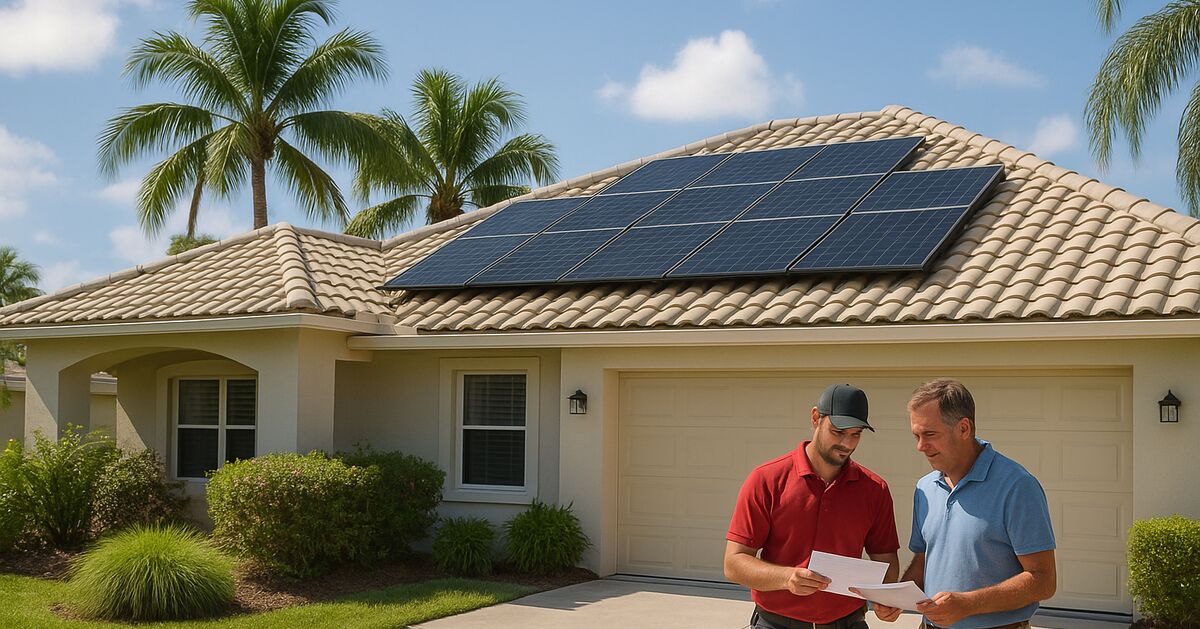
Solar panels are showing up on rooftops all over Southwest Florida, from Lakewood Ranch to Anna Maria Island, and the reasons are obvious. Electricity bills are punishing, the sun is relentless, and state incentives have made the numbers work for a lot of families. But here is what many homeowners discover only after the installers have left: putting solar panels on a roof is not a neutral act. It changes the structural loading, it almost always affects your roofing manufacturer's warranty, and it can complicate your homeowner's insurance in ways that take months to sort out. Getting informed before you sign a solar contract is the smartest thing you can do.
Why your roofing warranty is the first thing to check
Most asphalt shingle and tile roof systems sold in Florida carry a manufacturer's warranty that covers defects in the material itself. Some of those warranties also include a workmanship or "system" component tied to the original installing contractor. Both types can be voided, partially or entirely, by third-party penetrations into the roof deck.
Every traditional rack-mounted solar system requires lag bolts to be driven through your shingles or tile, through the underlayment, and into the roof deck and rafters below. The moment a solar installer does that without the roofing manufacturer's explicit written approval, you may have no warranty protection left on those penetration points or the surrounding area. If a leak develops three years later near a mounting bracket, the roofing manufacturer can reasonably argue the leak originated at a third-party penetration they never authorized.
A few things matter here:
- Check your warranty documents before signing any solar contract. Look for language about "third-party penetrations," "modifications," or "alterations."
- Contact your roofing manufacturer directly and ask whether solar mounting is permitted and what the approval process looks like.
- Ask your solar company for proof that their mounting hardware and installation method are approved by your roofing system's manufacturer.
Some manufacturers, particularly in the metal roofing space, have developed clamp-based mounting systems that attach to the standing seam without penetrating the metal at all. If your home already has a standing seam metal roof, this is a significant advantage worth asking about. Our earlier breakdown of standing seam vs. exposed fastener metal roofs in coastal Southwest Florida covers some of that territory if you want to dig deeper into the structural differences.
What a roof inspection before solar actually looks for
A reputable solar company will tell you upfront that your roof needs to be in good condition before panels go on. But "good condition" means different things to different people, and a solar company's cursory walk-around is not the same as a proper roofing inspection.
Before committing to solar, have an independent roofing contractor assess your roof. A real inspection looks at:
- Deck integrity. Soft spots, delamination, or rot in the plywood or OSB sheathing mean the lag bolts holding your racking system will not have a solid bite. A compromised deck that shifts or flexes under load can crack sealants, loosen hardware, and create leak pathways over time. Florida's decking challenges are significant enough that we devoted a full post to roof decking: when it needs replacing and what it costs.
- Remaining service life. If your shingle roof in Sarasota has eight years of useful life left, adding solar is almost certainly a mistake. When that roof needs replacing, the panels come off, the old roof comes off, new roofing goes on, and the panels go back up. That process typically costs between $1,500 and $3,500 in additional labor just for panel removal and reinstallation, on top of the full roof replacement cost. Panels should go on a roof that has at least 20 to 25 years of life ahead of it.
- Rafter spacing and condition. Solar racking attaches to rafters, not just the deck. If your rafters are undersized, spaced unusually wide, or show any signs of rot or insect damage, they may not be suitable anchor points without remediation first.
- Underlayment condition. This is the layer that does the real waterproofing work around penetrations. Dried, cracked, or brittle underlayment does not seal properly around lag bolts no matter how good the flashing is. Florida's heat accelerates underlayment degradation faster than most homeowners realize. Florida humidity and heat: what they do to your roof underlayment explains the mechanisms in detail.
Structural loading: what the weight of solar really means
A standard residential solar array adds roughly 3 to 4 pounds per square foot of dead load to your roof structure. For most homes built to modern Florida building codes, that is within the structural capacity of the framing. But "most homes" is not "all homes," and the Suncoast has a wide range of construction eras.
Older homes in areas like Englewood, Nokomis, Port Charlotte, and parts of Downtown Bradenton were often built before current wind and load standards. The framing may be entirely sound but designed to tighter margins. A structural engineer, or at minimum a thorough review of your permit drawings, can confirm whether your home's framing will handle the additional load comfortably.
Wind uplift is the more pressing concern in Southwest Florida. Panels act as sails. A solar array that is not mounted with hardware rated for local wind speeds can become a projectile during a hurricane or severe tropical storm. Florida building codes require solar installations to be engineered for local wind loads, and every permit should reflect that. Ask your solar contractor for the engineering documents and confirm that the permit is pulled and inspected before any work begins. An unpermitted solar install in Sarasota or Bradenton is not only a code violation but can create serious problems when you go to sell the home or file an insurance claim.
How solar affects your homeowner's insurance
Florida's property insurance market is already complicated, and adding solar panels introduces additional variables. Here is what most agents will tell you:
- Your dwelling coverage should increase to reflect the added value of the solar system. Panels typically add $15,000 to $30,000 or more in value to a home, and if that is not reflected in your coverage limit, you are underinsured.
- Some insurers treat rooftop solar as a liability. A panel that detaches during a storm and damages a neighbor's property could result in a claim that your insurer argues falls outside standard coverage.
- Leaks attributed to the solar installation may be denied by your homeowner's policy if the insurer determines the installation was faulty or unpermitted, and your roofing warranty may be void on those same penetration points.
The overlap between roof warranties, solar equipment warranties, and homeowner's insurance creates a situation where a legitimate leak can fall into a gap between all three. Getting everything in writing before the installation happens, including the solar company's warranty on their flashing and penetration work, is the only way to protect yourself.
Our post on Florida insurance market changes and what Sarasota homeowners need to know before replacing a roof has relevant context on how Florida insurers currently view roofing decisions, which applies directly to the solar conversation.
What good solar flashing actually looks like
The most common source of solar-related roof leaks is poor flashing at the mounting points. A lag bolt driven through a shingle and sealed with a dollop of roofing caulk is not flashing. Proper flashing involves:
- A purpose-made flashing plate installed under the shingles above the penetration point, so water that runs down the roof plane passes over the flashing rather than into it.
- A rubber or EPDM boot around the lag bolt itself.
- A secondary sealant layer rated for UV exposure (Florida's UV index degrades low-grade sealants within two or three years).
When you are evaluating solar contractors in the Sarasota, Venice, or Osprey area, ask to see photos of completed installations and specifically ask how they flash each mounting point. A company that uses proprietary flashing kits approved by roofing manufacturers is doing it right. A company that tells you "we use sealant and it never leaks" is a company you should walk away from.
Tile roofs and solar: a special case
A significant number of homes in communities like Lakewood Ranch, Siesta Key, and the barrier islands along the Suncoast have concrete or clay tile roofs. Solar on tile is more complex than solar on shingles for several reasons.
First, tile is fragile. Walking on a tile roof to install solar racking almost always results in cracked tiles unless the crew has specific tile-walking training and uses proper standoffs. Cracked tiles are not just a cosmetic problem. They compromise the water-shedding layer and can allow water to reach the underlayment.
Second, tile mounting typically requires removing individual tiles to install the flashing and bracket, then replacing the tile over the bracket. Done correctly, this is acceptable. Done quickly by a solar crew without roofing expertise, it often results in poorly reseated tiles, cracked mortar at ridges, and underlayment damage.
If your home has a tile roof, look for a solar company that has documented experience with tile specifically, or consider involving your roofing contractor in the installation process. Some homeowners in the Sarasota roofing and Bradenton roofing areas have arranged for their roofer to do the penetration and flashing work separately from the solar company's racking and panel installation, keeping each trade responsible for what they know.
The right sequence: roof first, then solar
If your roof is within five to eight years of needing replacement, the single best decision is to replace the roof first and then install solar on the new system. Here is why this sequence matters:
- You start with a fresh manufacturer's warranty that is not already partially consumed.
- You can choose a roofing system specifically with solar in mind. A standing seam metal roof, for example, allows clamp-based solar mounting with zero penetrations and no warranty concerns.
- The new underlayment and deck will give the lag bolts a clean, solid, fully sealed anchor point.
- You avoid the cost and disruption of pulling panels off a failing roof a few years down the road.
The roofing services we provide include pre-solar inspections and consultation on which roofing systems are most compatible with solar installation in Southwest Florida's climate. Getting a roofing professional involved early in the solar planning process, before you have committed to a solar company or a system design, gives you the most options and the best outcome.
Questions to ask before you sign
Here is a practical checklist to bring to any solar sales conversation:
- Will this installation penetrate my roof deck, and if so, what flashing system do you use?
- Is your mounting hardware and flashing method approved by my roofing manufacturer?
- Will you pull a permit, and will the installation be inspected?
- What is your warranty on the flashing and weatherproofing of each mounting point?
- How do you handle any roof damage that occurs during installation?
- What is the process and cost to remove and reinstall panels when I need a roof replacement?
- Can I get a copy of the engineering documents showing wind load ratings?
Any solar company operating honestly in the Sarasota, Bradenton, or Venice market should be able to answer all of these questions clearly and in writing. Hesitation or vague answers on any of them is a signal worth paying attention to.
Bringing it all together
Solar makes a lot of sense for Southwest Florida homeowners. The sun exposure is unmatched, the electricity costs are significant, and a well-designed system genuinely delivers long-term financial value. But a solar array is only as good as the roof it sits on, and a roof warranty is only as valuable as the conditions under which it remains valid.
Do the roof inspection first. Understand your warranty terms. Get the flashing details in writing. Make sure the permit is pulled and the engineering is done for local wind loads. And if your roof is approaching the end of its service life, replace it before the panels go up.
Our team works with homeowners across all of our service areas, from Port Charlotte up through Anna Maria Island, and we are glad to walk through a pre-solar roof assessment with you. If you have questions about whether your current roof is ready for solar, or you want a second opinion on what a solar company has told you, reach out to us and we will give you a straight answer.