
Roof decking in Florida: when it needs replacing and what it costs
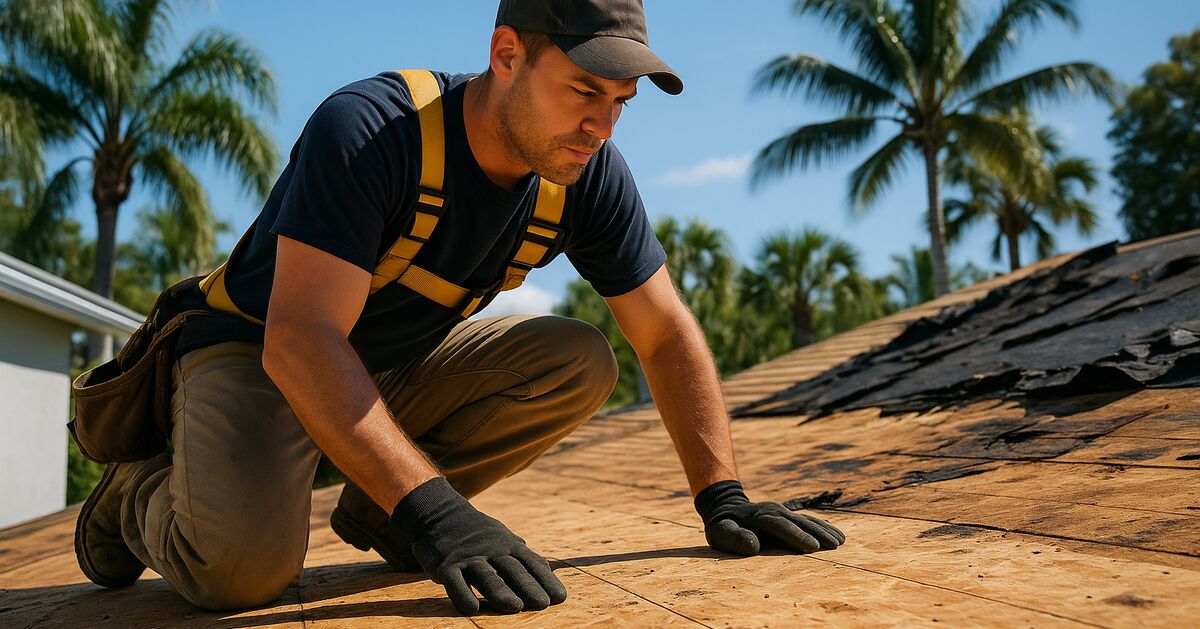
Your roof decking is failing right now, and you probably have no idea - because it's hidden under every layer of roofing material you can see. That's the uncomfortable truth about decking: it does all the structural work and gets none of the attention, right up until the moment a foot goes through it or a roof replacement uncovers a sheet of plywood that crumbles like wet cardboard.
If you're a homeowner in Sarasota, Bradenton, Lakewood Ranch, Venice, or anywhere else on Florida's Gulf Coast, understanding your roof decking is one of the most practical things you can do to protect your home and your wallet. This post explains what decking is, what Florida's climate does to it, how to spot trouble, and what you can realistically expect to pay when it needs work.
What roof decking actually is (and why it matters so much)
Roof decking - sometimes called roof sheathing - is the layer of solid material nailed directly to your roof's structural rafters or trusses. In virtually every Florida home built or re-roofed in the past few decades, that material is oriented strand board (OSB) or plywood, typically in 4-by-8-foot sheets.
Everything else on your roof sits on top of the decking: the underlayment, the ice-and-water shield at eaves and valleys, and then the final surface material, whether that's architectural shingles, concrete tile, or a standing-seam metal panel. When decking is solid and flat, it gives every layer above it a stable, nailable surface. When it's soft, swollen, or delaminated, the entire roof assembly is compromised, no matter how new the shingles are.
The decking also plays a critical role in wind resistance. Florida's building code requires specific nailing patterns and fastener types for decking panels precisely because well-attached decking is what keeps a roof from peeling away in a hurricane. You can read more about those requirements in our post on how Florida building codes affect your next roof replacement.
What Florida's climate does to roof decking
This is where our region is genuinely different from, say, the midwest or the northeast. The combination of factors here is punishing in a very specific way.
Humidity and moisture infiltration. Sarasota and Bradenton average somewhere around 55 to 60 inches of rainfall per year, and the relative humidity stays high year-round. Any small breach in a roof system - a cracked tile, a popped nail, a deteriorated flashing at a skylight or chimney - can let moisture work its way down to the decking. OSB in particular is sensitive to repeated wetting and drying cycles. It swells, delaminates, and loses structural integrity over time. Plywood is somewhat more forgiving, but it's not immune.
Poor attic ventilation. This one surprises a lot of homeowners. When attic ventilation is inadequate, hot humid air gets trapped in the attic space and condenses on the underside of the decking. The damage happens from below, invisibly, before a single drop of rain ever finds its way through the roof surface. We cover the full story on ventilation in our post on roof ventilation and why it matters for Florida homes, but the short version is: a poorly ventilated attic in Venice or Englewood can rot decking from the inside out.
Storm damage. When hurricane-force winds cause a tree limb to impact the roof, or when wind-driven rain gets under lifted shingles, the decking directly below takes the brunt. This kind of damage is often localized, but it's real and it's common on the Suncoast. Our guide to storm damage vs. normal wear explains how this affects your insurance claim.
Age and material degradation. Older homes in areas like Anna Maria Island, Nokomis, or Osprey may still have original decking from construction in the 1970s or 1980s. Some of those homes used a product called "skip sheathing" or even board lumber rather than sheet goods. As this material ages, it can become brittle, develop gaps, and simply fail to hold fasteners reliably. When a full roof replacement is due, the decking evaluation is just as important as picking a new shingle or tile.
The warning signs that something is wrong with your decking
Some signs are obvious. Most are not. Here's what to watch for, both from inside and outside the home.
From inside the attic:
- Visible daylight coming through the roof boards (beyond at ventilation points)
- Soft, spongy, or discolored patches on the underside of the decking
- A musty or earthy smell, which often indicates mold growth on wood
- Staining or water tracks running along the decking surface
From outside the roof:
- Visible sagging or "waves" in the roofline between rafters - this is called "decking sag" and it means the panels have lost their rigidity
- Shingles that look dimpled, uneven, or buckled without obvious surface damage
- Areas where granules have accumulated in gutters from one specific section, suggesting that shingles over compromised decking are moving slightly
During a professional inspection: A trained eye will walk the roof, probe soft spots with a moisture meter, and assess nailing patterns and fastener pull-through. If you haven't had a recent inspection, our article on what a roof inspection actually checks walks through exactly what happens during a proper evaluation. For homes in Port Charlotte and areas that took direct hits during recent storm seasons, an inspection should be considered urgent rather than optional.
When can decking be repaired, and when does it need full replacement?
This is a judgment call that depends on how much of the decking is affected and why.
Spot repairs are appropriate when:
- Damage is localized to one or two sheets, such as below a failed flashing or a single impact point
- The surrounding decking is dry, solid, and properly fastened
- The cause of the damage has been identified and corrected (meaning the leak that caused the rot has been fixed)
A roofer can remove the damaged sheets, replace them with code-compliant OSB or plywood of the correct thickness (typically 7/16-inch or 5/8-inch, depending on rafter spacing and the roof covering material), and re-nail to the existing framing. This is relatively straightforward work.
Full or large-scale decking replacement is warranted when:
- More than 20 to 30 percent of the decking is soft, delaminated, or water-damaged
- The existing decking is a non-standard material (old board sheathing, thin luan panels) that won't meet current Florida Building Code requirements
- You are doing a full roof replacement and the inspector finds widespread moisture damage during tear-off
Here's the practical reality: most homeowners discover the full extent of their decking damage only when a new roof is being installed and the old surface material comes off. Reputable contractors will document every damaged sheet found during tear-off, photograph it, and walk you through what needs replacement before proceeding. If a contractor never mentions decking condition during a replacement estimate, that's a red flag worth asking about. Our guide to choosing a roofing contractor on the Suncoast includes specific questions to ask about how a company handles unexpected decking issues.
What does roof decking replacement cost in Florida?
Let's get to the number you're looking for. The honest answer is that decking costs vary considerably based on several real factors, and we'd rather explain those factors than give you a made-up figure that doesn't apply to your situation.
Factors that move the price:
- Size of the affected area. Replacing two sheets of OSB costs a fraction of replacing half a roof's worth of decking. Labor is often the bigger variable on smaller jobs; material dominates on larger ones.
- Material type. OSB is generally less expensive than plywood. However, some tile roof systems require a specific plywood thickness that OSB cannot substitute for under current Florida code. Your roofer should know which is required for your roof type and your county's adopted building standards.
- Accessibility and pitch. A low-slope roof on a single-story Lakewood Ranch home is far easier and faster to work on than a steep-pitch tile roof on a two-story home in Downtown Sarasota. Steeper pitches require more safety equipment and slower work, which increases labor costs.
- Whether it's standalone or part of a full replacement. Decking work done as part of a complete roof replacement is almost always less expensive per sheet than a standalone repair, because the crew is already mobilized, the old roofing material is already removed, and the inspection has already been done.
- Permit and inspection requirements. Significant decking replacement in Sarasota County, Manatee County, and Charlotte County typically requires a permit and inspection. That cost is real and necessary, not optional.
For a standalone spot repair of one to three sheets, you're generally looking at a few hundred dollars in parts and labor. For widespread decking replacement discovered during a full re-roof, the add-on cost can range from a few hundred to several thousand dollars depending on square footage and material. The best approach is to get a written estimate that explicitly separates decking replacement as a line item, so you know exactly what you're paying for.
If you're navigating whether insurance might cover some of this, our post on the Florida insurance market and what Sarasota homeowners need to know before replacing a roof is worth reading before you call your carrier.
What good contractors do during tear-off (and what to watch for)
During a legitimate re-roofing job, every sheet of decking that comes off should be evaluated before anything new goes over it. Here is what a quality process looks like:
- Tear-off and exposure. Old material is removed carefully to avoid damaging salvageable decking.
- Visual and physical inspection. The crew checks each panel by feel, looking for soft spots, bounce, and delamination.
- Moisture readings. A competent contractor uses a moisture meter on borderline panels rather than guessing.
- Documentation. Damaged panels are marked, counted, and photographed before removal. You should receive documentation of how many sheets were replaced and where.
- Code-compliant replacement. New panels are fastened using the nail pattern and fastener size specified by Florida Building Code for your wind speed zone.
- Inspection. In most jurisdictions on the Suncoast, the building inspector will need to sign off on decking before the new roof covering can be installed. Do not work with a contractor who skips the permit process to save time.
A note for homeowners in older Suncoast neighborhoods
If your home is in a neighborhood built before the mid-1990s, particularly in areas like Englewood, older sections of Venice, or the historic districts of Downtown Bradenton and Downtown Sarasota, your decking may predate Florida's modern building code requirements. That means it may be thinner than what's required today, may use outdated materials, or may have been re-roofed multiple times without ever fully replacing the underlying deck.
When you're getting estimates for roof work, specifically ask: "Will the decking meet current Florida Building Code requirements, and what happens if it doesn't?" That single question will tell you a lot about whether a contractor is thinking carefully about your whole roof system or just quoting the surface layer.
You can see the full range of roofing services we provide on our roofing services page, and if you're unsure whether your area is in our service footprint, our locations page covers every community we work in along the Gulf Coast.
The bottom line
Roof decking isn't glamorous. Nobody picks their house based on what kind of OSB is underneath the tile. But it is the foundation of every other roofing decision you make, and Florida's heat, humidity, storm season, and strict building codes make it more important here than in most of the country.
The right move is to have your decking honestly assessed before any significant roof work begins, to insist on transparent documentation of what's being replaced and why, and to budget for the possibility of unexpected decking costs when planning a full re-roof. If you'd like a straightforward evaluation of your roof's condition, including its decking, reach out to us directly and we'll schedule a time to take a look.